Utah Lawmakers Outline Legislative Priorities Ahead of 2026 Session
Utah lawmakers outline key legislative priorities for the 2026 session at the Utah Economic Outlook and Public Policy Summit.
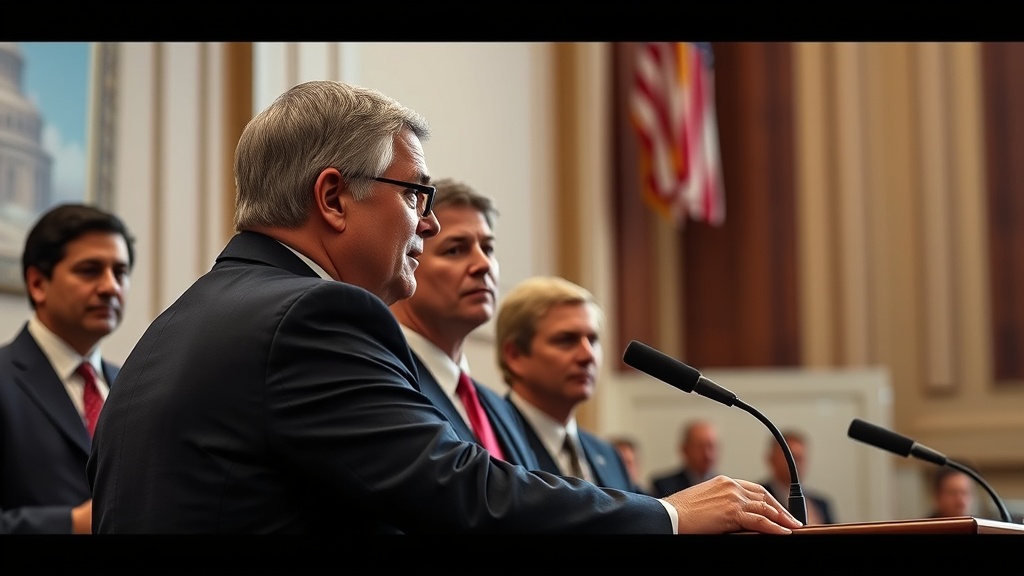
As the 2026 general legislative session approaches, some of Utah's most influential lawmakers gathered on Friday to delineate their key legislative priorities during the Utah Economic Outlook and Public Policy Summit. This annual event, which attracts a wide spectrum of political leaders and policy experts, serves as a platform for discussing the state's economic landscape and legislative agenda. With issues ranging from education funding to healthcare reform, lawmakers from both sides of the aisle shared their visions for Utah’s future.
During the summit, held in Salt Lake City, Governor Spencer Cox addressed the audience, emphasizing the importance of a collaborative approach to governance. "In Utah, we pride ourselves on finding common ground," Cox stated, underscoring the necessity for bipartisan cooperation. He noted that the complexity of current challenges, particularly in education and infrastructure, necessitates a united front.
Education emerged as a predominant theme during the discussions. Representative Rebecca Chavez-Houck, a Democrat, highlighted the critical need for increased funding for public education. "Our schools are the backbone of our communities, and they deserve our unwavering support," she remarked. Chavez-Houck pointed to the ongoing struggles within the education system, citing teacher shortages and the need for updated curriculum technologies. She advocated for a robust investment in educational resources to enhance student outcomes and ensure equitable access for all Utahns.
On the Republican side, Senate President Stuart Adams echoed similar sentiments regarding education but emphasized a different approach. He suggested that improving vocational training programs could help alleviate workforce shortages in high-demand sectors. "We need to prepare our young people for the jobs of tomorrow, and that means expanding our technical education programs," Adams asserted. He argued that a greater focus on vocational training could bridge the gap between education and employment, addressing both student needs and economic demands.
Healthcare reform was another significant topic of conversation at the summit. With rising healthcare costs affecting families across Utah, lawmakers are increasingly prioritizing access to affordable care. Senator Mike Lee, a prominent figure in the state's healthcare discussions, proposed measures aimed at increasing competition among healthcare providers. "By fostering a competitive environment, we can drive down costs and improve quality for patients," Lee stated, suggesting that deregulating certain healthcare markets could lead to better outcomes for consumers.
In addition to education and healthcare, transportation infrastructure was highlighted as a critical issue. With Utah's population continuing to grow rapidly, Representative Steve Eliason stressed the need for innovative solutions to address traffic congestion and infrastructure development. He advocated for increased funding for public transit options and the implementation of smart technology in traffic management. "If we don't act now, we risk falling behind as our cities expand," Eliason warned, urging lawmakers to prioritize infrastructure in their upcoming legislative agendas.
The summit also focused on environmental concerns, with discussions centered on sustainable practices and responsible resource management. Lawmakers expressed a collective commitment to addressing climate change and preserving Utah’s natural landscapes. Senator Dan McCay underscored the importance of balancing economic development with environmental stewardship. "We have a duty to protect our beautiful state for future generations while also fostering economic growth," he remarked, highlighting proposals aimed at promoting clean energy initiatives.
As the 2026 session looms closer, the conversations held at the summit reflect an evolving political landscape in Utah, where collaboration and compromise may be essential for addressing the state's pressing challenges. Lawmakers from both parties recognized that the issues at hand require not only innovative solutions but also a collective willingness to work across party lines.
In conclusion, the Utah Economic Outlook and Public Policy Summit has set the stage for what promises to be a dynamic legislative session in 2026. With a focus on education, healthcare, infrastructure, and environmental sustainability, Utah lawmakers are preparing to tackle the complexities of modern governance. As they look ahead, the need for bipartisan support remains paramount, ensuring that the voices of all Utahns are heard in the decision-making process. The momentum generated at this summit may very well shape the future direction of the state as it navigates the challenges and opportunities that lie ahead.