Examining Trump's Controversial Statements on Law and Power
President Trump's assertion that he operates above the law raises critical questions about governance and accountability.
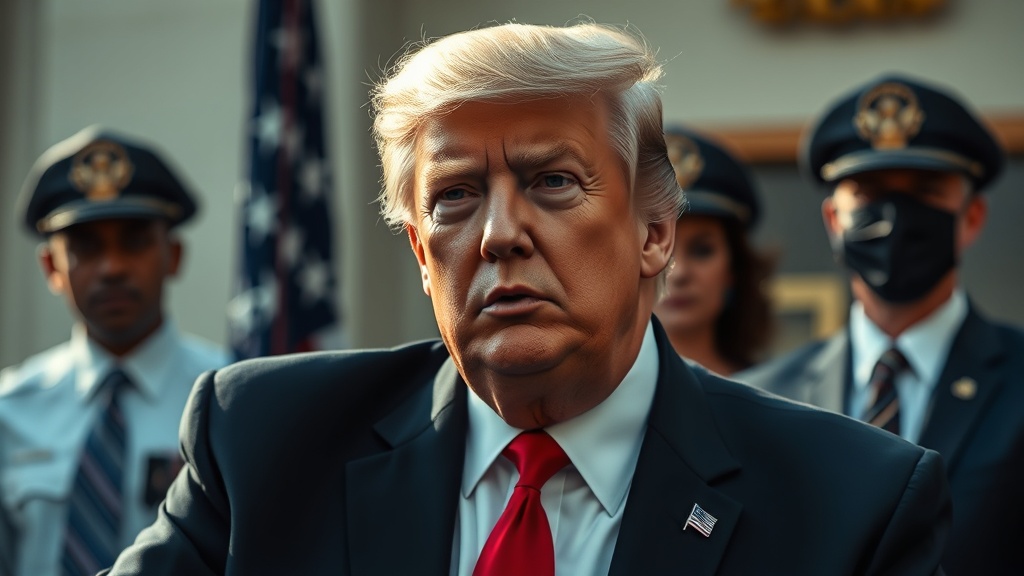
In a striking moment shortly after his second inauguration, President Donald Trump took to social media to assert a controversial perspective on the relationship between governance and legality. 'He who saves his Country does not violate any Law,' Trump proclaimed on X and his Truth Social platform, drawing inspiration from Sergei Bondarchuk’s 1970 film 'Waterloo.' This statement, which suggests that extraordinary circumstances may justify extraordinary actions, raises significant questions about the president's interpretation of law and order during his administration.
The timing of Trump's proclamation is notable, coming as he celebrated his return to power, a moment when he was presumably buoyed by renewed public support. This assertion, however, appeared to signal a shift in Trump's approach to the law, suggesting that he saw himself not merely as a leader, but as a savior figure whose actions were above reproach. Such a stance could potentially undermine the foundational principles of the American legal system, which is built on the premise that no individual, regardless of their position, is above the law.
Following this proclamation, the Trump administration faced a series of legal challenges and controversies that would test the boundaries of presidential power. Critics argue that many of these incidents reflected a broader pattern of law evasion and disregard for established protocols. For instance, there were numerous instances where Trump and his administration were accused of circumventing legal frameworks to achieve policy goals. From immigration enforcement actions to environmental regulations, the administration often appeared willing to prioritize political objectives over legal constraints.
One of the most prominent examples of this trend was the controversial immigration policy known as 'zero tolerance,' which resulted in the separation of families at the U.S.-Mexico border. This policy drew widespread condemnation, not only from human rights groups but also from lawmakers across the political spectrum. Critics argued that the implementation of such measures was not only inhumane but also violated existing laws and international agreements regarding the treatment of asylum seekers. Trump's assertion that he was saving the country was used to justify these extreme actions, further complicating the legal landscape.
Additionally, Trump's approach to executive power raised alarms among legal experts and constitutional scholars. The administration's frequent use of executive orders to bypass Congress and implement policies without legislative approval demonstrated a willingness to stretch the limits of presidential authority. This was particularly evident in actions related to healthcare, environmental protections, and economic regulations, where executive power was wielded to dismantle policies set by previous administrations.
The implications of Trump's stance on law and governance extend beyond the immediate controversies of his presidency. By positioning himself as a figure who operates above the law, Trump has set a precedent that could have lasting effects on future administrations. Legal scholars warn that this could embolden future leaders to adopt similar approaches, potentially eroding the balance of power that is vital to the functioning of the U.S. government. The normalization of such rhetoric poses a risk to democratic institutions, which rely on the rule of law to maintain order and accountability.
In the months and years following Trump's proclamation, various legal battles ensued, reflecting the tension between presidential authority and legislative oversight. The impeachment proceedings against Trump, initiated in part due to alleged abuses of power, were emblematic of the broader concerns about accountability in governance. Each of these events highlighted the urgent need for a robust discussion about the limits of presidential power and the importance of adhering to established legal norms.
As the nation moves forward, the legacy of Trump’s presidency will likely be debated for years to come. His assertion that saving the country justifies legal violations raises critical questions about the nature of leadership and the responsibilities of the presidency. In an era marked by political polarization, it is essential for citizens and lawmakers alike to engage in meaningful dialogue about the principles that govern the nation.
In conclusion, Trump's proclamation serves as a reminder of the delicate balance between authority and accountability in American government. The legal challenges faced by his administration, coupled with the broader implications of his rhetoric, underscore the importance of upholding the rule of law. As the nation reflects on this period, it must consider the vital role that legality and ethics play in the preservation of democracy and the protection of individual rights.