US Military Actions in Venezuela Spark Controversy and Comparisons to Russia
President Biden's military actions in Venezuela raise legal and ethical questions, drawing comparisons to Putin's invasion of Ukraine.
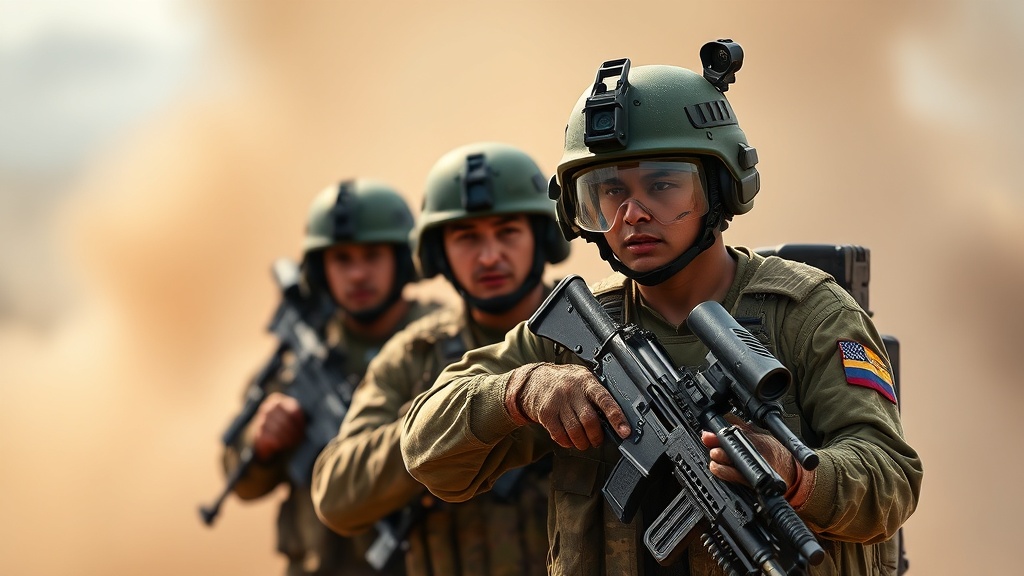
In a controversial move that has drawn significant attention and criticism, President Biden has authorized U.S. military operations against Venezuela, citing the need to combat illegal drug trafficking. This decision comes amid a complex backdrop of geopolitical tensions and raises questions about the implications of unilateral military action without congressional approval.
The situation escalated when Biden announced that U.S. military forces would target Venezuelan fishing boats suspected of transporting illegal drugs to American shores. Critics argue that this decision undermines the principles of due process, as these actions are carried out without verified proof of guilt. Many Americans remain unaware of the broader ramifications of such military engagement, particularly those who have experienced past conflicts like World War II, the Korean War, and Vietnam, which serve as stark reminders of the potential for tragedy that accompanies military intervention.
The recent actions also include plans to capture Venezuelan President Nicolás Maduro and his wife, leading to their indictment on charges of drug trafficking. Biden’s administration argues that Maduro’s regime is a significant threat due to its alleged involvement in narcotics operations that directly affect U.S. national security. However, the legality and morality of invading a sovereign nation remain contentious, with critics likening Biden’s moves to those made by Russian President Vladimir Putin in Ukraine.
Venezuelan Vice President Delcy Rodriguez would assume office should Maduro be captured, raising further questions about the effectiveness of such a regime change. Rodriguez has been accused of complicity in the corruption that has plagued Maduro’s administration, leading many to question whether a change in leadership would bring about the desired reforms.
The parallels drawn between Biden’s military actions and Putin’s invasion of Ukraine are striking. Both leaders have been accused of invading sovereign nations without provocation, resulting in loss of life among innocent civilians. The humanitarian crisis in Ukraine has garnered significant international attention, while similar concerns are raised in Venezuela, where economic instability and political repression have already led to a dire situation for many citizens.
Critics of the Biden administration’s approach argue that a military intervention in Venezuela could lead to unintended consequences, including prolonged conflict and increased regional instability. Historical precedents exist, such as the U.S. involvement in Afghanistan, which demonstrates the complexities and challenges associated with regime change. After years of military engagement, the U.S. ultimately withdrew with little to show for its efforts, raising doubts about the feasibility of similar endeavors in Venezuela.
The situation prompts a hypothetical scenario: how would the American public react if China were to capture the U.S. president under the pretext of violating international trade agreements? Such a scenario highlights the delicate balance of international relations and the potential backlash against perceived acts of aggression.
As the U.S. moves forward with its military strategy in Venezuela, there are calls for greater transparency and accountability. Advocates emphasize the need for congressional approval before undertaking military actions that could have profound implications for both allies and adversaries. The importance of diplomatic engagement and multilateral cooperation is underscored by these developments, as the international community closely monitors the actions of the Biden administration.
In conclusion, President Biden’s decision to authorize military action against Venezuela raises significant legal, ethical, and geopolitical questions. As tensions escalate, the ramifications of these actions will likely resonate far beyond the immediate context, influencing U.S. foreign policy and international relations for years to come. The need for careful consideration and a balanced approach to international conflicts remains paramount as the U.S. navigates this tumultuous landscape.