Utah's Great Salt Lake Faces Challenges Amid Record-Low Snowpack
With a record-low snowpack, Utah's Great Salt Lake faces significant challenges, impacting ecosystems and water supply.
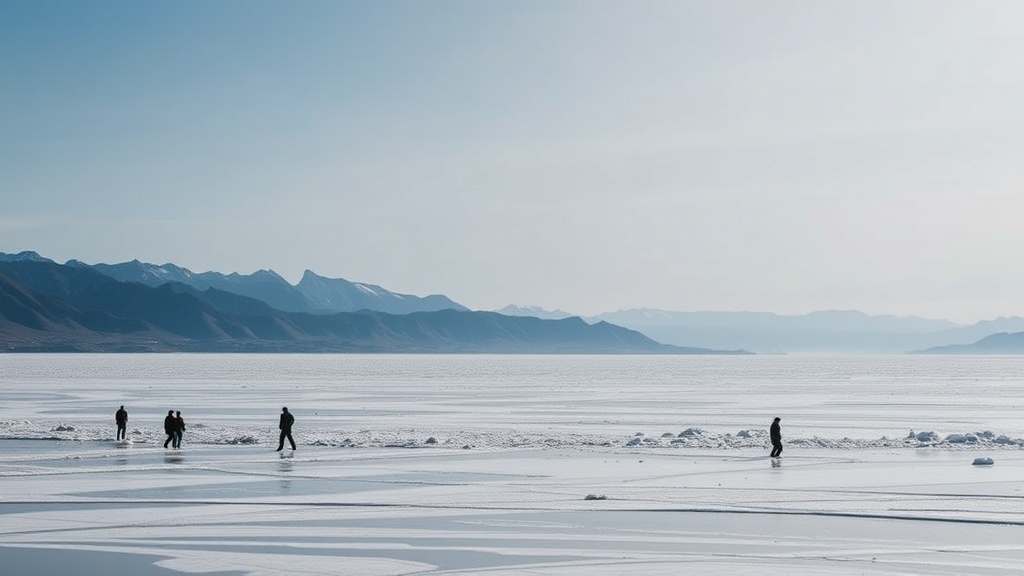
As winter unfolds in Utah, the Great Salt Lake is at a critical juncture that could test the state's water management protocols. The Utah Division of Water Resources (UDWR) has expressed concern over the current snowpack levels, which are reported to be at a record low for this time of year. With the winter season traditionally serving as a key period for replenishing the lake's water levels, the implications of a dry season could be profound, affecting not only the ecosystem but also the economy and water supply throughout the region.
The Great Salt Lake, the largest saline lake in the Western Hemisphere, has been experiencing declining water levels for several years. In recent years, the lake has shrunk dramatically, with its surface area shrinking to approximately 1,000 square miles, a significant reduction from its historical average. This alarming trend has raised concerns among environmentalists, as the lake supports a unique ecosystem that is home to various bird species and other wildlife. Furthermore, the lake plays a crucial role in the regional climate and water supply, making its health a matter of statewide significance.
The current snowpack, which is a key indicator of potential runoff into the Great Salt Lake, has been recorded at only 66% of the average for this time of year. This stark figure has prompted officials at the UDWR to reconsider their water management strategies. "We are hopeful for late-season storms to help us recover some of the lost snowpack, but the reality is that we are facing unprecedented challenges," said UDWR spokesperson, Sarah Johnson. "Our protocols for managing the Great Salt Lake are designed to respond to a variety of conditions, but we have never encountered a situation like this."
The challenges posed by a low snowpack extend beyond mere aesthetics; they have far-reaching implications for agriculture, industry, and local communities. The Great Salt Lake serves as a critical water source for surrounding cities and agricultural areas. A decrease in water levels can lead to increased salinity, which impacts both the lake’s biodiversity and the quality of water drawn from it. Farmers who depend on irrigation from local water sources could face reduced yields, further straining the agricultural sector.
Moreover, the declining water levels have raised concerns about air quality due to dust storms. The exposed lakebed, known as the playa, can generate harmful dust that impacts air quality and public health. Recent studies have indicated that dust from the Great Salt Lake can carry fine particulate matter, which has been linked to respiratory issues among residents living in proximity to the lake. "The health impacts are significant, especially for vulnerable populations. We need to consider not only the ecological but also the public health implications of a declining lake," stated environmental scientist Dr. Emily Tran.
In light of these challenges, the state has initiated discussions regarding long-term water management strategies. Governor Spencer Cox has emphasized the importance of a collaborative approach involving various stakeholders, including environmental groups, agricultural organizations, and local governments. "We need to come together as a community to address the challenges facing the Great Salt Lake. Our future water security depends on it," he remarked during a recent press conference.
As winter progresses, the state is also closely monitoring weather patterns. Meteorologists have indicated that late-season storms could still bring much-needed precipitation to the region. The outlook remains uncertain, but many are hopeful that these storms could help alleviate some of the pressure on the snowpack. The Utah Climate Center has been tracking trends in precipitation and temperature, noting that while some years have seen heavy snowfall, the overall trend has been towards drier winters.
In addition to natural weather patterns, the state is exploring innovative solutions to address the water crisis. Initiatives such as water conservation programs, improved irrigation practices, and investments in water recycling technologies have been proposed as ways to mitigate the impacts of low snowpack and declining lake levels. Experts emphasize that proactive measures are essential to ensure the sustainability of the Great Salt Lake and the surrounding ecosystem.
In conclusion, as Utah grapples with the potential ramifications of a record-low snowpack, the future of the Great Salt Lake remains uncertain. The interplay between weather patterns, water management protocols, and community health will be critical in determining the lake’s fate. With the collaboration of state officials, scientists, and the public, there is hope that Utah can navigate these challenges while safeguarding one of its most vital natural resources.