Utah's Controversial Anti-Transgender Bill Faces Strong Opposition from Advocates
Utah's LGBTQ+ advocates are alarmed as lawmakers prepare to debate HB183, a bill targeting transgender rights, amidst ongoing legislative battles.
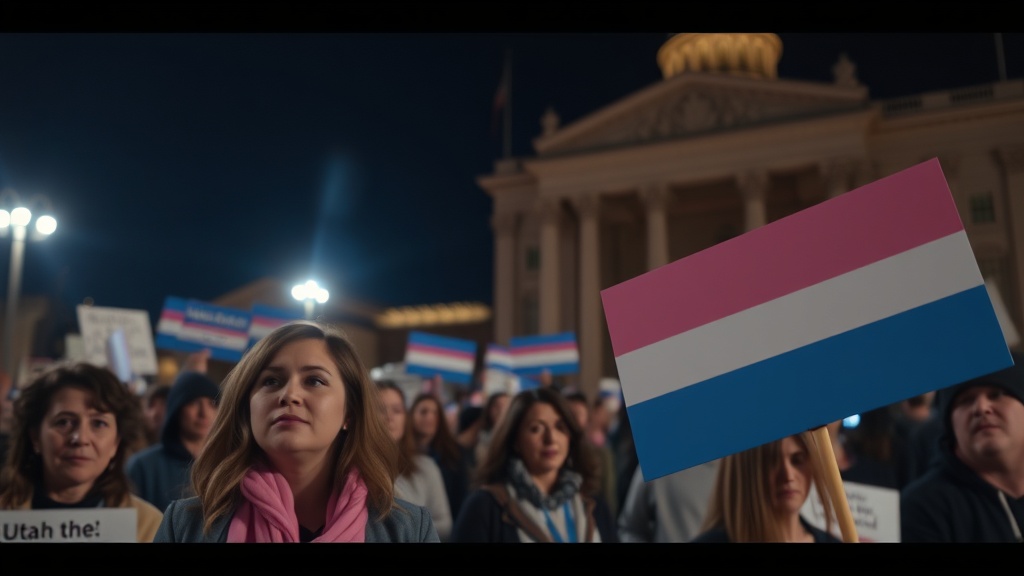
As the Utah Legislature convenes for its 2026 session, LGBTQ+ advocates brace themselves for what has become an ongoing battle over transgender rights in the state. For the fifth consecutive year, lawmakers are introducing multiple bills aimed at regulating the lives of transgender individuals. Among these, House Bill 183 (HB183), championed by Republican Representative Trevor Lee of Layton, is drawing particular ire from advocacy groups, who describe it as one of the most damaging pieces of legislation they have encountered in recent history.
Marina Lowe, policy director for Equality Utah, the state's largest LGBTQ+ advocacy organization, expressed her concerns in an interview, stating that the legislation is “by far the most harmful and outrageous piece of legislation” she has seen in years. HB183 proposes sweeping changes to various state laws, fundamentally altering how gender is recognized and treated in legal contexts.
The bill aims to eliminate the term “gender” from numerous areas of state law, replacing it with “sex.” This change extends to anti-discrimination protections that currently safeguard individuals based on gender identity in key areas such as housing, employment, and crime victim rights. Additionally, if passed, the bill would prohibit any modifications to the sex designation on birth certificates, a move that advocates argue undermines the rights of transgender individuals to self-identify.
State agencies would be mandated to refer to “biological sex” instead of gender, further complicating administrative processes for many. Furthermore, HB183 seeks to restrict the involvement of transgender individuals in educational settings by banning school districts and certain licensed providers from assigning transgender employees to roles that involve interaction with children.
Another concerning provision within the bill stipulates that courts must consider a parent's non-support of their transgender child's gender identity as a factor favoring custody decisions, which advocates believe could lead to further discrimination and familial strife.
Lowe summarized the potential impacts of the bill by saying it would effectively “green light, by way of state law, the ability to commit hate crimes against the transgender community, to discriminate against the transgender community.” The bill’s provisions would strip away existing protections for transgender individuals in employment and housing, leaving many vulnerable to discrimination.
Lee, in defense of his bill, argued that it seeks to clarify and simplify the conversation around gender, asserting that “there is no such thing as gender; it’s a made-up word.” He contends that the bill aims to eliminate confusion surrounding gender identity, especially for children. “We need to get back to that basic biology,” Lee stated, expressing his belief that the legislation is necessary to maintain societal order.
Critics, including Lowe, argue that Lee's bill represents a significant regression in the fight for LGBTQ+ rights in Utah. They highlight that it undermines years of legislative progress, including the 2015 “Utah Compromise,” which balanced anti-discrimination protections for sexual orientation and gender identity with religious freedoms. Lowe noted that HB183 would dismantle the careful compromises that have been established to protect LGBTQ+ rights in the state.
Senate President Stuart Adams, a Republican who was involved in the 2015 compromise, voiced skepticism about HB183. He indicated that any attempt to alter the anti-discrimination code established by that law would require substantial justification. Adams emphasized the importance of maintaining the balance achieved through the previous legislation, suggesting that he would be hesitant to support changes that could undermine those protections.
Despite pushback from some Republican leaders, the bill is set to be debated as part of the upcoming legislative session, which runs for 45 days and coincides with an election year. This timing adds an additional layer of complexity, as lawmakers weigh the implications of their positions on such divisive issues.
In addition to HB183, other bills targeting LGBTQ+ rights are also on the table this session. For instance, HB196, another proposal by Lee, seeks to rename Harvey Milk Boulevard in Salt Lake City to Charlie Kirk Boulevard, igniting outrage among local leaders who view this as not only an attack on an LGBTQ+ icon but also a violation of local governance over street naming.
As Utah continues to grapple with issues of gender identity and LGBTQ+ rights, advocates like Lowe remain vigilant. They argue that the barrage of anti-transgender legislation is demoralizing for the community, which already faces significant challenges. “It feels like there’s nothing else that can be legislated, and yet every year they seem to come back to the same issue area,” Lowe lamented.
The ongoing legislative efforts reflect broader national trends regarding transgender rights and societal acceptance. As Utah’s lawmakers prepare to enter the session, the outcomes of these bills could have far-reaching implications not only for the state’s LGBTQ+ community but for the national conversation surrounding gender identity and civil rights. The stakes are high as advocates and lawmakers alike brace for what is sure to be another contentious legislative session, one that could redefine the rights and protections of transgender individuals in Utah for years to come.