Utah Legislature Returns: Key Issues and Legislative Challenges of 2026 Session
As the 2026 legislative session begins, Utah lawmakers face a complex agenda of tax cuts, social issues, and budget challenges.
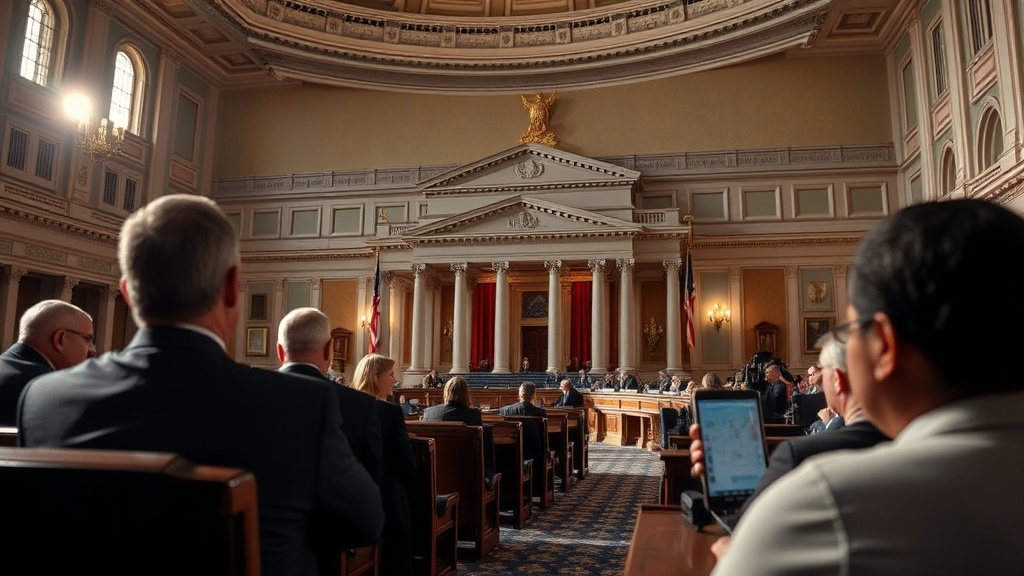
As the 2026 legislative session opens on Capitol Hill in Salt Lake City, Utah lawmakers are bracing for a comprehensive agenda during the 45-day session. With a Republican supermajority controlling both chambers, the legislative landscape is set for a series of contentious debates and significant policy proposals. Lawmakers have already filed numerous bills as they prepare to tackle pressing issues, including tax cuts, immigration, homelessness, and education reform.
Utah’s Republican legislative leaders, including Senate President Stuart Adams and House Speaker Mike Schultz, have outlined their priorities for the upcoming session in interviews with Utah News Dispatch. They emphasize a focus on tax cuts, with plans for a sixth consecutive year of reducing the state’s income tax rate, which currently stands at 4.5%. The GOP leadership argues that these tax cuts are essential for maintaining Utah's affordability and competitiveness.
However, the state’s budget is under considerable strain, with more than $30 billion at stake. Recent federal tax cuts have compounded the financial pressure, prompting calls for a 5% budget cut across state agencies. While the Republican leadership is determined to continue their streak of income tax reductions, Democrats and community advocates voice concerns over the impacts of such cuts on essential services, particularly in education and social services.
"We cannot continue to cut taxes while our state faces pressing challenges in education, healthcare, and child care," said Senate Minority Leader Luz Escamilla, reflecting the fears of many Democrats who worry about the implications of these fiscal policies on vulnerable communities.
In addition to tax issues, the legislature is gearing up for debates on contentious social issues. Notably, proposals targeting undocumented immigrants and the LGBTQ+ community are expected to surface. Some lawmakers are pushing measures to restrict public assistance for undocumented immigrants and significantly limit rights for transgender individuals, prompting fierce opposition from advocacy groups.
One particularly controversial bill aims to amend Utah's legal code to remove protections against discrimination based on gender, which LGBTQ+ advocates have condemned as deeply harmful. "This is one of the most aggressive attacks on our community we’ve seen," said Angela Romero, House Minority Leader, who is working alongside Escamilla to counter these legislative measures.
On the issue of homelessness, Governor Spencer Cox has proposed a budget allocation of $25 million in one-time funding and $20 million in ongoing support aimed at addressing homelessness and criminal justice high utilizers. However, while the governor supports ambitious plans, including a proposed 1,300-bed homeless campus in northwest Salt Lake City, legislative leaders have not committed to fully funding these initiatives, suggesting a need for local governments to shoulder some financial responsibility.
Amid these pressing social issues, the legislature is also looking at significant changes to the judiciary. Plans to expand the Utah Supreme Court from five to seven justices are gaining traction, with supporters arguing that it will enhance efficiency and alignment with practices in other states. However, critics, including some Democrats, are wary of the timing of these changes, interpreting them as retaliatory responses to recent court rulings that have not favored Republican interests, particularly concerning redistricting.
"There’s a palpable tension regarding the judiciary and its relationship with the legislature, especially following the court's ruling on redistricting. This could be seen as an attempt to undermine judicial independence," Escamilla stated, highlighting the broader implications of these legislative moves.
As lawmakers prepare to dive into the complexities of the budget and the array of proposed bills, a significant focus will be on election-related issues. The previous session saw considerable debate over voting by mail, and lawmakers are likely to revisit these topics, including potential ID requirements for voters and additional measures to ensure compliance with immigration laws regarding voting eligibility.
The close proximity of the 2026 election, which will see all 75 House seats and 15 Senate seats contested, adds another layer of complexity to the legislative dynamics. This electoral context could influence the priorities and strategies of both Republican and Democratic lawmakers as they navigate this year's session.
With numerous contentious issues on the table, including tax cuts, social policies, homelessness, and election integrity, the 2026 Utah legislative session promises to be a critical period for the state's political landscape. Lawmakers will need to balance fiscal responsibility with the needs of their constituents, as they seek to address the pressing challenges facing Utah today.