Trump Administration Revokes Temporary Legal Status for Over 1.5 Million Immigrants
The Trump administration has revoked Temporary Protected Status for over 1.5 million immigrants, raising concerns for communities and the economy.
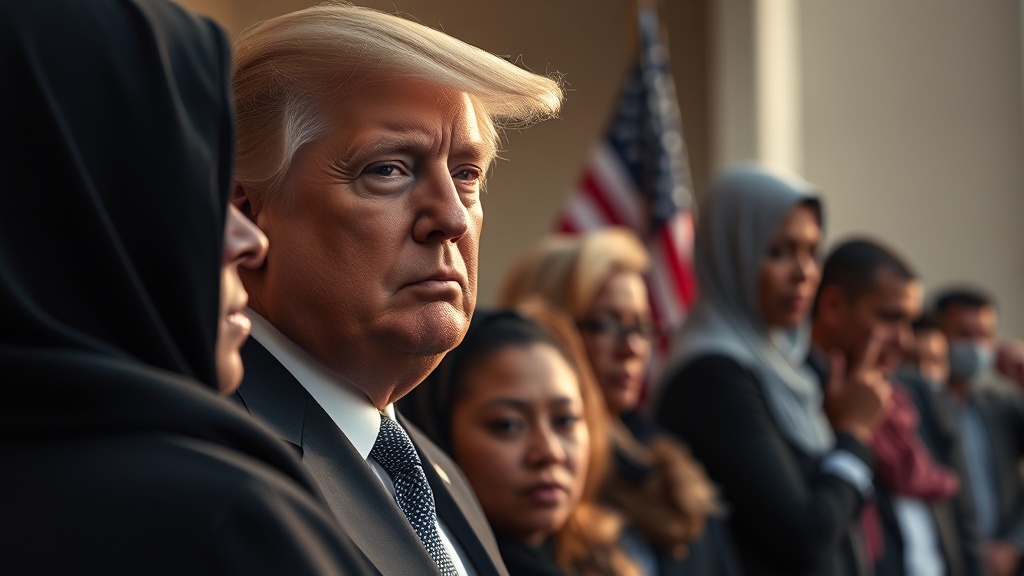
In a sweeping move that could reshape the landscape of immigration in the United States, the Trump administration has officially revoked the temporary legal status of more than 1.5 million immigrants since Inauguration Day in January 2025. This change, involving the termination of Temporary Protected Status (TPS) for over 1 million individuals from 11 different countries, marks one of the most significant reductions in legal immigration status in U.S. history, according to experts in immigration policy. The revocation of TPS, which provides essential work authorization and deportation protections, has raised concerns about its long-term implications for both immigrant communities and the broader economy.
Experts warn that the abrupt loss of legal status for such a large number of individuals is unprecedented. Julia Gelatt, associate director of the U.S. Immigration Policy Program at the Migration Policy Institute, stated, "I don't think we've ever seen such a huge number of people losing their immigration status all at once." This rapid revocation could have ripple effects, impacting local economies, employers, and families across the country, particularly in states heavily populated by TPS recipients.
The decision to terminate TPS is seen as part of a broader immigration strategy by the Trump administration, which has sought to curtail legal immigration significantly. In addition to TPS, the administration has also ended Humanitarian Parole protections for approximately 500,000 individuals. This multifaceted approach has raised alarms among immigrant rights advocates, who argue that these policies are harmful and unjust.
Jose Palma, a TPS recipient from El Salvador and coordinator of the National TPS Alliance, expressed his concerns, stating, "This is the continuation of the Trump administration's attack against the immigrant community, and specifically about the TPS program, which has been a life-saving program for many of us." In response to these changes, numerous lawsuits have been filed by immigrant rights groups and TPS recipients challenging the legality of the terminations.
The TPS program, established by Congress in 1990, allows individuals from countries deemed unsafe due to violence, war, or natural disasters to stay in the U.S. temporarily. Recipients must undergo background checks and are subject to periodic reviews of their status. However, TPS does not provide a path to citizenship, which has left many immigrants in a precarious situation. Before the Trump administration took office, over 1.3 million immigrants were enrolled in TPS from 17 countries. The first Trump administration saw a significant reduction in TPS recipients, dropping the number to around 400,000.
Homeland Security Secretary Kristi Noem has taken a hardline stance on TPS, recently announcing the termination of protections for immigrants from 11 countries, including Afghanistan, Haiti, Venezuela, and Syria. While Noem extended protections for South Sudan earlier this year, she has faced criticism for her approach to immigration policy, particularly in light of the Biden administration's expansion of TPS and humanitarian parole programs.
The termination of TPS for Venezuelans and Haitians, who together make up nearly 935,000 of the affected individuals, poses a unique challenge. Venezuelans were initially granted TPS during Trump's first term, with protections reaffirmed by the Biden administration in 2021 and 2023. Michael Clemens, a professor of economics at George Mason University, indicated that the removal of these individuals from the workforce could lead to an economic contraction exceeding $14 billion.
As the situation unfolds, the impact of these policy changes is becoming increasingly apparent. Experts predict that industries heavily reliant on TPS workers, such as construction and healthcare, may experience significant disruptions. Florida and Texas, home to large numbers of TPS recipients, are expected to feel the brunt of the economic fallout as thousands lose their work authorization.
While the Biden administration has retained humanitarian parole for certain groups, including 140,000 Ukrainians and 76,000 Afghans, the termination of protections for other nationalities has drawn widespread criticism. Alice Barrett, a supervising immigration attorney at the immigrant rights group CASA, described the ongoing attacks on temporary immigration statuses as "saddening and concerning." Barrett emphasized that TPS recipients face numerous hurdles in seeking longer-term legal status, often finding themselves in precarious situations.
The legal landscape surrounding TPS is complex and evolving, as courts continue to weigh challenges against the administration's actions. While lower courts have previously blocked attempts to end TPS, the current Supreme Court appears more amenable to allowing the Trump administration to proceed with terminations. This shift has left many TPS recipients in a state of uncertainty, facing the possibility of deportation despite ongoing legal battles.
In conclusion, the Trump administration’s revocation of temporary legal status for over 1.5 million immigrants is a significant policy shift that could have lasting repercussions for individuals and communities across the United States. As legal challenges unfold, the future of TPS and humanitarian protections remains uncertain, with advocates urging for a re-examination of the policies affecting vulnerable populations. The ongoing struggle for immigrant rights continues as communities brace for the potential consequences of these sweeping changes.