Rock Glaciers in Utah: A Climate Resilient Water Source Amid Low Snowfall
Amid a record low-snow winter, Utah researchers explore rock glaciers as a resilient water source, vital for future water management.
As the Wasatch Back experiences an unprecedented low-snow winter, the implications for water supply in Utah are becoming increasingly concerning for local leaders and residents alike. According to the Utah Division of Water Resources, approximately 95% of the state's water comes from snowpack, making this winter's conditions particularly alarming. However, researchers from Utah State University (USU) are focusing on an unexpected ally in the fight against water shortages: rock glaciers.
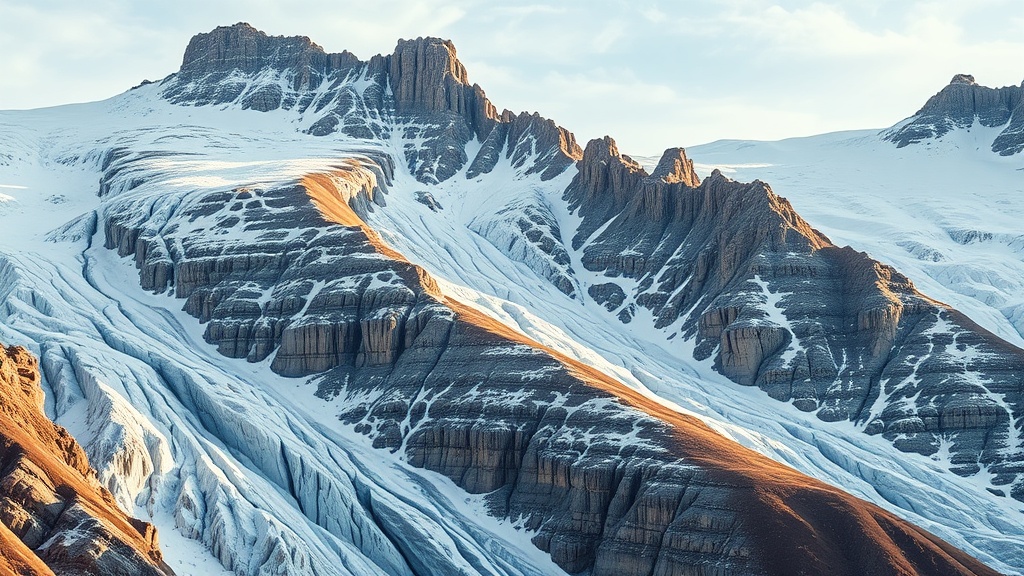
Unlike traditional surface ice glaciers that are more vulnerable to climate change, rock glaciers are large masses of ice covered with rubble that have exhibited remarkable resilience in the face of warming temperatures. Scott Hotaling, an assistant professor in USU's Department of Watershed Sciences, explains that while rock glaciers may appear like ordinary talus fields, they possess unique properties that allow them to move slowly downhill and store significant amounts of ice.
Hotaling notes that the rock glaciers in Utah could already be contributing to the state's water supply, albeit in ways that remain largely unquantified. "If that rock glacier savings account goes away, then we might have a sudden surprise where not only have we lost the snowpack component, but then the buffer has also gone away at the same time, and now we’re in a really tough place," he warns. This highlights the critical role of these glaciers, especially in a year where snowpack levels have drastically fallen.
Recent data from the Utah Snow Survey indicates marginal improvements in snowfall at the Bear Basin headwaters and parts of the High Uintas, yet areas such as Parley’s Summit recorded only 32% of typical snowfall by the end of December. As Wasatch County continues to grapple with water resource management, the potential contributions of rock glaciers could serve as an essential factor in long-term sustainability.
Within Utah, there are approximately 900 identified rock glaciers, with nearly 700 of these located in the Uinta Mountains. The largest rock glacier in the state, situated on Mount Timpanogos, is particularly noteworthy due to its proximity to the community of Midway. Hotaling highlights that a small lake visible on the trail leading up Mount Timpanogos marks the terminus of this rock glacier. Historically, this glacier was a natural ice glacier that melted over time into its current form, now consisting of a significant amount of ice buried under layers of rock.
"We think that, as glaciers recede and change over time, especially under climate warming, big surface ice glaciers retreat and many of them become rock glaciers because of the nature of the surface they’re in," Hotaling explains. This transformation underscores the importance of understanding how rock glaciers can supplement water supply, particularly as climate change continues to impact traditional snowpack levels.
Despite their potential benefits, Hotaling emphasizes the challenges of studying rock glaciers. Their remote locations and significant size complicate research efforts, particularly in wilderness areas where access is limited. Researchers are currently employing ground-penetrating radar technology to gain insights into the subsurface structure of these glaciers, which may reveal how much water they are storing.
The findings so far suggest that rock glaciers are more climate-resistant than surface ice glaciers, which have been steadily losing mass over time. "That suggests that these rock glaciers are quite resistant to years like this one, that they are going to persist sometime into the future and longer than a surface snow field might last," Hotaling remarks. This resilience offers a glimmer of hope as Utah navigates the complexities of water resource management in a changing climate.
Interestingly, rock glaciers also exhibit elevated levels of nitrates compared to other mountain streams, but the reasons for this phenomenon remain unclear. Understanding the water quality implications is essential, particularly as Utah's water supply system becomes increasingly strained.
Hotaling believes that Utah is at the forefront of rock glacier research in the United States, emphasizing the need for continued investigation into these natural features. While the role of rock glaciers in Utah's water supply is still being explored, their resilience against climate change might offer valuable insights into future water management strategies.
As local leaders remain vigilant in addressing the state’s water challenges, the significance of rock glaciers as a potential resource cannot be overlooked. The ongoing research into their properties and contributions to the water cycle may provide crucial data that could reshape Utah’s approach to water sustainability, especially in the face of increasingly unpredictable winter weather patterns. In this context, rock glaciers present not only a scientific curiosity but also a vital component in the quest for water security in Utah's future.