2025 Utah Wildfires Highlight Urgent Need for Wildfire Preparedness
The 2025 wildfire season in Utah underscores the urgent need for residents in fire-prone areas to enhance preparedness and resilience.
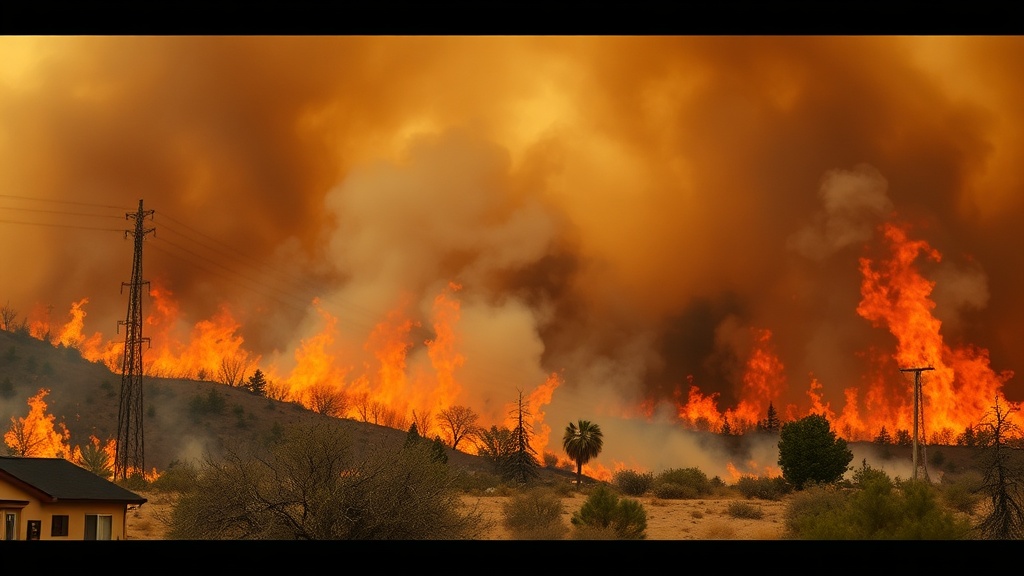
LOGAN, Utah — The wildfire season of 2025 in Utah, while not marked by an overwhelming number of acres burned, revealed a critical issue concerning the destruction of structures in areas where neighborhoods intersect with wildland vegetation. Brad Washa, an assistant professor specializing in wildland fire science at Utah State University (USU) Extension, emphasized that the significant number of homes and buildings lost serves as a stark warning to residents living in the wildland-urban interface (WUI). This area is defined as the zone where urban development meets undeveloped vegetation, making it particularly vulnerable to wildfires.
Among the most devastating events during this wildfire season was the Forsyth Fire, which erupted near Pine Valley in Washington County. Initial assessments from Governor Spencer Cox and fire officials indicated that the fire resulted in the loss of at least 13 homes, with estimates of the total number of buildings destroyed, including outbuildings, reaching as high as 14. As the situation unfolded during a public meeting, Pine Valley Fire Department Chief Robert Hardy urged residents to view the fire as an instructive experience. “If there is one word you take away from this, it is ‘Firewise,’” he said, emphasizing the importance of preparedness and proactive measures to mitigate fire risks.
Washa noted that the Pine Valley area serves as a microcosm of a broader challenge faced across Utah and the Western U.S., where homes have been constructed in fire-prone ecosystems. He explained that the Forsyth Fire was ignited naturally by lightning days before it fully developed into a persistent danger in Forsyth Canyon. “The Pine Valley fire is unique and concerning because wildfire has occurred regularly around that area, and steps were taken to help reduce the risk of wildfire,” Washa stated. These mitigation efforts included the construction of a fuel break around the town following a similar fire incident in 2016.
Despite the destruction, Washa highlighted that the fuel break likely performed as intended, helping to reduce the fire's intensity before it reached populated areas. “For the number of structures lost in Pine Valley in 2025, many more were saved because of Firewise concepts homeowners used around their homes before the fire and because of firefighters’ efforts during the wildfire,” he added, underscoring the importance of community preparedness.
The 2025 wildfire season was not limited to the Forsyth Fire; several other incidents also caused significant damage and displacement. The Deer Creek Fire near Old La Sal damaged or destroyed 13 structures, including a U.S. Forest Service guard station and a critical communications site. In central Utah, the Monroe Canyon Fire led to the destruction of 10 homes, primarily cabins and second residences, as reported by a public information officer from the Utah Department of Natural Resources. Additionally, a rapidly spreading fire in Millcreek resulted in the loss of two apartment buildings, displacing 79 residents.
In response to these challenges, USU Extension has been proactive in disseminating crucial information to the public. Recently, Washa announced the release of a video featuring interviews with Pine Valley residents and firefighters, aimed at elucidating the risks associated with living in the WUI and presenting potential solutions. “We hope it better explains the risks and possible solutions for those living in the WUI,” he remarked, emphasizing the value of learning from these crises.
The video specifically focuses on community resilience, while USU Extension has also collaborated with KUTV 2 News to promote Firewise landscaping practices that homeowners can adopt to minimize their wildfire risk. These educational efforts coincide with the implementation of a new state law aimed at shifting wildfire-prevention responsibilities more towards property owners in high-risk areas.
House Bill 48, known as the “Wildland Urban Interface Modifications,” took effect on January 1, 2026. This legislation mandates that Utah’s Forestry, Fire, and State Lands division maintain a high-risk WUI boundary map, establishing a fee-funded system for lot-level assessments and mitigation guidance. According to the provisions of HB 48, taxable structures within the high-risk boundary may incur a fee ranging from $20 to $100 per structure in the years 2026 and 2027, depending on their square footage. A triage-assessment component is slated to begin in 2028.
The law also requires insurance companies to reference the state’s high-risk WUI boundary when labeling properties as “high risk” for wildfire and, in certain circumstances, to justify any significant rate increases or coverage cancellations stemming from wildfire risks. As Utah residents reflect on the lessons learned from the 2025 wildfire season, the urgency for preparedness and proactive measures has never been clearer. With more people living in close proximity to wildland areas, the importance of community resilience and individual responsibility in fire prevention is paramount for safeguarding lives and properties in the future.