Salt Lake City Residents Turn to Public Transit Amid Stubborn Air Pollution
Salt Lake City faces persistent air pollution, prompting residents to shift to public transit in hopes of improving air quality.

Salt Lake City is grappling with persistent air quality issues as it ranks among the top 50 most polluted major cities in the United States for a third consecutive day. According to IQAir, a global air quality monitoring organization, Salt Lake City is currently positioned as the 48th most polluted city with an air quality index (AQI) reading of 75, placing it firmly in the 'Moderate' category. This alarming situation has prompted residents to explore alternative modes of transportation, particularly public transit, to mitigate their impact on local air quality.
The health implications of air pollution cannot be understated. As highlighted by IQAir, air pollution was a significant risk factor for over 8 million deaths in 2021, contributing to 4.7 million deaths linked to outdoor particulate matter alone. These statistics underscore the urgent need for communities to address the factors contributing to poor air quality. Dr. Denitza Blagev, a pulmonary and critical care physician at Intermountain Health, emphasized that much of the pollution plaguing Utah comes from local sources. "On-road vehicles account for approximately 39% of the state’s annual human-produced air pollution," she noted, underscoring the importance of individual choices during this inversion season.
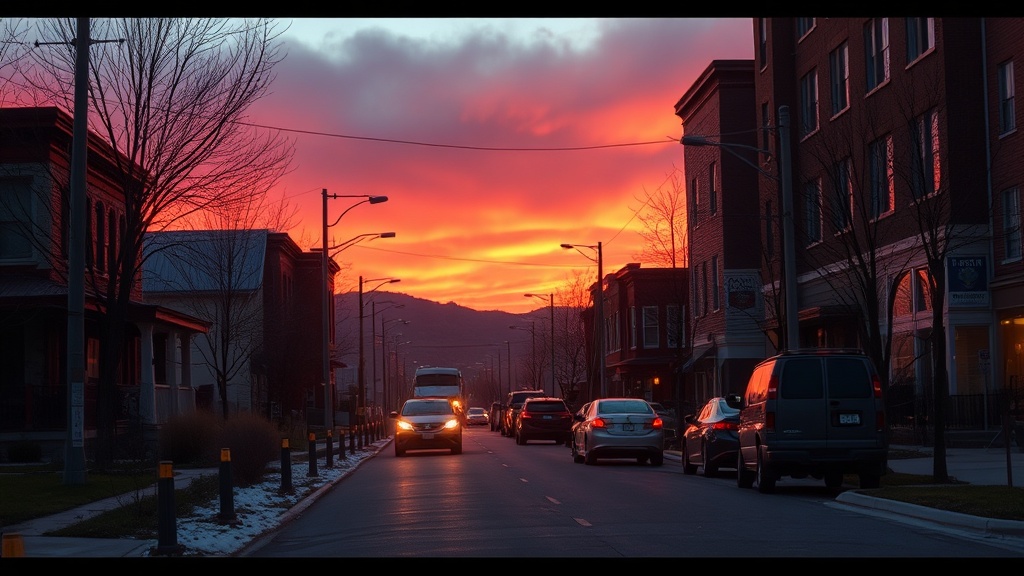
The current inversion period, characterized by stagnant air trapping pollutants close to the ground, has led to a visible haze over the Salt Lake Valley. Dr. Blagev advises residents to be mindful of their driving habits and to refrain from activities like wood burning, which can exacerbate pollution levels. "These are not the days to be doing that," she cautioned, stressing the importance of collective action.
In response to these challenges, public transportation has emerged as a viable alternative for many residents. The Utah Transit Authority (UTA) offers several options, including the TRAX light rail system, bus services, and the FrontRunner commuter train. Gavin Gustafson, the senior public information officer for UTA, highlighted the capacity of the FrontRunner to significantly reduce the number of cars on the road. "This train can accommodate up to 450 passengers across its three cars, effectively removing hundreds of vehicles from congested streets," he explained. "Every little bit counts, so we encourage everyone to do their part."
For many residents, the decision to use public transit is not solely about environmental concerns; convenience plays a significant role as well. Ayung Kuath, a frequent bus and TRAX user, remarked, "I love taking the bus. I get my little me time, and it helps out the air as a part two, so it's two birds with one stone." Kuath, who has lived in Utah for 25 years, expressed concern over the visible pollution and its impact on the younger generation. "It’s terrible. I feel bad for my little siblings or my nephews because now they don’t get the same experience I did, like playing outside and such."
Public transit options are not only convenient but also economically accessible. UTA provides a variety of fare structures, including free services within downtown Salt Lake City. Riders can easily access schedules and fare information on UTA's website, allowing them to plan their journeys efficiently. Tickets can be purchased online or at stations, simplifying the process for commuters.
As the inversion continues and air quality remains a pressing concern, community members are being encouraged to adopt more sustainable practices. The collective shift toward public transportation not only aids in reducing air pollution but also fosters a sense of community as residents come together to combat a shared challenge. The current situation serves as a reminder of the interconnectedness of individual actions and community health, emphasizing that each small change can contribute to broader environmental benefits.
In conclusion, as Salt Lake City faces ongoing air quality challenges, the response from its residents illustrates a growing awareness of environmental issues and a commitment to taking action. By choosing public transit, individuals are not only benefiting their own health but also paving the way for a cleaner and more sustainable future for the community. As these efforts continue, the hope is that air quality will improve, allowing future generations to enjoy the natural beauty of Utah without the hindrance of pollution.