Utah's Great Salt Lake Sees Progress, Yet Recovery Challenges Persist
Utah reports progress in stabilizing the Great Salt Lake, but serious recovery challenges remain, highlighting the need for long-term action.
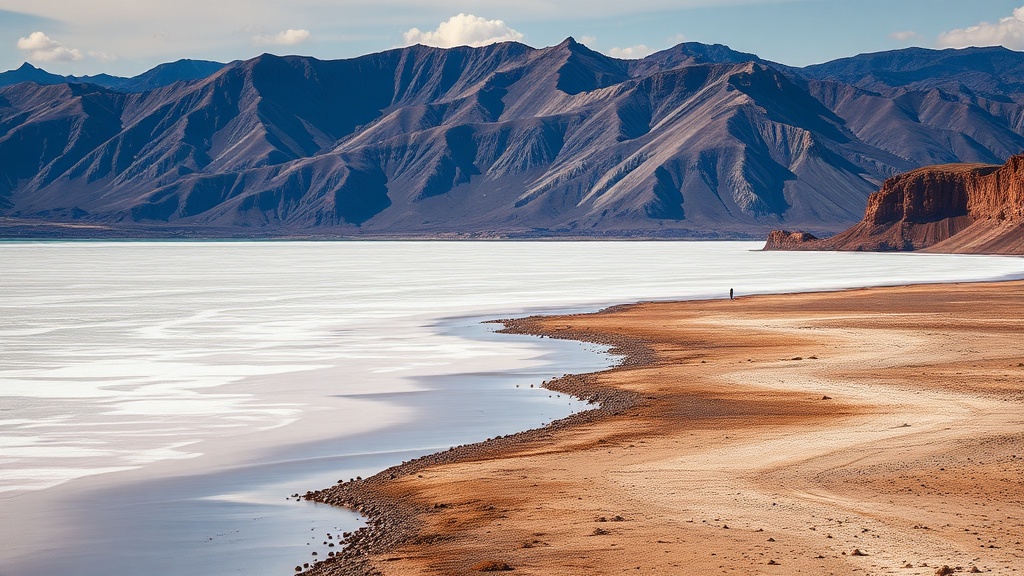
SALT LAKE CITY — Utah has made significant strides in stabilizing the Great Salt Lake, a vital yet fragile ecosystem, according to a new data summary released ahead of the 2026 General Legislative Session. While measurable progress has been achieved through initiatives such as water conservation, leasing contracts, and habitat restoration efforts, the latest findings indicate that the lake remains critically below healthy levels, necessitating sustained, long-term action for recovery.
The report, produced by the Great Salt Lake Strike Team and shared through the Kem C. Gardner Policy Institute, highlights notable gains from 2021 to 2025. During this period, nearly 400,000 acre-feet of water were successfully delivered to the lake, which has been beneficial in stabilizing conditions. However, experts warn that even with these efforts, the current state of the lake poses serious environmental and public health risks. “The collective efforts across our state agencies, public research universities, and private partners have yielded tangible progress in stabilizing the Great Salt Lake,” remarked Great Salt Lake Commissioner Brian Steed. “While conditions have stabilized, this report clearly shows that the journey to recovery requires sustained commitment, innovative solutions, and data-driven decisions.”
Despite recent gains, the report reveals a concerning outlook. The south arm of the lake ended the 2025 water year at an elevation of 4,191.1 feet, marking its third-lowest level since recordkeeping began in 1903. This position places it firmly within the “serious adverse effects” range, raising alarms among environmentalists and public health officials alike. Adaptive management strategies, particularly those involving the railroad causeway berm, have contributed to stabilizing salinity levels in the south arm since 2022, but the lake’s overall health remains precarious.
Long-term projections indicate that the lake would need an additional 800,000 acre-feet of water annually to return to healthy levels by 2055. Climate models further complicate recovery efforts, suggesting that rising temperatures and increased evaporation could counteract any gains made from higher precipitation. This underlines the urgency for comprehensive water management strategies that can adapt to these changing conditions.
In an additional effort to combat the environmental challenges posed by the lake's declining water levels, initiatives addressing dust pollution from exposed lakebed areas continued throughout 2025. The expansion of the Utah Dust Observation and Research Network (UDORN) has been crucial in monitoring dust sources and analyzing their potential public health impacts. Preliminary findings indicate that temporarily impounding water in Farmington Bay could significantly reduce dust emissions by submerging over half of the identified dust “hotspots,” should water levels rise to 4,199 feet.
The report also includes an updated water budget, revealing that municipal and industrial water usage now accounts for approximately 26% of human-caused depletions to the lake, a figure higher than previously estimated. This revelation underscores the critical need for conservation efforts across all sectors, including urban, agricultural, and industrial users. “Our report provides critical understanding of how changes in climate and land use influence the hydrology of the Great Salt Lake watershed,” stated Paul Brooks, a geology and geophysics professor at the University of Utah. “These data and analyses underscore the urgency of implementing comprehensive strategies that account for both natural variability and long-term trends in water supply.”
The findings of the report serve to illuminate both the progress made in stabilizing the Great Salt Lake and the extensive actions still required to secure the future of this essential ecosystem. Officials emphasize that while recent initiatives have yielded positive results, the pathway to recovery is fraught with challenges that demand ongoing commitment and innovative solutions.
As Utah prepares for the upcoming legislative session, the stakes are high. The health of the Great Salt Lake is not just an environmental concern; it intertwines with public health, economic stability, and the overall ecological balance of the region. With serious implications for wildlife, air quality, and water availability, the need for collaborative efforts among state agencies, researchers, and local communities has never been more urgent. As discussions commence in the legislature, the focus will undoubtedly be on ensuring that the necessary resources and policies are put in place to protect one of Utah's most significant natural treasures for generations to come.