Utah's Rainfall: A Double-Edged Sword for Water Supply Future
Utah's recent rainfall may boost green lawns but raises concerns over future water supply as snowpack levels remain critically low.
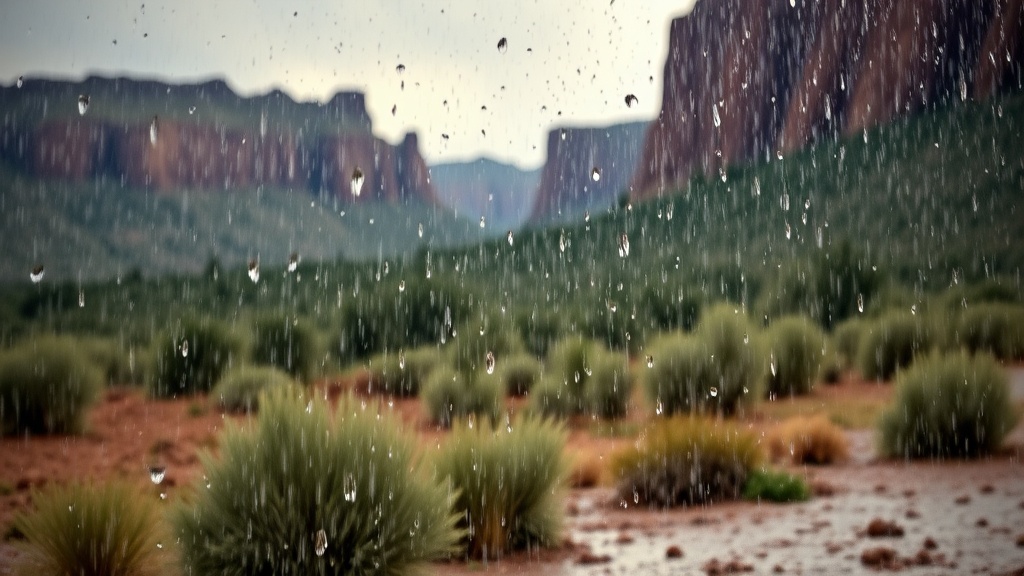
In recent weeks, Utah has experienced a notable shift in its weather patterns, marked by record warm temperatures and an unexpected abundance of rainfall in the valleys. This unusual weather has transformed many lawns into lush green landscapes, prompting discussions about mowing rather than shoveling snow. However, experts warn that this rainfall, while beneficial in the short term, may lead to significant water supply issues later in the year, particularly as the state heads into the critical spring and summer months.
The current water year has provided Utah with a healthy amount of precipitation, but the majority has fallen as rain rather than snow. This distinction is crucial, as the state relies heavily on snowpack for its water resources. Jon Meyer, Utah's Assistant State Climatologist, notes that while recent storm cycles have improved snowpack levels—from 55% to a more optimistic 75%—the quality and timing of precipitation are just as vital as the quantity. Meyer emphasized, "We are fairly concerned about drought impacts next year, water availability, and reservoir levels because a gallon of rainwater delivered in the middle of winter is not the same as a gallon of water in the snowpack that melts in April and May."
Snowpack serves as a natural reservoir, gradually releasing water as temperatures rise. In contrast, rain tends to run off quickly or be absorbed into the ground before it can be effectively stored. This means that while Utah may appear to be receiving ample precipitation, the reality is that the state's water situation could become precarious as the warmer months approach. Jordan Clayton from the Utah Snow Survey echoed these concerns, stating, "Our mid-elevation snowpack, even in those same areas, is poor, and then you get into central Utah and the snowpack is almost nonexistent. It’s terrible."
Despite recent rains, the impact on snowpack remains minimal. Storms have mostly delivered rain to elevations that would typically be accumulating snow, which is vital for the state's water supply. Meyer pointed out that while the rain gauges may show positive numbers, the reality from a water resource perspective is grim. "It feels like we are getting precipitation. The rain gauges are great. Our grass is green. We’re not shoveling; we’re looking at mowing instead. But from a water resource point of view, our spring and summer is looking quite pinched based on where we currently stand," he said.
Historically, Utah has faced challenging water years, and there is still time for conditions to improve as winter progresses. However, experts caution that the longer rain continues to replace snow, the more difficult it becomes for the state to recover. The implications of this rainfall pattern extend beyond immediate water supply concerns; they may also affect agriculture, outdoor recreation, and overall economic stability in the region.
As Utah grapples with its water supply issues, stakeholders across various sectors are beginning to take notice. Farmers, in particular, are anxious about how these weather patterns will affect crop yields and irrigation schedules. The agricultural community plays a critical role in the state’s economy, making it imperative that water resources are managed wisely to mitigate potential shortages.
In addition to agriculture, local governments and water management agencies are closely monitoring the situation. With anticipated growth in Utah's population, the demand for water is expected to increase, placing additional strain on already limited resources. State officials are tasked with developing comprehensive water management strategies that can address both immediate and long-term challenges.
In conclusion, while Utah may currently enjoy the aesthetic benefits of green lawns and mild weather, the underlying water supply challenges pose a significant risk for the near future. As experts continue to analyze the effects of this rainfall on snowpack and overall water availability, it is clear that proactive measures must be taken to ensure that Utah can sustain its water resources amidst changing climate patterns. The state’s residents and policymakers alike will need to stay vigilant and adaptable as they navigate the complexities of water management in the face of unpredictable weather conditions.