Bureau of Reclamation Unveils Draft Plans for Colorado River's Future Management
The Bureau of Reclamation has unveiled a draft plan for Colorado River management, offering five proposals as states face dwindling water supplies.
In a crucial step towards addressing the ongoing water crisis in the West, the Bureau of Reclamation released a comprehensive draft plan on Friday outlining proposed long-term management strategies for the Colorado River. The 1,600-page document presents five alternative proposals aimed at governing the river's two largest reservoirs, Lake Mead and Lake Powell, amidst continued negotiations among the seven states that rely on its waters. The existing management guidelines are set to expire in August 2026, creating urgency among stakeholders to establish a viable plan.
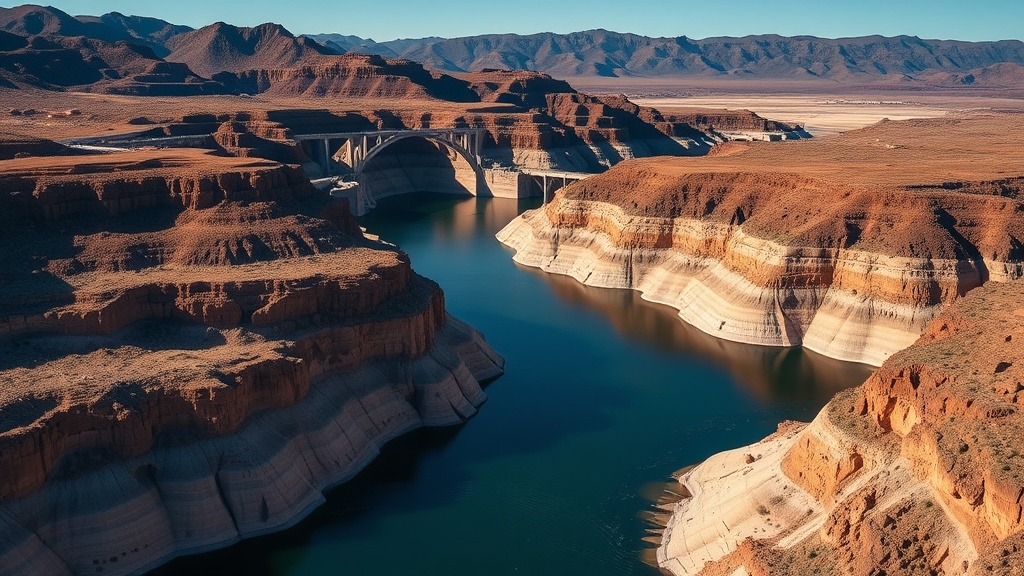
The Colorado River serves as a vital water source for approximately 40 million people across the southwestern United States, including urban centers and agricultural regions. However, two consecutive years of disappointing snowpack have significantly reduced water levels in both Lake Mead and Lake Powell, which are currently less than two-thirds full. As such, the proposals released by the Bureau are not just administrative but essential for the survival of both communities and ecosystems dependent on the river.
One of the alternative proposals includes a compliance option that may be enacted in 2027 if the seven states fail to reach a consensus on how to allocate the dwindling water supply. Under this proposal, states such as Nevada, Arizona, and California could face water shortages of up to 1.48 million acre-feet, exacerbating an already tense situation. “The Department of the Interior is moving forward with this process to ensure environmental compliance is in place so operations can continue without interruption when the current guidelines expire,” said Andrea Travnicek, Assistant Secretary for Water and Science. She emphasized that the urgency of the situation means inaction is not an option.
The proposals are particularly timely, as forecasts predict that both lakes will face record low elevations by 2027. Current projections indicate that inflow to the river could be 27% lower than normal next year. This situation raises concerns that without substantial winter snow, Lake Powell may drop to levels that halt hydropower production by October 2026, further complicating the delivery of water downstream to states relying on its flow.
Negotiations among federal officials and the seven states—California, Arizona, and Nevada in the Lower Basin, and Colorado, New Mexico, Utah, and Wyoming in the Upper Basin—have largely occurred behind closed doors for nearly two years. The lack of a consensus has left many stakeholders concerned about the future of Colorado River management. The newly released draft is part of the National Environmental Policy Act (NEPA) process, which will require public review before any final decisions are made.
Several negotiators from the affected states have stated that they have not yet fully reviewed the lengthy document. Bronson Mack, a spokesperson for Nevada’s chief river negotiator, indicated that thorough analysis would be necessary before any comments could be provided. Similarly, Utah's chief river negotiator Gene Shawcroft acknowledged the importance of the draft as a significant milestone in a complex process and expressed the need for careful evaluation before submitting feedback.
Interestingly, the draft environmental impact statement did not suggest a preferred alternative for the operating guidelines, a departure from typical practice. “Given the importance of a consensus-based approach to operations for the stability of the system, Reclamation has not yet identified a preferred alternative,” said Acting Bureau of Reclamation Commissioner Scott Cameron. This decision underscores the emphasis on collaboration among states to develop a sustainable management plan for the river’s resources.
The draft includes a variety of alternatives aimed at facilitating an agreement among the states, which have been divided on how to manage water usage in the face of ongoing drought conditions. Disagreements have primarily centered around which states should bear the burden of water cuts during dry years. Lower Basin states advocate for mandatory reductions from all seven states, while Upper Basin states argue that their current usage is already significantly lower, and they should not face additional cuts.
The public comment period for the draft proposals will run from January 16 to March 2, 2026, providing an opportunity for stakeholders and the general public to weigh in on the proposed strategies. Additionally, two virtual public meetings will be held on January 29 and February 10 to discuss the draft further. As negotiations continue, the clock is ticking for the seven states to reach a consensus-based final plan by mid-February 2026, with the aim of implementing new guidelines by October 2026.
The stakes are high for communities across the region as water scarcity becomes an increasingly pressing issue. A thoughtful and collaborative approach to managing the Colorado River is not just a regulatory necessity but a critical lifeline for millions who depend on this vital water source.