Utah Judge Allows Legislative Appeal in Redistricting Case Decision
A Utah judge has ruled that the legislature can appeal to the Supreme Court in a redistricting case, prolonging legal uncertainty ahead of elections.
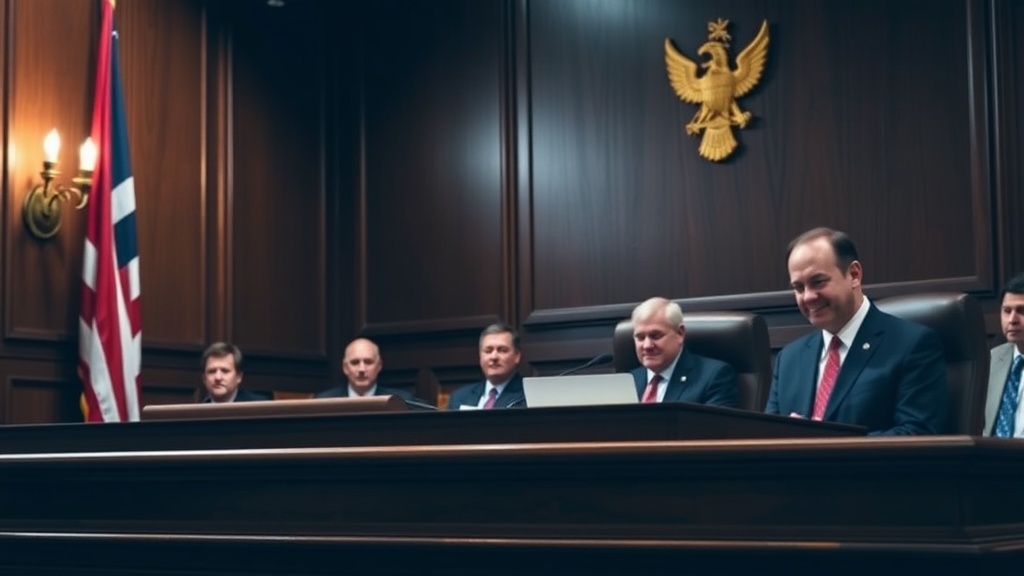
In a significant development in Utah's ongoing redistricting battle, a judge has ruled that the state legislature can appeal to the Utah Supreme Court regarding the redistricting case. This ruling comes as the judge denied the legislature's request for a final ruling, indicating that the legal proceedings surrounding this contentious issue will continue to unfold at the highest levels of the state judiciary.
The case revolves around the legislative district maps that were drawn following the 2020 census, a process that has historically been fraught with political controversy. Redistricting is pivotal because it determines the boundaries of legislative districts for the next decade, impacting electoral outcomes and representation for Utah's diverse population. The maps in question were challenged by various advocacy groups who argue that they unfairly favor certain political parties, undermining the principles of fair representation.
In her ruling, Judge Jennifer Brown emphasized the complexity of the case and the importance of allowing the legislature to seek further clarification from the state’s Supreme Court. "This matter raises significant questions about the balance of power between the legislative and judicial branches," she stated. "By allowing an appeal, we can ensure that these questions are resolved at the highest level of our state’s judiciary."
The legislature had previously sought a swift resolution to the case, hoping to avoid prolonged legal battles that could disrupt the election cycle. However, Judge Brown's decision delays any final resolution, prolonging uncertainty for candidates and voters alike. Lawmakers expressed disappointment at the ruling, arguing that it prolongs the instability around the district maps, which they contend should have been finalized long ago.
"We were hopeful for a quicker resolution that would allow us to move forward with the elections process, but we respect the court's decision to allow for an appeal," said House Speaker Brad Wilson. "It’s crucial for us to have clarity on this matter as we approach the upcoming election cycle."
The redistricting process in Utah has been a contentious issue, with various stakeholders, including political parties, civil rights groups, and community organizations, weighing in. The state’s population growth, particularly in urban areas like Salt Lake City and Provo, has led to significant changes in demographic patterns, making the redistricting process even more critical as lawmakers attempt to reflect these shifts in the new maps.
Critics of the current district maps allege that they were drawn to benefit the Republican Party, which controls the state legislature. A coalition of advocacy groups, including the League of Women Voters and the Utah Democratic Party, filed a lawsuit challenging the maps, claiming that they violate the principles of equal representation by diluting the votes of certain communities. The plaintiffs argue that the maps were crafted in a way that minimizes the electoral power of minority populations, particularly in urban centers that have seen an influx of diverse residents.
In response to these allegations, the state legislature has defended its redistricting process, asserting that the maps comply with legal standards and reflect the population distribution accurately. Lawmakers argue that the maps were created with input from various stakeholders and that they represent a fair depiction of Utah’s demographic landscape.
As the case moves to the Utah Supreme Court, both sides prepare for what could be a lengthy legal battle. Legal experts predict that the Supreme Court's ruling could have far-reaching implications, not only for the current redistricting process but also for future legislative actions and the balance of power within the state.
The court's decision on whether to hear the appeal will likely come in the coming months, setting the stage for a pivotal moment in Utah’s political landscape. With the 2024 elections on the horizon, the outcome of this case could significantly affect candidate filings, campaign strategies, and ultimately, the representation of Utahns in the state legislature.
As the situation develops, both voters and elected officials will be closely monitoring the Supreme Court's actions, understanding that the implications of this case extend far beyond the immediate legal questions at hand. The importance of fair and transparent redistricting cannot be overstated, as it is foundational to the health of Utah's democracy and the principle of representative governance. As the legal battles continue, the eyes of the nation will be on Utah, showcasing the broader challenges faced in redistricting efforts across the United States today.