Senate Republicans Rally to Protect Federal Reserve's Independence Amid DOJ Investigation
Senate Republicans defend the Federal Reserve's independence amid a DOJ investigation into Chair Jerome Powell, raising concerns of political interference.
In a significant escalation of tensions between the Trump administration and the Federal Reserve, Senate Republicans are voicing strong support for the independence of the central bank in light of a Department of Justice (DOJ) investigation into Chair Jerome Powell. The investigation has raised concerns among GOP senators about potential political interference in monetary policy, especially as Trump prepares to nominate a successor to Powell, whose term ends in May 2026.
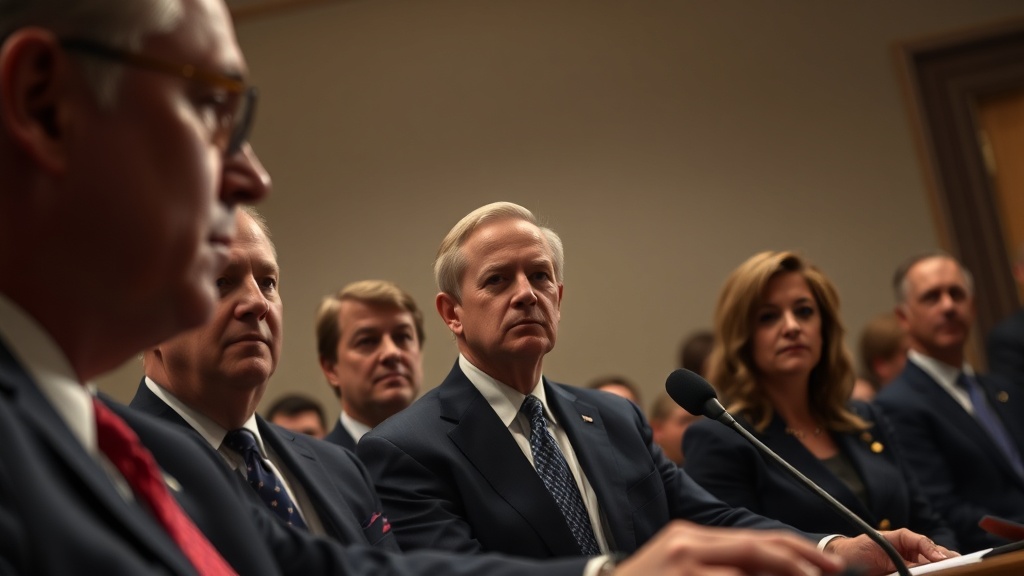
The situation has garnered attention particularly from retiring North Carolina Senator Thom Tillis, a member of the Senate Banking Committee, which will conduct hearings on the upcoming Fed chair nomination. In a statement, Tillis expressed his unwillingness to confirm any nominee unless the independence of the Federal Reserve is assured. "If there were any remaining doubt whether advisers within the Trump Administration are actively pushing to end the independence of the Federal Reserve, there should now be none. It is now the independence and credibility of the Department of Justice that are in question," he stated. Tillis further declared his intention to block any nominee until the legal matters surrounding the investigation are resolved.
The DOJ's investigation reportedly involves grand jury subpoenas issued to the Federal Reserve, concerning Powell's testimony during a Senate Banking Committee meeting last June. In a video message released over the weekend, Powell described the subpoenas as a threat of criminal indictment tied to his leadership of the Fed. He asserted that the investigation is not simply about oversight concerning the Fed's office renovation project in Washington, D.C., but rather a direct consequence of the Federal Reserve's commitment to setting interest rates based on economic conditions rather than political pressure. "This is about whether the Fed will be able to continue to set interest rates based on evidence and economic conditions—or whether instead monetary policy will be directed by political pressure or intimidation," Powell emphasized.
Former President Donald Trump initially nominated Powell to lead the Federal Reserve in November 2017, praising his leadership qualities and experience. The Senate confirmed Powell with a decisive 84-13 vote in January 2018. President Joe Biden later re-nominated Powell in November 2021 for a second four-year term, which commenced in May 2022, with the Senate again voting in favor of his confirmation by a margin of 80-19. However, with Powell's term approaching its end, Trump's next nominee will require bipartisan support to secure confirmation.
As the Judiciary Committee is closely divided, with 13 Republican members and 11 Democrats, Tillis's position gives him significant leverage to block any nominee if he and the Democrats oppose the candidate. This dynamic could complicate Trump's ability to place a new person in charge of the Federal Reserve, especially if further political controversies continue to unfold.
Democratic Senator Elizabeth Warren, who serves as the ranking member of the Banking Committee, criticized Trump’s actions, accusing him of abusing DOJ authority for personal gain. In a statement, she declared, "Trump is abusing the authorities of the Department of Justice like a wannabe dictator so the Fed serves his interests, along with his billionaire friends." Warren urged her fellow senators to refrain from moving forward with any Trump-nominated candidates, including a new Fed chair.
Additionally, Alaska Republican Senator Lisa Murkowski, who is not on the Banking Committee, expressed her concerns about the investigation, stating, "It’s clear the administration’s investigation is nothing more than an attempt at coercion. If the Department of Justice believes an investigation into Chair Powell is warranted based on project cost overruns—which are not unusual—then Congress needs to investigate the Department of Justice." Murkowski echoed Tillis's sentiments, emphasizing the importance of the Fed's independence for market stability.
Senate Minority Leader Chuck Schumer, a Democrat from New York, condemned the DOJ's actions, suggesting they represent a form of bullying characteristic of Trump’s approach to governance. Schumer remarked, "Anyone who is independent and doesn’t just fall in line behind Trump gets investigated. Jay Powell and the Fed aren’t the reason Trump’s economy and his poll numbers are in the toilet. If he’s looking for the person who caused that he should look in the mirror."
In response to the investigation and the surrounding controversy, a group of former Federal Reserve chairmen, Treasury secretaries, and White House economic advisers issued a joint statement highlighting the critical importance of the Fed's independence. They warned that the ongoing inquiry represents an unprecedented attempt to undermine the institution's autonomy, a tactic more commonly observed in countries with weak governance structures. The statement underscored that the Fed’s independence is essential for maintaining economic stability and achieving its mandated goals of stable prices, maximum employment, and moderate long-term interest rates.
In a press briefing, White House press secretary Karoline Leavitt defended President Trump's right to criticize the Federal Reserve's actions, asserting that the president is exercising his First Amendment rights. "Look, the president has every right to criticize the Fed chair. As for whether or not Jerome Powell is a criminal, that’s an answer the Department of Justice is going to have to find out," Leavitt stated, further complicating the narrative surrounding this fraught investigation.
As the situation develops, the balance between political influence and the independence of the Federal Reserve remains a pivotal issue for both the economy and the upcoming nomination process, with significant implications for the future direction of U.S. monetary policy.