Utah Lawmaker Proposes Controversial Name Change for Harvey Milk Boulevard
A Utah lawmaker's proposal to rename Harvey Milk Blvd to Charlie Kirk Blvd ignites debate over LGBTQ+ rights and historical representation.
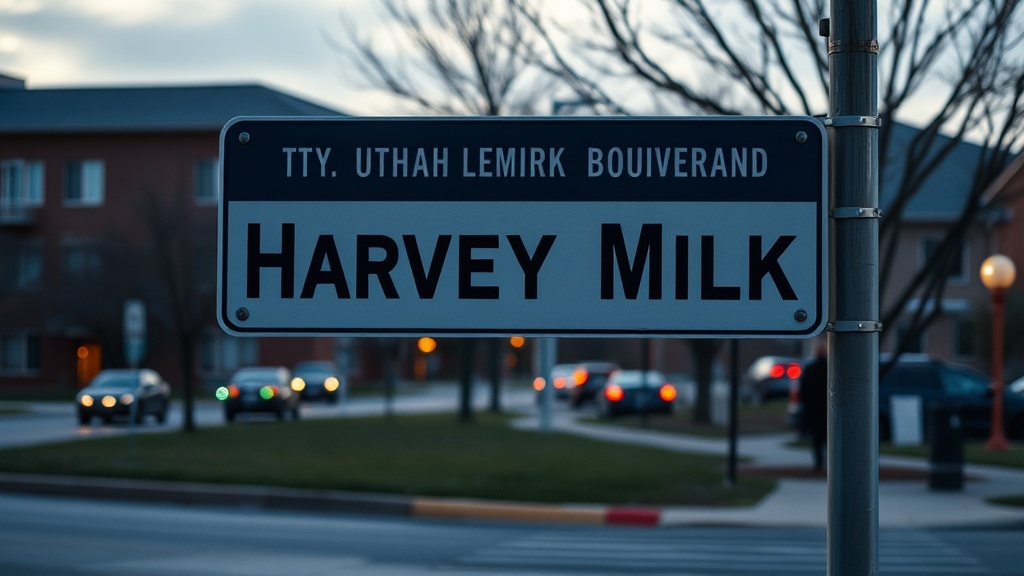
In a move stirring significant debate within the Utah community, Representative Trevor Lee (R-UT) has introduced legislation to rename Harvey Milk Boulevard in Salt Lake City to Charlie Kirk Boulevard. The proposal, which has already garnered a mix of support and opposition, aims to honor the conservative activist and founder of Turning Point USA, a prominent organization advocating for conservative values on college campuses.
Harvey Milk Boulevard, named after the late LGBTQ+ rights pioneer and the first openly gay elected official in California, holds historical significance as a symbol of progress in the fight for LGBTQ+ rights. Milk’s legacy is celebrated nationwide, making the proposed name change particularly contentious. As a prominent figure in the LGBTQ+ community, Milk's contributions to civil rights resonate deeply, especially in a state like Utah, where LGBTQ+ issues remain a focal point of social and political discourse.
The bill, which Representative Lee plans to formally introduce in the upcoming legislative session, has already sparked a range of reactions from local residents, advocacy groups, and political commentators. Supporters of the name change argue that Charlie Kirk represents a new wave of conservative activism that resonates with a segment of Utah's population. "Charlie Kirk has inspired countless young people to embrace conservative values and principles," said Lee in a statement. "It’s time we recognize leaders who are making a positive impact in our communities."
Critics of the proposal, however, contend that renaming the boulevard would erase a vital part of history and send a regressive message regarding LGBTQ+ rights. Local LGBT advocacy group, Equality Utah, released a statement condemning the bill, arguing that renaming the boulevard would undermine the progress made in the fight for equality. "Harvey Milk’s legacy represents hope and resilience for the LGBTQ+ community. Renaming this street would not only dismiss that legacy but also alienate countless individuals who find solace and inspiration in his story," said the group’s executive director, Troy Williams.
The controversy surrounding the proposed name change highlights broader tensions within Utah's sociopolitical landscape, where conservative and progressive values often clash. This state, known for its strong conservative base, also has a growing population of individuals advocating for social justice and equality, reflecting a more diverse set of beliefs and values. As Utah's demographics change, the conversation around representation and recognition becomes increasingly important.
In the past, similar proposals to rename streets or public spaces have raised questions about historical representation and the narratives that communities choose to uphold. The renaming of public spaces often serves as a barometer of societal values and priorities, prompting discussions about who is honored and why. This proposed change is no exception, as it places the spotlight on the ongoing struggle for LGBTQ+ rights, particularly in areas where conservative ideologies dominate.
In Salt Lake City, where Harvey Milk Boulevard is located, the conversation is particularly poignant. The city has made strides in recent years to support the LGBTQ+ community, from hosting Pride events to implementing policies aimed at protecting LGBTQ+ rights. The renaming of a street that symbolizes this progress could be seen as a step backward, according to many community members who fear the implications of such a change.
As the legislative session approaches, it remains to be seen how the bill will be received by lawmakers and constituents alike. Public hearings are expected, allowing residents to voice their opinions and concerns regarding the proposed name change. Many anticipate a heated debate, as both sides prepare to present their arguments for and against the renaming.
In a state where political discourse can be polarizing, this proposal serves as a reminder of the evolving nature of Utah’s identity. The discussion surrounding Harvey Milk Boulevard and its potential renaming to Charlie Kirk Boulevard underscores the complexities of honoring historical figures while navigating the contemporary landscape of social justice and political activism.
Ultimately, the fate of this legislation will likely reflect the ongoing dialogue about the values that Utahns hold dear as they navigate their collective past and future. As Representative Lee moves forward with his bill, the community will be watching closely, ready to engage in what promises to be a defining moment in the state’s ongoing conversation about equality, representation, and the legacies that shape our public spaces.