U.S. Strategy in Latin America: Consequences of Militarized Approaches to Crime
The U.S. government’s militarized approach to organized crime in Latin America raises concerns about its effectiveness and potential consequences.
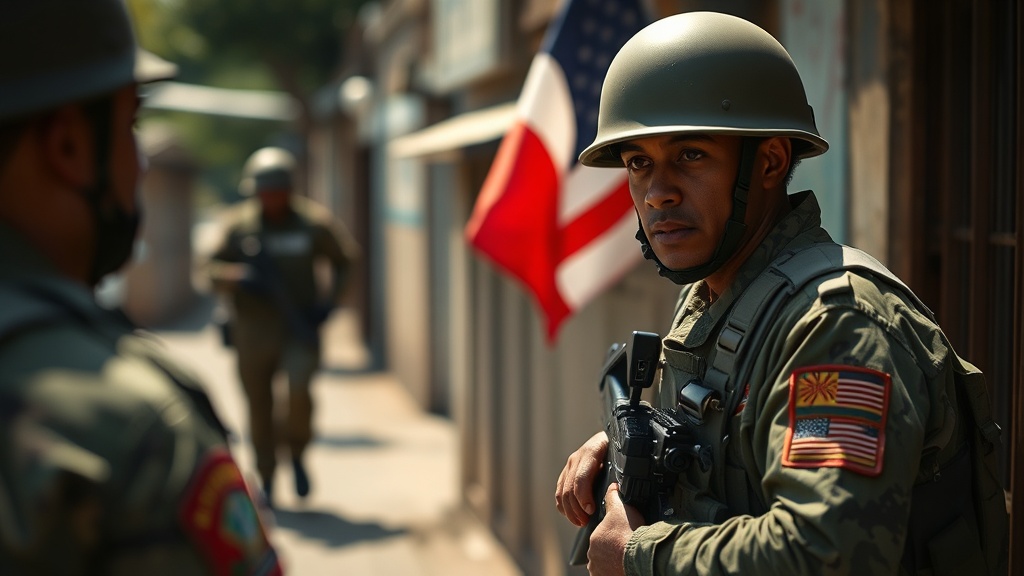
Sao Paulo, Brazil — The political landscape in Latin America is undergoing significant changes under the influence of the United States, particularly since President Trump resumed office. The U.S. government has increasingly classified organized crime as a critical national security threat, leading to a recalibration of its foreign policy in the region. This shift gained prominence with the recent capture of Nicolás Maduro, the Venezuelan president, who has long been accused of colluding with narco-traffickers. The U.S. administration has characterized the operation against Maduro as a necessary law enforcement action targeting a so-called 'narco-terrorist network,' thereby justifying a more aggressive posture toward various Latin American countries.
The operation in Caracas was not merely a singular event but part of a broader strategy aimed at dismantling perceived threats from organized crime throughout the Americas. U.S. officials have indicated that this approach could extend beyond Venezuela, with Mexico and Colombia also identified as potential targets. This escalation raises critical questions about the efficacy of militarizing the fight against organized crime and its potential to further entrench these networks rather than dismantle them.
Historically, the United States has engaged militarily in Latin America under the pretext of combating drug trafficking and organized crime. The so-called 'War on Drugs,' which began in the late 20th century, has often led to increased violence and instability in the region. Critics argue that a heavy-handed approach not only fails to resolve the underlying issues but also exacerbates them. As the U.S. government pursues a more aggressive stance, many experts warn of the likely consequences.
In Colombia, for instance, decades of U.S. military aid aimed at eradicating drug production have led to a cycle of violence with significant humanitarian costs. The Colombian government has struggled to maintain control over rural areas, which are often dominated by armed groups involved in drug trafficking. Similarly, in Mexico, the militarization of law enforcement has resulted in a surge of violence, with cartels adapting and becoming more entrenched in response to government crackdowns.
The implications of this militarized approach extend beyond immediate violence. The framing of organized crime as a national security threat can lead to the erosion of civil liberties and the undermining of democratic institutions. In many cases, governments may resort to heavy-handed tactics, sidelining judicial processes in favor of military action. This can create a climate of fear and distrust among citizens, further complicating efforts to build effective governance.
Moreover, the rhetoric surrounding 'narco-terrorism' has significant psychological and political ramifications. It often simplifies complex social and economic issues into a binary narrative of good versus evil, neglecting the myriad factors that contribute to the rise of organized crime, including poverty, corruption, and lack of opportunity. By framing the fight against organized crime as a war, the U.S. risks alienating local populations, who may view foreign intervention as an infringement on their sovereignty.
In light of these challenges, some experts advocate for a more comprehensive approach to addressing the root causes of organized crime. This could involve investing in economic development, education, and social programs that address the conditions that foster criminal activity. Building strong institutions and promoting the rule of law are also seen as crucial components in any sustainable strategy to combat organized crime.
As the U.S. government continues to recalibrate its policies in Latin America, the international community will be closely watching the outcomes of this aggressive approach. The potential for increased violence and instability poses significant risks not only for the countries involved but also for regional and global security. The U.S. must weigh the immediate benefits of military intervention against the long-term consequences of entrenching criminal networks.
In conclusion, while the fight against organized crime is a legitimate concern for national security, the methods employed must be scrutinized. The militarization of this struggle in Latin America may ultimately prove counterproductive, entrenching the very criminal networks that Washington seeks to dismantle. A multifaceted strategy that prioritizes social development and institutional strengthening may be necessary to achieve lasting peace and security in the region.