New Pipeline Project to Safeguard Water Supply for 1.6 Million Utahns
A new $100 million pipeline project aims to secure water supply for 1.6 million Utah residents amidst disaster risks.
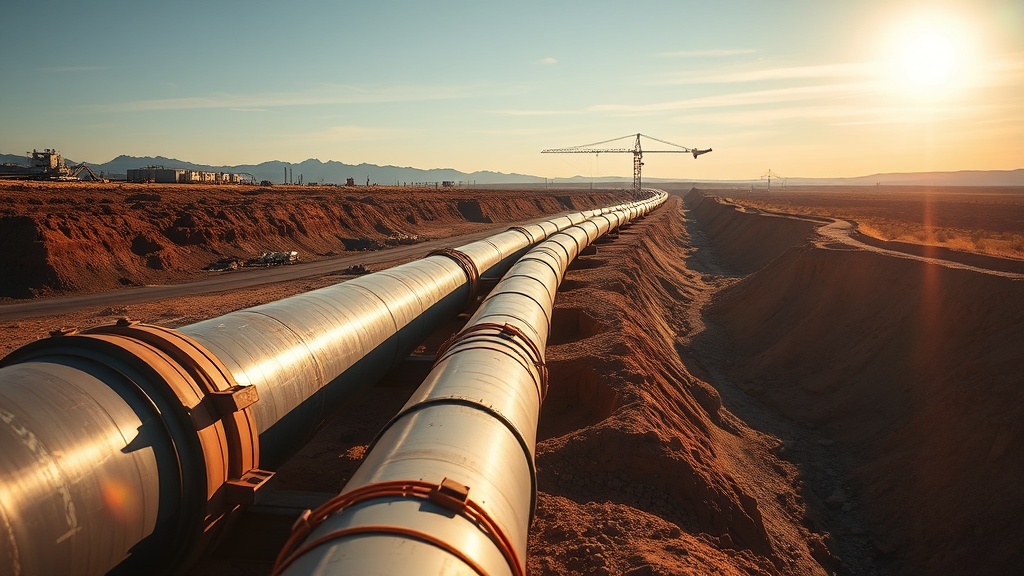
In a significant move to secure water resources for over 1.6 million residents along the Wasatch Front, crews have commenced drilling a tunnel in the mountains to reroute a vital water pipeline. This project, driven by the Central Utah Water Conservancy District, aims to mitigate the risks posed by seismic activity and landslides, ensuring a reliable water supply in the event of a disaster.
The $100 million project involves the construction of a 1,000-foot tunnel designed to redirect an aqueduct that transports water from the Colorado River Basin in eastern Utah through Provo Canyon into Utah and Salt Lake counties. The existing pipeline has been identified as vulnerable, crossing an area affected by an active landslide and two segments of the Wasatch Fault, which poses a heightened risk during an earthquake.
Chris Elison, who is overseeing the project for the Central Utah Water Conservancy District, emphasized the importance of the initiative. "In the event of an earthquake, this project is to provide us with an opportunity or the best chance of providing water," he stated during a tour of the construction site. The current pipeline’s integrity and reliability have come under scrutiny, and Elison noted that merely repairing the existing infrastructure would only serve as a temporary fix.
The construction crews are replacing the old pipeline with a new type of flexible Kubota pipe imported from Japan. This innovative piping system is designed to withstand seismic activity by bending and stretching as the ground shifts during an earthquake. Randy Lindwall, a representative from WWClyde, the construction company responsible for the project, explained the engineering behind the new system. "Rather than have a single piece of pipe that's going to try to flex during an earthquake, it has multiple rubber gaskets that allow for movement during the inevitable earthquake," Lindwall said, pointing to sections of the new pipe that will be able to flex and bend without breaking.
The motivation behind this ambitious project is rooted in the need for resilience in the face of natural disasters. Utah’s rapidly growing population and the increasing frequency of seismic events have prompted officials to take proactive measures to ensure that essential resources, such as water, remain accessible during emergencies. Rep. David Shallenberger, R-Orem, who also visited the site, remarked, "These are the types of projects that are looking at the future to help us get ready for the next hundred years along the Wasatch Front."
As construction progresses, the implications of this project extend beyond immediate disaster preparedness. It represents a forward-thinking approach to water management in a region that has faced challenges related to water scarcity and infrastructure aging. The new pipeline is expected to be completed by next year, marking a significant milestone in enhancing the reliability of Utah’s water supply.
Community members have expressed their support and interest in the project. Stacie Berardi, who accompanied her engineering student son on the tour, shared her amazement at the scale and importance of the undertaking. "I just had no idea what they're doing to get our water. Unbelievable," she said, highlighting the public’s growing awareness of infrastructure challenges.
This construction initiative is part of a broader conversation in Utah regarding water conservation and management, especially as lawmakers consider measures to enforce water conservation ordinances in cities across the state. As the population continues to grow and climate change impacts water availability, these discussions are becoming increasingly crucial to ensure sustainable water resources for future generations.
The new pipeline project not only addresses immediate concerns regarding earthquake vulnerability but also positions Utah for long-term water security. With careful planning and innovative engineering, officials hope to safeguard the water supply for residents, ensuring that in times of crisis, essential resources remain accessible. As this project unfolds, it serves as a reminder of the importance of investing in infrastructure to meet the needs of a changing environment and population dynamics. This article is published through the Colorado River Collaborative, a solutions journalism initiative supported by the Janet Quinney Lawson Institute for Land, Water, and Air at Utah State University. Further stories on how Utahns are affected by the Colorado River can be found at greatsaltlakenews.org/coloradoriver.