Groundbreaking Cloud Seeding Study Over Northern Wasatch Range Aims to Enhance Utah's Water Supply
A landmark cloud seeding study in Utah aims to evaluate its impact on snowfall and water supply amidst ongoing water shortages.
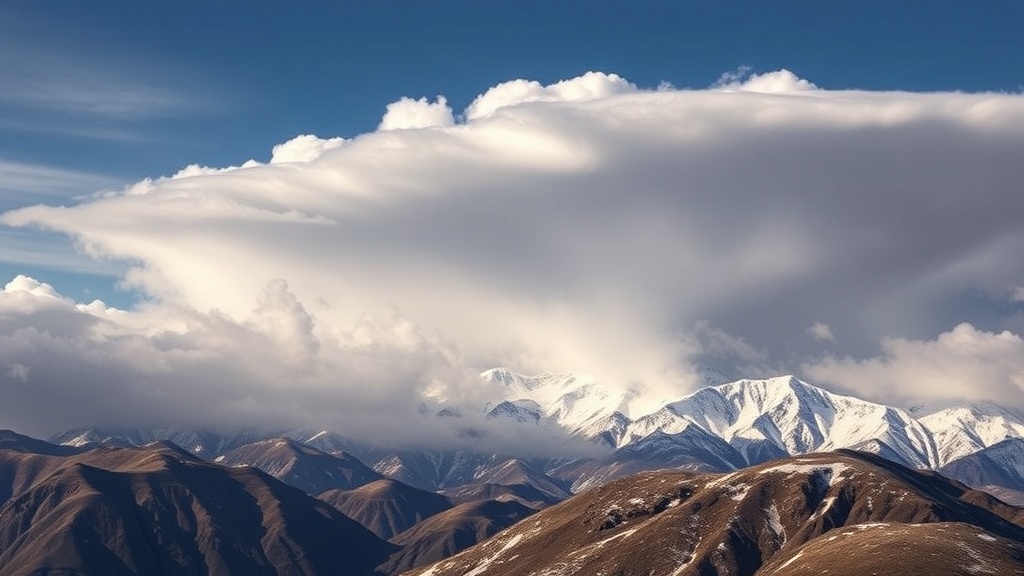
SALT LAKE CITY – In a significant advancement for water management in Utah, researchers are embarking on what is expected to be the largest cloud seeding study in the state’s history. For decades, cloud seeding has been a tool for increasing precipitation in the arid region, but this winter, scientists from the University of Utah and Utah State University are intensifying their efforts to evaluate the effectiveness of this controversial weather modification technique. The study, which focuses on winter storms over the northern Wasatch Mountains, aims to provide a deeper understanding of how cloud seeding influences snowfall and subsequent spring runoff, crucial components of Utah’s water supply.
Cloud seeding involves the introduction of silver iodide into the atmosphere during storms to stimulate additional precipitation. Jim Steenburgh, a professor of atmospheric sciences at the University of Utah, emphasized the importance of this research, stating, “We’re trying to understand winter storms in the northern Wasatch and the impacts of cloud seeding on those storms, and whether or not it’s having a major impact on both snowfall and runoff.” The project is described as the most extensive field campaign focused on mountain precipitation in Utah in at least two decades, and possibly the largest ever.
The scale of this project is unprecedented. Research teams have deployed dozens of advanced instruments around the northern Wasatch Range, many of which surpass the capabilities of typical weather sensors. These specialized tools are designed to analyze the internal structure of winter storms, utilizing cutting-edge laser technology to assess cloud properties such as liquid water content and storm evolution. Steenburgh noted, “These instruments are very different from typical weather instruments; they’re designed to tell us about the properties and characteristics of clouds.”
During the storms that are being seeded, researchers will meticulously monitor radar data and precipitation patterns. Their goal is to determine whether cloud seeding alters the structure of storms or enhances snowfall totals. This focused investigation comes on the heels of a substantial expansion of Utah’s cloud seeding program, prompted by the alarming drop in the Great Salt Lake’s water levels, which hit a record low in 2022. In response, state leaders allocated increased funding for cloud seeding initiatives, research, and the necessary infrastructure, viewing this as a critical strategy to address ongoing water shortages.
Jonathan Jennings, a meteorologist with the Utah Division of Water Resources, highlighted the long-term benefits of cloud seeding efforts. He explained that historical evaluations suggest that cloud seeding can increase precipitation by about six to twelve percent per storm. “While the gains may appear small, they can add up over time,” Jennings said. “Over the course of a decade, that’s an additional half year to a year of snowpack.” This incremental increase in snowpack is vital, as it serves as a primary water source during the spring runoff season.
In addition to traditional cloud seeding methods, researchers are exploring innovative drone technology, which could enable more precise targeting of cloud seeding efforts by allowing drones to fly directly into specific areas of winter storms. This approach could enhance the effectiveness of cloud seeding operations and further contribute to increasing precipitation.
Data collection for the study will continue through the spring runoff period, with scientists expressing optimism that the findings could extend beyond cloud seeding itself. The research may lead to improvements in mountain weather forecasting and snowfall predictions, which could be particularly beneficial for future significant events like the 2034 Winter Olympics, when accurate weather predictions will be crucial.
While the research team anticipates that it will take at least two years of analysis before final conclusions can be drawn, early findings are expected to inform Utah’s water management decisions for years to come. As the state grapples with the challenges of water scarcity, this comprehensive cloud seeding study stands as a critical endeavor to enhance the understanding and management of Utah’s precious water resources, ensuring a more sustainable water future for the region’s residents.
The implications of successful cloud seeding are profound, with potential benefits extending to agriculture, recreation, and overall water supply stability in a state that relies heavily on its mountain snowpack. As researchers continue their work, the results of this groundbreaking study could reshape how Utah approaches its water management strategies in the face of climate variability and growing demand.
For those interested in the latest weather conditions and forecasts, the Utah Weather Authority app offers real-time updates and severe weather alerts, providing residents with essential information to navigate the changing climate.