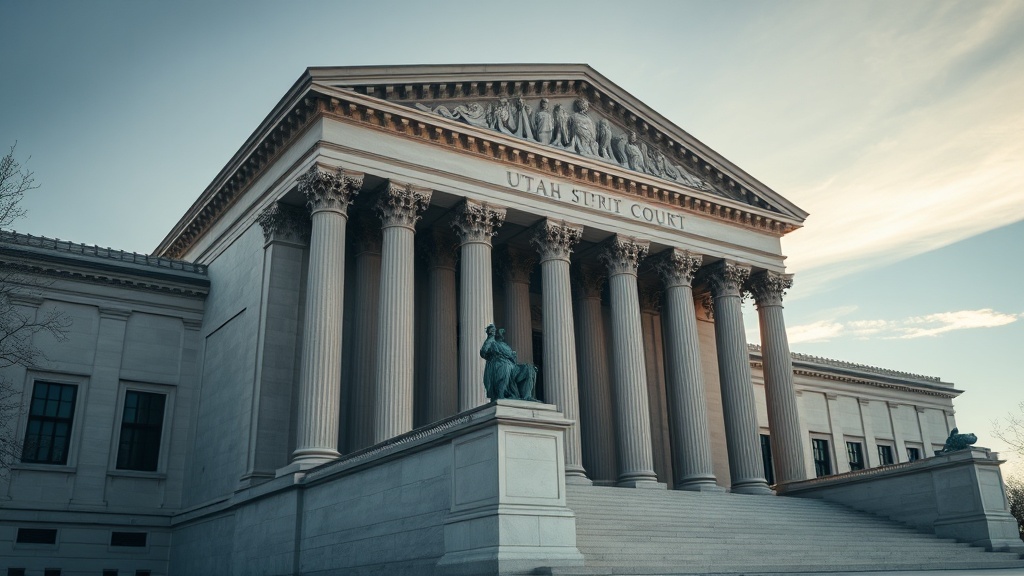
Governor Cox Expands Utah Supreme Court with New Justices Amid Controversy
Governor Spencer Cox signs a bill adding justices to the Utah Supreme Court, prompting debates on judicial independence.
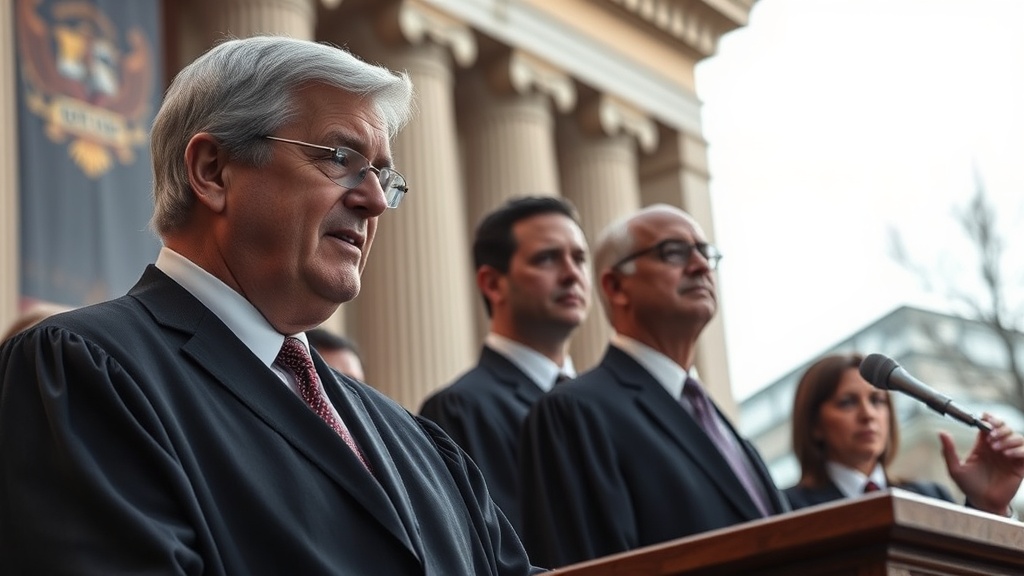
In a significant move that has sparked both support and criticism, Governor Spencer Cox officially signed Senate Bill 134 on Saturday, which adds two justices to the Utah Supreme Court. This decision marks a pivotal change in the state's judicial landscape, as it aims to address the increasing demands placed on the judiciary due to rising caseloads. The bill also includes provisions for additional judges in the Utah Court of Appeals and district courts, a development that has been long advocated by the judicial branch itself.
The signing of SB134, which was largely backed by Republican legislative leaders, has been framed as a necessary response to the growing workload facing Utah's courts. Legislators argue that the additional justices and judges will help alleviate bottlenecks in the legal system and ensure that all cases are handled in a timely manner. "For years, the judicial branch has requested more resources to effectively manage its increasing caseloads," stated Senate President Stuart Adams. "This legislation is a direct response to those needs."
Despite the justifications presented by proponents of the bill, critics have voiced serious concerns about the motivations behind the legislation. Detractors, including various legal experts and advocacy groups, have accused Republican leaders of attempting to manipulate the judicial system to align with their political goals. They argue that this expansion of the court is a strategic move to influence decisions on controversial issues such as independent redistricting, abortion rights, and environmental regulations—areas where the courts have recently made rulings that did not favor the GOP agenda.
The bill’s passage comes at a time when tensions between branches of government have been palpable, particularly regarding judicial independence. Legal analysts have pointed out that while addressing caseloads is a legitimate concern, the timing and context of this legislation raise red flags about the integrity of the judicial system. “It is essential for the judiciary to remain independent and impartial, free from political manipulation,” noted Professor Emily Johnson, a constitutional law expert at the University of Utah. “The fear is that adding justices could lead to a court that reflects political ideologies rather than judicial fairness.”
In the lead-up to the bill's signing, public discourse surrounding the judiciary's role and the balance of power among branches of government intensified. Many advocates for judicial reform have called for nonpartisan measures to ensure that the justice system remains fair and accessible to all citizens, regardless of political affiliation. These advocates argue that the current political climate necessitates a cautious approach to any expansion of the judicial branch.
In addition to the changes to the Supreme Court, Governor Cox also signed the state’s base budget bills on the same day, which allocate billions of dollars to maintain essential government functions. The budget bills were deemed crucial for the ongoing operations of various state services, including education, healthcare, and public safety. By prioritizing both the judiciary and budgetary needs, Cox is navigating a complex political landscape that requires balancing immediate operational needs with long-term institutional integrity.
As this new chapter unfolds for the Utah Supreme Court, the implications of these changes will be closely monitored by legal experts, policymakers, and the public alike. The additional justices are expected to be appointed in the coming months, and the process for selecting these candidates will also be scrutinized. The potential for significant shifts in the court's rulings on pressing social issues remains a topic of heated debate.
In conclusion, while the addition of justices to the Utah Supreme Court may provide relief for an overburdened judiciary, it also raises critical questions about the intersection of law and politics in the state. As Utah navigates these changes, the balance of power within its judicial system will be more important than ever, with both advocates and critics watching closely to see how this legislative move will shape the future of the state's legal landscape.