Controversial Utah Bill Proposes Renaming Street for Charlie Kirk Amid Backlash
A proposed Utah bill to honor conservative activist Charlie Kirk by renaming a Salt Lake City street has sparked backlash from local leaders and LGBTQ+ organizations.
In a move that has sparked significant controversy, a proposed bill in Utah aims to rename a street in Salt Lake City to honor Charlie Kirk, a conservative activist and founder of Turning Point USA. The proposal, introduced in the Utah State Legislature, has drawn sharp criticism from local officials, LGBTQ+ organizations, and community members who view the bill as a provocative gesture that undermines the city’s commitment to inclusivity.
The bill, titled SB 123, was filed by State Senator Michael McKell, a Republican representing the Spanish Fork area. McKell has positioned the bill as a way to honor Kirk for his advocacy and influence within conservative circles. "Charlie Kirk has been a leading voice for young conservatives, and his dedication to promoting conservative values deserves recognition," McKell stated during a press conference announcing the bill.
However, the proposed renaming has raised alarms among local leaders. Salt Lake City Mayor Erin Mendenhall expressed her concerns about the implications of such a change. "Renaming a street is not just a matter of signage; it affects the identity of our community. We strive to create an inclusive environment for everyone, and this proposal feels like a step backward," Mendenhall said.
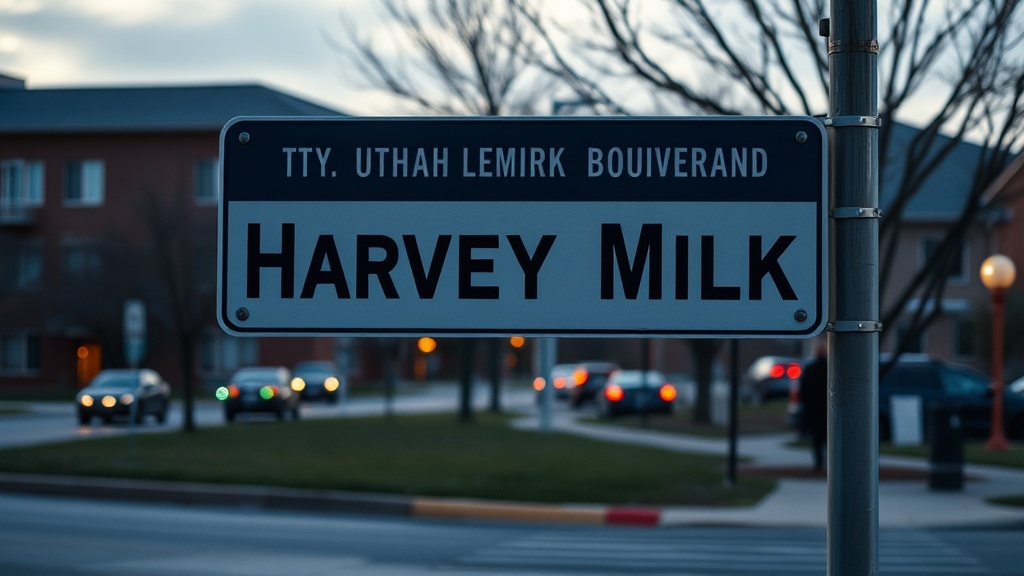
The street targeted for renaming is currently named after a prominent LGBTQ+ politician, a move seen by many as an attempt to erase the history and contributions of marginalized communities. The street in question, which runs through a vibrant neighborhood known for its diverse population, has long been symbolic of Salt Lake City’s progressive values. LGBTQ+ advocacy groups, including Equality Utah, have voiced their opposition to the bill, arguing that it represents a broader trend of marginalization.
"This is not just about a street name; it’s about visibility and recognition of the contributions made by LGBTQ+ individuals in our community," said Troy Williams, Executive Director of Equality Utah. "To replace a name that honors progress and inclusion with one that aligns with divisive politics sends a harmful message."
The bill has also ignited discussions around the legislative process in Utah. Critics argue that the proposed bill was introduced without adequate community engagement or consultation. Local activist groups have called for a public forum where residents can voice their opinions and concerns regarding the proposed changes. "Legislation that impacts our community should involve our community," said activist Sarah McBride. "This top-down approach is not how democracy should function."
Supporters of the bill, however, argue that it reflects a growing sentiment among conservative constituents who feel disenfranchised in a city that has increasingly leaned toward progressive policies. Proponents believe that recognizing Kirk would inspire young conservatives and validate their perspectives in a predominantly liberal environment.
Despite the backlash, McKell remains steadfast in his support for the bill. "We need to ensure that all voices are heard in our public spaces. Charlie Kirk represents a significant portion of our population, and it’s time their contributions are acknowledged," he remarked.
The bill is set to be discussed in committee in the coming weeks, where lawmakers will debate its merits and the potential impact on the community. If passed, the legislation would require the approval of the Salt Lake City Council to officially change the street name, adding another layer of complexity to the proposal.
As the bill moves forward, community members are bracing for a heated debate. Many are planning to attend upcoming legislative sessions to voice their opinions. "We won’t sit back and allow this to happen without a fight," said local resident and activist Jonathan Reyes. "This is our home, and we have a right to protect our community’s values and history."
The outcome of this bill could set a precedent for how street names are determined in Salt Lake City and potentially across Utah. As the state grapples with questions of identity, representation, and the legacies of its citizens, the discussions surrounding SB 123 are likely to resonate well beyond the walls of the legislature. The decision could either reinforce or challenge the narrative of inclusivity and acceptance that many in Salt Lake City hold dear.
As the bill progresses, it remains to be seen how community engagement efforts will shape the final decision. Local organizations are mobilizing to ensure that their voices are heard. "We are committed to standing up for the values that define us as a community," Williams stated, emphasizing the importance of unity in the face of divisive politics.
In the coming weeks, Salt Lake City will watch closely as this contentious bill unfolds, highlighting the ongoing struggle for representation and recognition in a rapidly changing cultural landscape.