Utah Secures Enhanced Role in National Forest Management with New Federal Agreement
Utah secures a significant role in managing national forests with a new federal agreement, expanding state authority amid wildfire concerns.
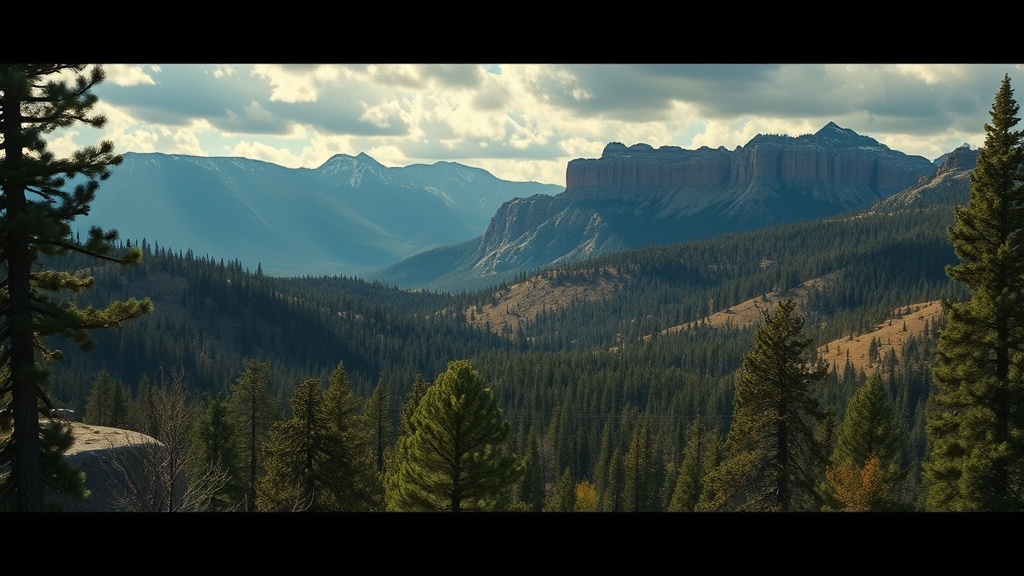
In a landmark agreement finalized on Thursday, Utah has gained a significant role in managing its national forest lands, which encompass over 7 million acres. This development marks a pivotal shift for the state, which has long sought greater involvement in decisions regarding the stewardship of these public lands. The agreement was signed by Utah Governor Spencer Cox and U.S. Forest Service Chief Tom Schultz at the Utah State Capitol, symbolizing a cooperative federalism approach to land management that aims to address both environmental concerns and economic interests.
Governor Cox expressed his enthusiasm for the agreement, stating, "This is something we’ve been working for — wanting — literally, for generations in our state. And now the moment is here where we can be involved on the front end of these decisions." The agreement allows Utah to participate actively in decisions related to logging, cattle grazing, recreation, wildlife management, and forest restoration, thereby expanding the state's authority compared to previous, more limited arrangements.
The new deal positions Utah as the third state to formalize such an agreement with the Forest Service this year, following Idaho and Montana. The compacts arise amidst federal directives to expedite timber sales and logging projects as a means to mitigate wildfire risks, a priority emphasized by President Donald Trump earlier this year. The administration has focused on enhancing state partnerships to tackle what it describes as an urgent crisis in national forest management, citing severe wildfires and other ecological challenges.
Forest Service Chief Tom Schultz articulated the significance of the agreement, stating, "The term I like is cooperative federalism, but there’s a role for the states to manage federal lands, and that’s what we’re doing here today." This approach aims to provide states with a more substantial voice in land management decisions, rather than merely offering input.
However, the agreement has sparked criticism from conservation groups, who argue that it could lead to an expansion of commercial logging under the guise of wildfire management. Laura Welp from the Western Watersheds Project cautioned that relying on timber removal as a wildfire prevention strategy oversimplifies the issue. She pointed to the myriad factors contributing to wildfire severity, including climate change and weather patterns, and advocated for habitat restoration practices that involve smaller-scale operations rather than large commercial logging initiatives.
Critics like Steve Bloch, legal director at the Southern Utah Wilderness Alliance, expressed concerns that the agreement could marginalize other stakeholders, stating, "This change sets the stage for Utah officials to have both a heavy hand and the loudest voice in how our national forests are managed, crowding out all other stakeholders." He emphasized the need for balanced management that considers the diverse interests of the public.
In response to these criticisms, Joel Ferry, executive director of the Utah Department of Natural Resources, defended the agreement, asserting that it is not a giveaway to the timber industry. "I wouldn’t agree with that," Ferry said. "We take our environment very seriously. We care for it. It’s part of who we are." This sentiment resonates with local stakeholders who believe that improved management could enhance forest health and resilience against wildfires.
The agreement, which applies to over 8 million acres of national forest and adjacent lands in Utah, does not extend to other federally managed lands overseen by the Bureau of Land Management and the National Park Service. This delineation is crucial as it highlights the specific scope of the new management framework.
Leland Pollock, a rancher and chair of the Garfield County Commission, attended the signing event and has been an advocate for reduced federal oversight of public lands. Pollock acknowledged the importance of the agreement but dismissed concerns about it leading to greater state control over other public lands, stating, "Oh, hell, no, don’t say that. We’re not going to make the forest unhealthy or worse. We’re going to make it better."
As federal and state authorities embark on this new chapter in forest management, all eyes will be on how the agreement plays out in practice. Stakeholders from various sectors will be watching closely to ensure that the balance between environmental stewardship and economic interests is maintained. The implications of this agreement not only affect Utah's forests but could also set a precedent for similar arrangements in other states, redefining the relationship between state and federal management of public lands for years to come.