Utah's Tourism Industry Remains Steady in 2025 Amid International Visitor Decline
Utah's tourism industry held steady in 2025, but international visitor numbers, especially from Canada, saw a significant decline.
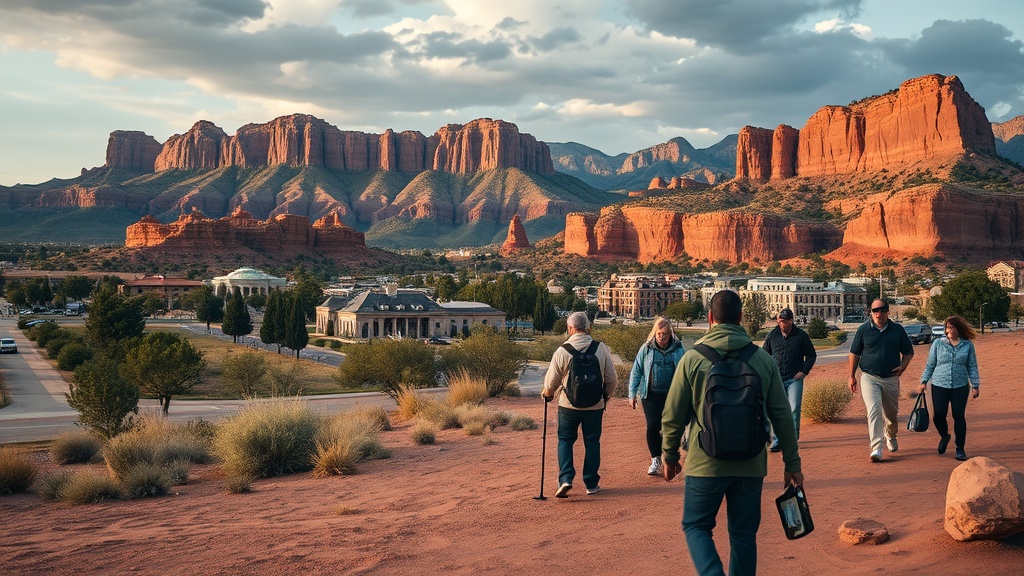
SALT LAKE CITY - Utah's tourism sector, a vital component of the state's economy valued at approximately $13 billion, showcased surprising stability in 2025, despite noticeable shifts in visitor demographics. Through November, key metrics such as national park visits, hotel occupancy rates, and spending patterns among domestic tourists remained largely consistent with the previous year. This trend raises questions about the future of tourism in the state, particularly with a significant decline in international visitors, especially from Canada, which has historically been Utah’s largest international market.
According to Jennifer Leaver, a senior tourism analyst at the Kem C. Gardner Policy Institute in Salt Lake City, the political climate and the fluctuating strength of the Canadian dollar against the U.S. dollar have played critical roles in this downturn. "The political tensions are probably playing into this," Leaver stated, noting that many Canadians may be hesitant to travel to the U.S. amidst ongoing geopolitical issues. The current exchange rate has also made travel to the U.S. less attractive for Canadian tourists, leading to an estimated 19% decline in their visits to Utah. Additionally, European travelers are expected to decrease by 2% to 3% compared to previous years, further impacting overall tourism metrics.
The impact of these changes is clearly illustrated in specific regions within Utah. For instance, the city of Moab, known for its stunning landscapes and outdoor recreational opportunities, publishes a tourism dashboard that tracks various statistics. Recent data indicates that while domestic spending on Visa credit cards has seen a slight uptick in 2025, international spending has significantly decreased, with a drop of over $1 million. This decline underscores the challenges faced by local businesses that rely heavily on foreign tourists.
Looking ahead, Leaver remains optimistic about the potential for Utah to attract more international travelers in the future. She noted that upcoming mega-events in 2026, such as the FIFA World Cup, the America 250 celebrations, and the centennial of Route 66, could serve as catalysts for increased foreign tourism. Although no World Cup games are scheduled to take place in Utah and Route 66 does not extend into the state, Leaver believes these events will raise awareness about the U.S. as a travel destination, indirectly benefiting Utah.
Moreover, Leaver pointed out that there are untapped international markets that Utah could potentially explore. "I think there definitely are opportunities abroad, especially as we've seen some growth trends from South America in recent years," she said. This suggests that while the current landscape may appear challenging, there are avenues for growth that could be pursued to diversify Utah's tourism portfolio.
Tourism officials in Utah are now exploring strategies to adapt to these changing dynamics. Efforts are underway to enhance marketing initiatives targeting international visitors, particularly those from emerging markets. By focusing on unique experiences that showcase Utah’s natural beauty, outdoor adventures, and cultural offerings, stakeholders hope to entice more foreign travelers to the state.
In conclusion, while Utah's tourism industry remains relatively stable in 2025, the decline in international visitors, particularly from Canada, poses challenges that could influence future growth. Stakeholders are cautiously optimistic, eyeing upcoming events and potential new markets as avenues for revitalization. As the state navigates these complexities, a concerted effort to broaden its appeal to a diverse array of visitors will be crucial in maintaining its position as a premier travel destination in the years to come.