Utah's Defining Moments of 2025: Politics, Sports, and Community Challenges
Utah reflects on a transformative 2025 marked by political shifts, sports milestones, and community challenges.
As 2025 draws to a close, Utah finds itself at a crossroads, reflecting on a year marked by significant events that shaped the state's political landscape, sports culture, and community resilience. From contentious redistricting battles to the establishment of a new NHL team, the year has been nothing short of transformative. In December, Fox 13 News revisits these defining moments, offering a comprehensive overview of the headlines that resonated throughout the Beehive State.
The political arena saw a seismic shift in 2025, primarily driven by a redistricting battle that has been described by political scholars as a defining moment for Utah. Typically occurring every ten years following the census, redistricting took on an unusual urgency this year as several states, including Utah, engaged in mid-decade map adjustments. This was catalyzed by Texas Governor Greg Abbott's swift action in August to finalize new congressional maps, which many Democrats denounced as a partisan power grab. Following this trend, six states, including Utah, North Carolina, and Ohio, implemented new congressional maps.
In Utah, however, the redistricting process ignited controversy. The League of Women Voters of Utah and Mormon Women for Ethical Government filed a lawsuit against the Utah State Legislature, arguing that the new maps undermined voters' will by disregarding Proposition 4. This proposition had established an independent redistricting commission aimed at creating fair congressional boundaries. The plaintiffs contended that the legislature's map was a blatant act of gerrymandering designed to favor Republican candidates.
In a landmark ruling, Judge Gibson sided with the plaintiffs, declaring that Proposition 4 remains law and invalidating both the legislature's map and those proposed by the independent commission. The ruling mandated the legislature to draft new maps, a process that they undertook amid ongoing protests and appeals, asserting their constitutional authority to determine the boundaries. As the year concluded, Judge Gibson permitted the legislature to appeal her ruling to the Utah Supreme Court, leaving the final decision in the hands of the state's highest court.
In the realm of sports, Utah welcomed its NHL team under a new name: the Utah Mammoth. Announced on May 7, this name came after extensive community engagement and symbolizes the team's commitment to Utah's culture and identity. Team owners Ryan and Ashley Smith expressed their excitement, emphasizing that the Mammoth represents the collective strength and spirit of the state. The unveiling of the team's mascot, Tusky the Mammoth, further energized fans, marking a new chapter in Utah's burgeoning hockey scene.
However, the year was not without its tragedies. A fatal shooting during a protest in downtown Salt Lake City on June 14 left local fashion designer Afa Ah Loo dead. The incident occurred during a largely peaceful “No Kings” protest when an armed individual sparked a confrontation. The shooter, volunteer peacekeeper Matthew Alder, mistakenly shot Ah Loo while attempting to engage the armed man. Gamboa, the individual carrying the rifle, was released without charges initially, leading to public outcry. It wasn't until December that Alder faced charges related to the shooting, stirring discussions about gun violence and public safety.
In a separate incident, three people, including an infant, were killed in a shooting at the WestFest festival in West Valley City on June 15. The tragedy struck when a targeted shooting claimed the lives of 41-year-old Fnu Reena, who was a bystander and pregnant at the time, along with 8-month-old Anderson Garcia Cabrera Junior. The shooting prompted outrage and led to the arrest of 16-year-old Matthiz Cantre Lauti Ioane-Register, who faced multiple charges, including aggravated murder.
The state also grappled with a public health crisis as a measles outbreak swept through Utah, with 156 cases confirmed by the end of June. Health officials highlighted that a significant portion of those infected were unvaccinated, igniting discussions about vaccination policies and public health strategies. Amidst rising cases, healthcare providers urged caution during the holiday season, emphasizing the importance of vaccination to curb the spread of the virus.
Additionally, the summer of 2025 was marred by devastating wildfires that ravaged thousands of acres, displacing families and prompting community efforts for recovery. The Forsyth Fire, which ignited in June, burned over 15,000 acres and destroyed multiple homes, while the Monroe Canyon Fire became the largest wildfire of the year, consuming 73,721 acres before it was finally contained.
In a shocking turn of events, conservative podcaster Charlie Kirk was shot and killed during a speaking engagement at Utah Valley University on September 10. Just moments before the shooting, Kirk had been engaged in a dialogue about gun violence. The alleged shooter, Tyler Robinson, was apprehended days later, leading to heightened discussions about campus safety and gun rights in America.
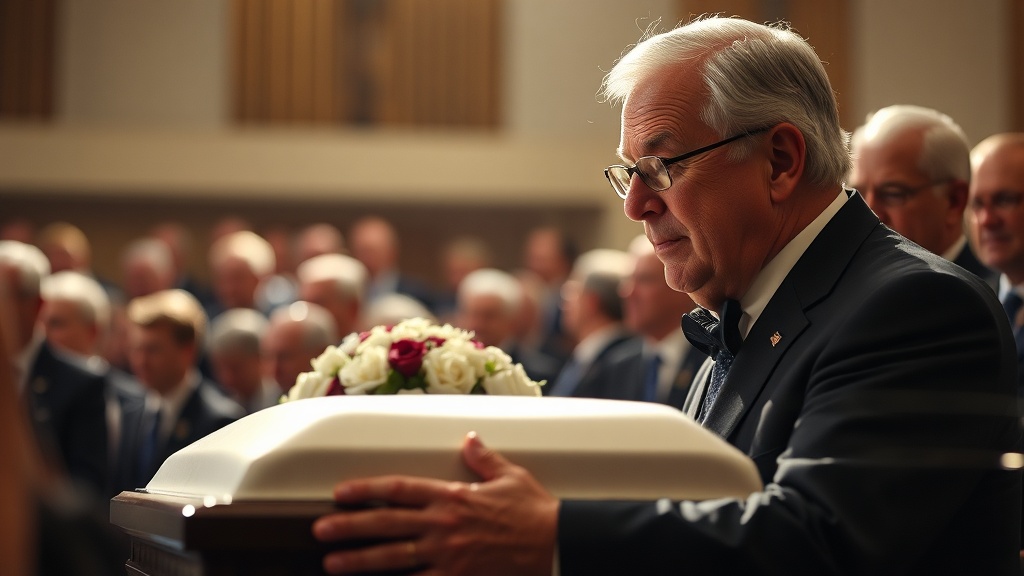
As the year concluded, Utah also witnessed a leadership transition within The Church of Jesus Christ of Latter-day Saints following the death of President Russell M. Nelson, who passed away at the age of 101. His funeral drew thousands, marking the end of an era for the church and ushering in a new leadership under Dallin H. Oaks.
In summary, 2025 has been a year of both triumphs and tragedies for Utah. While the political landscape changed dramatically and sports culture flourished with the introduction of the Utah Mammoth, the state also faced significant challenges, including public safety issues and health crises. As Utahns move into 2026, the lessons learned and the resilience demonstrated in the face of adversity will undoubtedly shape the future of this vibrant state.