Utah Judge Orders Return of Deportee Following Court Order Violation
A Utah judge orders the return of deported man after violation of court order, raising concerns about ICE's communication practices.
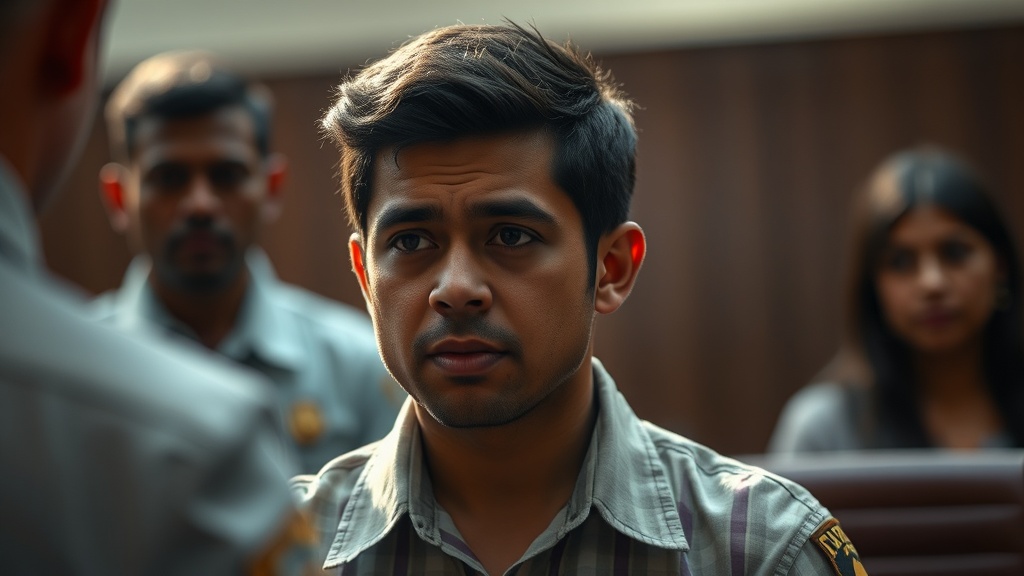
In a significant legal decision, U.S. District Judge Jill Parrish has ordered the Department of Homeland Security (DHS) to facilitate the return of Federico Reyes Vasquez to Utah from Jalisco, Mexico, within 21 days. This ruling comes after Reyes Vasquez's deportation was deemed a direct violation of a court order that had mandated he remain in the United States while his legal case was pending. The case has raised serious questions about the communication practices of U.S. Immigration and Customs Enforcement (ICE) and the rights of individuals facing deportation.
Federico Reyes Vasquez, a 43-year-old man who has spent over two decades living in Orem, Utah, was detained by ICE on December 19, 2022. According to his attorney, Alec Bracken, Reyes Vasquez was apprehended while accompanying a friend who was also targeted by ICE agents. Bracken promptly filed a habeas corpus petition the same day, seeking to clarify Reyes Vasquez's status and challenge his detention. On December 22, just three days after his detention, Judge Parrish issued an order that Reyes Vasquez should not be removed from the U.S. while the court reviewed the petition.
However, in a turn of events that surprised both Reyes Vasquez's family and his legal team, he was deported to Mexico the very next day. "The government hadn't contacted us at all or told us anything about what was happening," Bracken explained. This lack of communication has been a recurring issue in similar cases, according to Bracken, who noted that the ICE office in Salt Lake City has effectively disabled its public inquiry line, further complicating access to information for families and legal representatives.
Bracken's attempts to reach the ICE office for clarification were unsuccessful. When he called the inquiry line, the call was abruptly disconnected after navigating an automated system. This has prompted Bracken to pursue a separate lawsuit aimed at reinstating the public inquiry line, which he argues is essential for transparency and accountability in the immigration process.
As the case unfolds, Reyes Vasquez's family is grappling with the emotional and economic fallout of his deportation. According to Bracken, Reyes Vasquez does not have a criminal history but is a Mexican citizen without legal status in the U.S. He is, however, the father of three U.S. citizen children. Reyes Vasquez's son, Esggar Reyes, expressed the family's anguish in a statement: "Our family is heartbroken and still trying to process everything. My dad was deported just two days before Christmas, which made the situation even more devastating. We're living with constant sadness, fear, and uncertainty."
Esggar further detailed the impact of his father's deportation on their family and their business, stating, "His absence has affected not only our family but also the livelihood connected to that business. The judge's ruling gives us a sense of hope during an incredibly difficult time. It shows that there is still a chance for my dad to come back home to Utah, where his family and business are."
The emotional toll of such deportations extends beyond the immediate family; it reverberates through the community and local economy. Reyes Vasquez's deportation has not only disrupted his family's living situation but also jeopardized the family business he had worked tirelessly to build. His family’s struggle underscores the broader issues surrounding deportations and immigration enforcement in the United States.
As the legal process continues, Bracken emphasizes that the rights of all individuals, regardless of their immigration status, must be upheld. He stated, "I want people to think about their family. What would they want to have happen for someone in their life that's accused of something?" While there may be a possibility that Reyes Vasquez is ultimately deported, Bracken insists that due process must be followed to ensure fairness in the legal system.
The case has attracted attention not only for its immediate implications for Reyes Vasquez and his family but also for the broader questions it raises about the immigration system in the United States. As families continue to navigate the complexities of immigration law, the need for transparent communication and legal protections becomes increasingly critical.
In response to the ruling, the local ICE office has yet to provide any official comment regarding the circumstances surrounding Reyes Vasquez’s deportation and the subsequent court order. As the family and their legal team await further developments, the case serves as a poignant reminder of the human impact of immigration policies and enforcement practices.
As the deadline for Reyes Vasquez's return approaches, his family remains hopeful. "We are holding onto hope and praying for his return so our family can be reunited and our lives can begin to heal," Esggar Reyes said, encapsulating the emotional weight of their situation. The coming weeks will be crucial as both legal and personal battles unfold in this deeply affecting case.