Utah Implements Wastewater Surveillance to Monitor Measles Outbreaks
Utah is utilizing wastewater surveillance to track measles outbreaks, but significant gaps exist in testing coverage across the state.
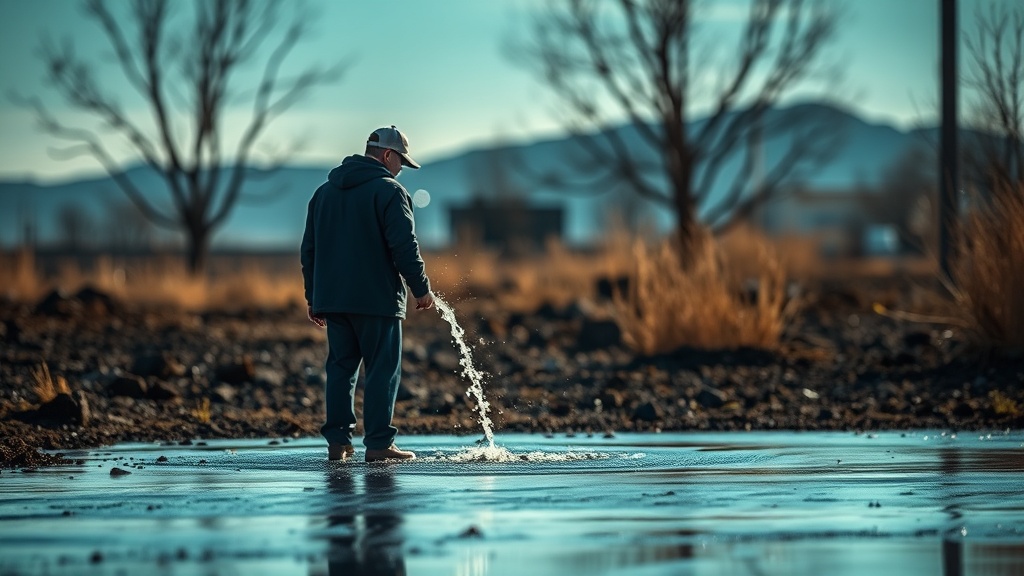
In a proactive move to combat the spread of measles, Utah has adopted wastewater surveillance as a key public health tool. This method, which gained prominence during the COVID-19 pandemic, involves analyzing wastewater for viral traces to track disease activity across communities. Public health officials assert that this approach can provide earlier warnings of outbreaks and complement traditional surveillance methods that often depend on reported cases and contact tracing.
Nathan LaCross, the manager of Utah’s wastewater surveillance system, emphasized the importance of this innovative technique. "It started with COVID, and that’s how wastewater surveillance as a sort of long-term, broad-scale public health surveillance tool really got going," he stated. LaCross noted that almost every state in the U.S. has implemented similar programs to monitor public health.
The integration of wastewater data into measles surveillance across the state aims to enhance the understanding of disease spread. LaCross pointed out that while conventional methods such as clinical case reporting and contact tracing are critical, they often fail to provide a complete picture of disease prevalence. "Just having additional data available is proving, in some ways, more reliable than some of the more traditional data streams," he said. "The data we get from clinical case finding and contact tracing is extremely valuable, but we know it is also extremely incomplete."
Despite this advancement, significant gaps exist in Utah's wastewater testing network, particularly in central and southeastern regions. State data reveals that large areas, including the jurisdictions served by the Central Utah Health Department (CUHD) covering six counties—Juab, Millard, Piute, Sanpete, Sevier, and Wayne—are not included in the current wastewater surveillance program. Additionally, San Juan County has not reported any sampling.
LaCross attributed these gaps to budget constraints, explaining that the state had to reduce the frequency of sampling due to cost. "We had to scale back when we went from sampling once per week to twice per week because it is about twice as expensive to do," he said. This funding issue has raised concerns about the ability to effectively monitor measles in regions where surveillance is lacking.
In a statement to FOX 13 News, the CUHD clarified that the decision to discontinue wastewater testing in their district was made by the Utah Department of Health and Human Services (UDHHS) without consultation with local health officials. The CUHD's statement highlighted that previous testing was deemed not cost-effective. "Upon inquiry regarding this decision, the CUHD was informed by UDHHS that previous wastewater surveillance testing was discontinued because it was not cost-effective to test within the health district," the statement read.
Despite the absence of wastewater data, measles cases have recently been identified in central Utah through traditional surveillance methods. Health officials have reiterated the importance of vaccination as the most effective means of preventing infection and limiting community spread. The CUHD emphasized that the message surrounding measles response in central Utah remains unchanged: vaccination is essential for building herd immunity and curbing further transmission of the virus.
LaCross stressed the importance of understanding diseases in populations and emphasized that the goal is to reduce the severity of outbreaks or ideally prevent them altogether. "We study diseases in populations and how to make them less severe and ideally prevent them altogether. That’s a tough ask, but that’s always our gold standard," he said.
To keep residents informed about disease trends, the Utah Department of Health and Human Services publishes wastewater surveillance data on a public online dashboard. Recent updates to this dashboard include measles data, which is now reported at the local health department level. This resource allows Utahns to stay informed about the health status of their communities and any emerging threats.
For those interested in tracking the data, the dashboard is accessible on the DHHS website. As measles continues to pose a threat to public health, the importance of comprehensive surveillance methods, including both traditional and innovative approaches like wastewater testing, cannot be overstated. With the ongoing evolution of surveillance strategies, Utah aims to bolster its defenses against the spread of this highly contagious disease and protect the health of its residents.