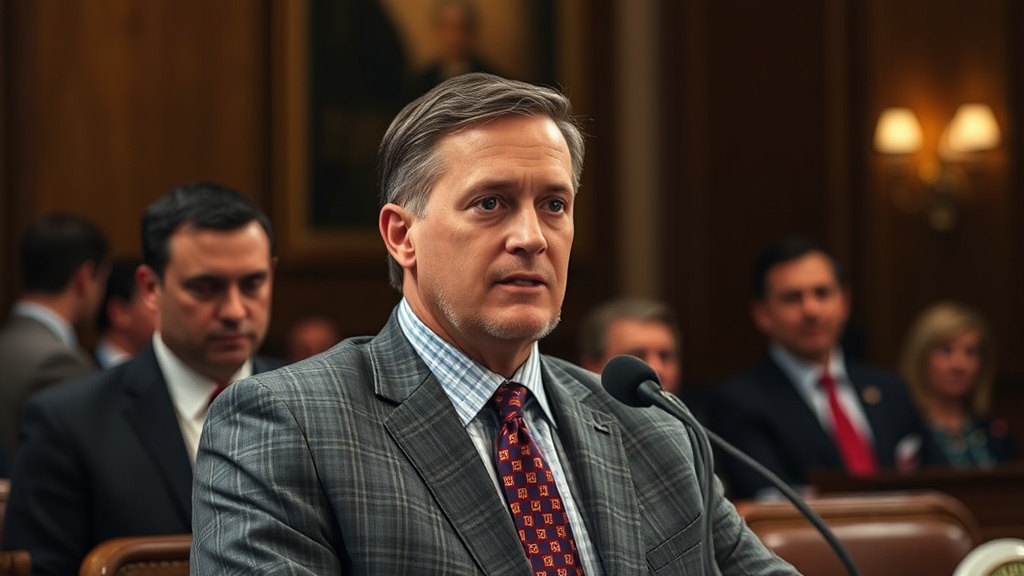
Utah Governor Proposes New Tax on Social Media Companies to Protect Children
Utah Governor Spencer Cox proposes a tax on social media companies to protect children, addressing mental health concerns linked to online use.

In a bold move aimed at addressing the growing concerns surrounding the influence of social media on youth, Utah Governor Spencer Cox announced on Tuesday his intention to introduce a tax targeting major tech companies, particularly social media platforms. This initiative is part of a broader campaign to mitigate the potential negative impacts of online interactions on children and adolescents. The proposal reflects a growing sentiment among lawmakers nationwide regarding the need for increased accountability from social media giants.
The Governor's announcement came during a press conference where he emphasized the urgent need to create safer online environments for young users. 'We cannot ignore the evidence that suggests social media can have detrimental effects on the mental health of our children,' Cox stated. 'This tax is not just about generating revenue; it is about holding these companies accountable for the role they play in the lives of our youth.' By imposing a financial responsibility on social media companies, Cox aims to encourage them to take more significant steps in safeguarding their platforms against harmful content.
The proposed tax is designed to target revenues generated by social media companies operating within Utah. While specific tax rates and structures are still under discussion, lawmakers are considering a model that would assess fees based on advertising revenues or user engagement metrics. This approach reflects a growing trend across various states, where lawmakers are exploring innovative ways to regulate the tech industry and address its societal impacts.
Cox's proposal aligns with similar legislative efforts emerging across the United States. In recent years, several states have debated implementing taxes on tech companies, driven by concerns about privacy, misinformation, and mental health issues linked to social media usage. For example, California has recently considered measures to hold companies accountable for data privacy violations, while New York has introduced legislation addressing online harassment and bullying.
As part of the campaign for the new tax, Governor Cox’s office has gathered input from mental health professionals, educators, and child advocacy groups. These stakeholders have expressed strong support for the initiative, citing alarming statistics related to the mental health crisis among youth. According to the National Institute of Mental Health, rates of depression and anxiety among adolescents have surged in recent years, with many experts attributing part of this rise to the pervasive use of social media.
'We need to turn the tide of this mental health crisis among our youth,' said Dr. Lisa Johnson, a child psychologist based in Salt Lake City. 'Implementing a tax on these social media platforms could incentivize them to prioritize the well-being of their users over profits. It’s a step in the right direction.'
Critics, however, have raised concerns about the implications of such a tax. Some argue that imposing additional financial burdens on tech companies could stifle innovation and lead to increased costs for consumers. 'While the intention behind this proposal may be noble, we must be cautious not to create an environment that discourages technological advancement,' remarked John Harris, a local business advocate. 'If these companies are taxed heavily, they may reduce their investments in new technologies or even limit their services in Utah.'
Despite these concerns, momentum for the tax appears to be building within the Utah legislature. Lawmakers from both parties have expressed interest in exploring the proposal further, recognizing the need to address the challenges posed by digital platforms. 'It’s time for us to step up and ensure that these companies are contributing to the communities they profit from,' said Representative Maria Sanchez, a co-sponsor of the bill. 'We have a responsibility to protect our children and ensure they have a safe online experience.'
In addition to the proposed tax, Governor Cox is advocating for a comprehensive approach to tackle the issues related to social media. This includes initiatives aimed at educating parents and children about responsible online behavior and promoting digital literacy in schools. By fostering a culture of awareness and responsibility, officials hope to empower families to navigate the complexities of the digital landscape more effectively.
As discussions around the proposed tax progress, it remains to be seen how tech companies will respond. With a growing number of states considering similar legislation, the outcome of Utah’s initiative could set a precedent for future regulatory efforts nationwide. For now, Governor Cox's proposal represents a significant step in the ongoing dialogue about the role of technology in modern society and its impact on the youngest members of our communities. As the legislative session continues, stakeholders and citizens alike will be watching closely to see how this pivotal issue unfolds in Utah and beyond.