Senate Republicans Block War Powers Resolution Against Trump’s Venezuela Strategy
Senate Republicans quash a war powers resolution limiting Trump's military actions in Venezuela after intense White House pressure.
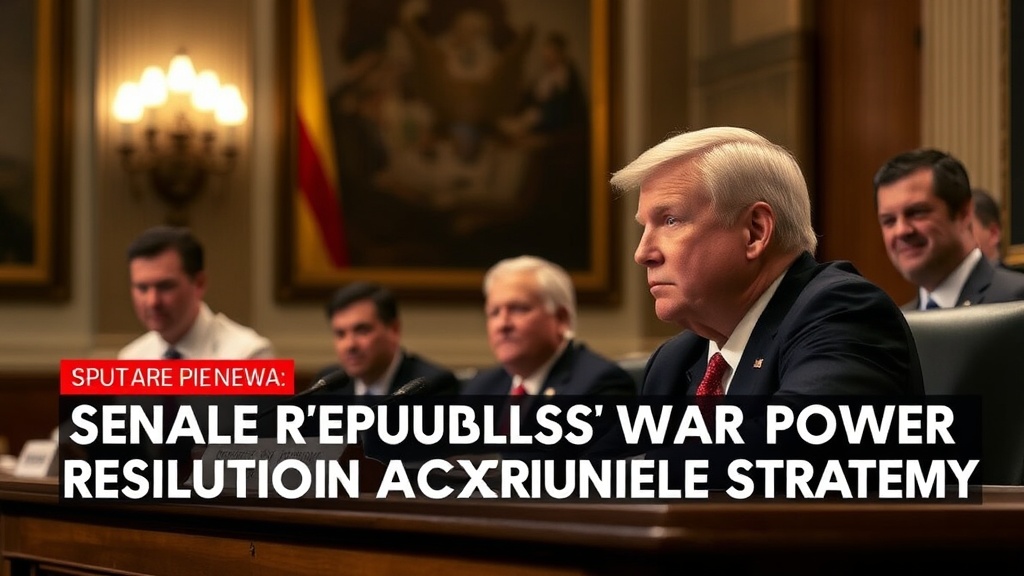
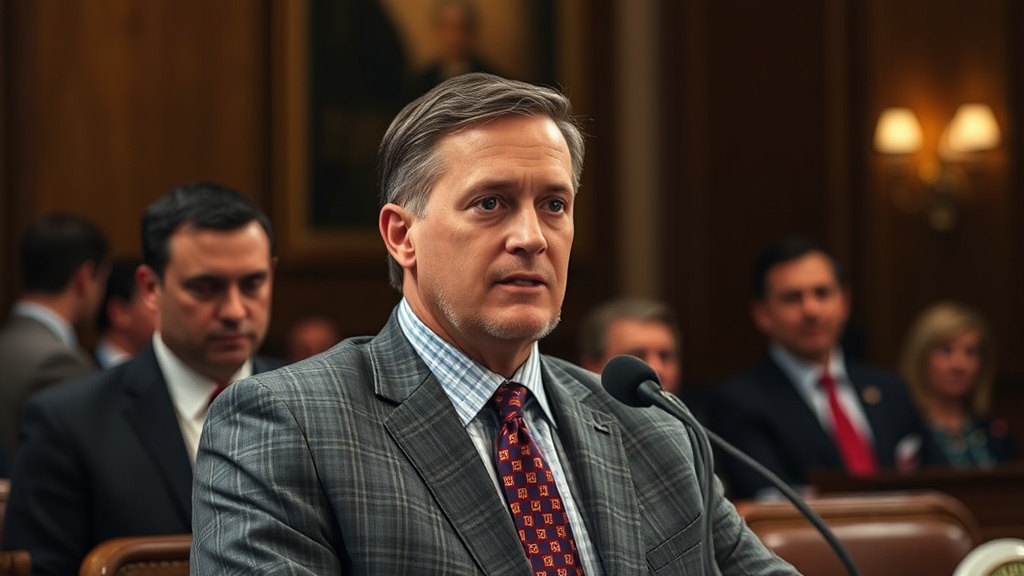
In a significant political maneuver, Senate Republicans successfully defeated a resolution aimed at curbing President Donald Trump's military authority concerning Venezuela on Wednesday. The vote followed intense pressure from the White House, leading to a surprising reversal by two Republican senators who had previously supported the measure. Senators Josh Hawley (R-Mo.) and Todd Young (R-Ind.) joined their party leadership in opposing the resolution, which sought to limit any military action against Venezuela without congressional approval.
The war powers resolution, introduced to reign in the executive branch's military initiatives, was designed to prevent President Trump from using military force ‘within or against’ Venezuela without explicit congressional permission. This resolution came amidst rising tensions in the region, with Venezuela facing a humanitarian crisis and ongoing political instability under President Nicolás Maduro's regime. Advocates of the resolution argued that it was crucial to uphold constitutional checks and balances, ensuring that decisions of war and peace were made with legislative oversight.
Despite its initial momentum, the resolution faced a swift decline in support after the White House intensified its lobbying efforts. In the days leading up to the vote, administration officials communicated directly with key Republican senators, emphasizing the importance of maintaining a strong stance against Venezuela, which the Trump administration has labeled a national security threat. The urgency of the situation, according to White House officials, necessitated a robust response, potentially including military options.
Senator Hawley, who had previously expressed concerns over the extent of presidential war powers, cited national security reasons for his change in vote. “The situation in Venezuela is dire, and we must ensure that our response is strong and decisive,” he stated. Senator Young echoed this sentiment, emphasizing the need for unity within the party against perceived threats from foreign adversaries.
The defeat of the resolution has sparked a wave of reactions from various political factions. Progressive Democrats, who had championed the measure, condemned the vote as a capitulation to executive overreach. Senator Tim Kaine (D-Va.), one of the resolution’s proponents, criticized his Republican colleagues for prioritizing party loyalty over constitutional obligations. “This is a dangerous precedent that undermines our system of checks and balances,” Kaine remarked during a press conference after the vote.
The implications of this vote extend beyond just Venezuela. It signals a broader trend within the Republican Party to consolidate power within the executive branch, particularly concerning foreign policy decisions. Critics argue that this sets a concerning precedent for future administrations, allowing them to engage in military action without adequate legislative oversight. The resolution's failure also reflects the challenges faced by lawmakers who seek to assert their role in matters of war and peace in an increasingly polarized political environment.
This situation in Venezuela remains fluid, with humanitarian organizations warning of a worsening crisis that could potentially require international intervention. The U.S. has been heavily involved in discussions regarding humanitarian aid and the potential for diplomatic solutions, but the military option has not been entirely off the table. The defeat of the war powers resolution may embolden the Trump administration to consider more aggressive tactics as it navigates the complexities of the Venezuelan crisis.
In conclusion, the Senate's decision to defeat the war powers resolution reflects the ongoing tensions between presidential power and congressional authority, particularly in matters of military engagement. As the situation in Venezuela evolves, the implications of this vote will likely resonate in future legislative discussions regarding the balance of power in U.S. foreign policy. The ongoing debate underscores the critical need for dialogue and cooperation among lawmakers to address national and international challenges effectively, particularly in a time of growing global instability.
As the Trump administration continues to define its strategy regarding Venezuela, the role of Congress and the ongoing discourse surrounding war powers will remain a focal point in the broader conversation about American foreign policy and the limits of executive authority.