Utah Activists Ramp Up Protests Against ICE Operations Amid Local Law Enforcement Partnerships
Activists in Utah are ramping up protests against ICE operations as local law enforcement partners with federal immigration authorities.
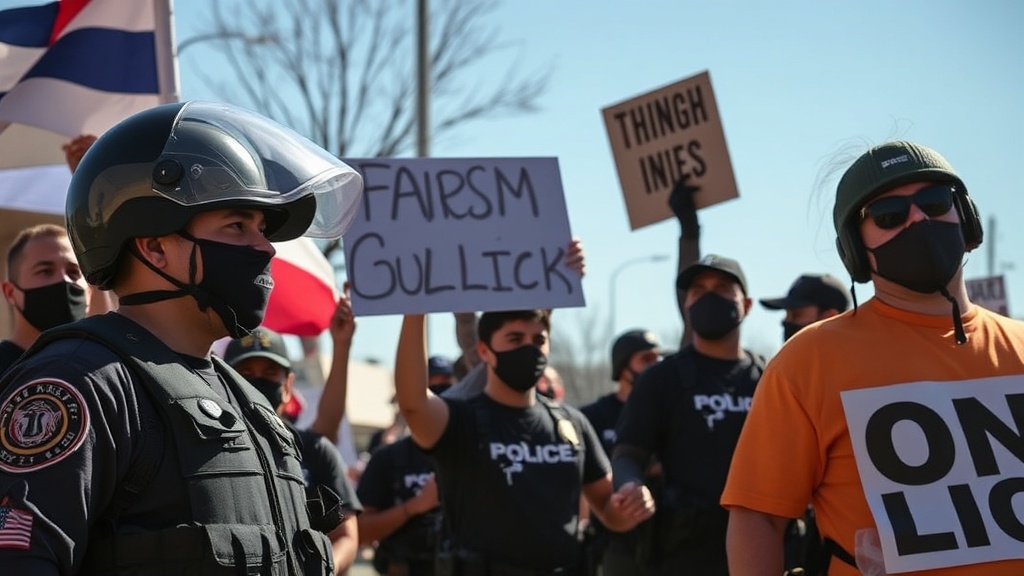
SALT LAKE CITY — The ongoing debate surrounding immigration enforcement in the United States continues to spark significant controversy, particularly in Utah, where several local law enforcement agencies have recently entered into partnerships with federal authorities through the 287(g) program. This initiative allows local law enforcement to engage in specific immigration enforcement functions, a move that has ignited protests and discussions among community members.
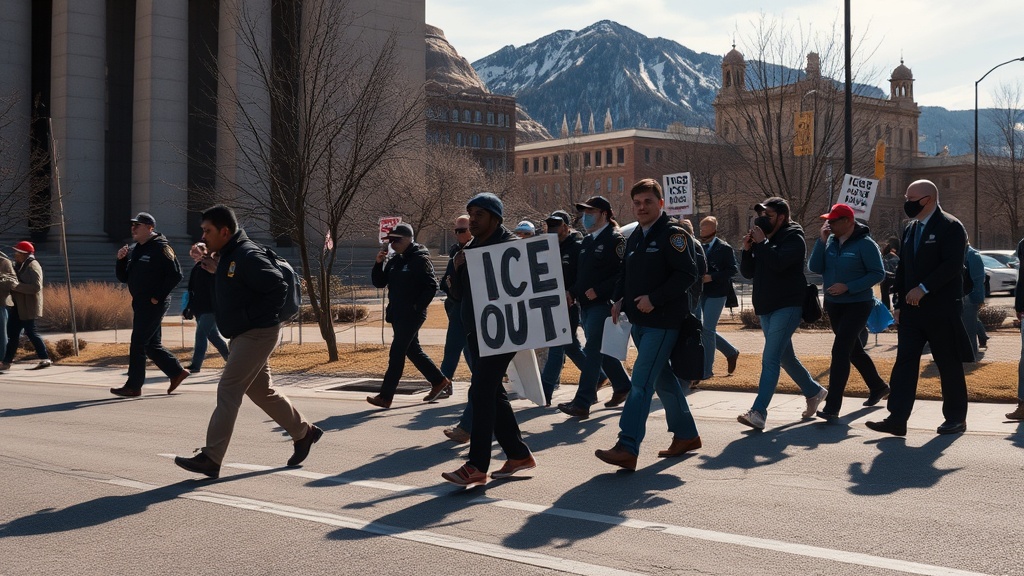
The 287(g) program, which has been implemented in various counties across Utah, has raised concerns among activists and immigrant rights groups. They argue that local cooperation with U.S. Immigration and Customs Enforcement (ICE) can lead to heightened fears and tensions within immigrant communities. Jamie Carter, a partner with the activist group ICE Out Actions, emphasized the importance of community protests during a recent gathering in downtown Salt Lake City.
"This is small democracy in action," Carter stated, highlighting the rally's spontaneous organization, which drew an impressive crowd of approximately 1,200 participants within just two days following the tragic shooting death of Renee Good during an anti-ICE protest in Minneapolis. Carter noted that the atmosphere surrounding ICE enforcement appears to have intensified since Good's death, stating, "It seems like they’re escalating."
Amidst rising tensions, protesters are determined to continue their advocacy. "We keep showing out. We keep speaking out. Because at some point, the tide is going to turn," Carter asserted, encouraging fellow activists to maintain their momentum.
The recent protests come in the wake of increasing ICE activity in the region, which has prompted both community concern and local law enforcement's collaboration with federal agents. In a recent post on social media platform X, ICE contrasted its cooperative efforts in states like Utah, Texas, and Louisiana with Minnesota’s refusal to partner with federal immigration agents, further illuminating the contrasting approaches to immigration enforcement across the country.
Aaron Welcher, the communications director for the American Civil Liberties Union (ACLU) of Utah, expressed the organization’s commitment to informing residents about the implications of the 287(g) agreements. The ACLU has created a comprehensive map that details which counties in Utah have active agreements, aiming to provide transparency and awareness regarding local law enforcement's role in immigration enforcement. "We wanted people to know where these 287(g) agreements have already happened in Utah so that people can be safe and thoughtful," Welcher stated.
The ACLU's message underscores a significant concern: increased cooperation between local law enforcement and ICE may result in greater federal presence in communities, impacting residents' daily lives and interactions with law enforcement. "Whether it’s Minneapolis or here in Utah, we’re all dealing with an increased presence of ICE. It’s affecting all of our communities, our friends and neighbors in different ways," Welcher said, emphasizing the urgency of the situation.
While many Utah residents are opposed to the 287(g) agreements, there is also a vocal segment of the population that supports ICE's role in maintaining public safety. The Utah Eagle Forum, a conservative organization, recently expressed their belief in the necessity of ICE as a federal agency tasked with protecting residents from criminal threats. This division in public opinion reflects the broader national debate over immigration enforcement and its implications for community safety and civil rights.
As protests continue and activists rally for change, Carter and her fellow demonstrators are steadfast in their commitment to raising awareness about the impact of ICE operations in Utah. "People need to know you’re not alone, and we the people have the power," Carter encouraged, as she called for ongoing public engagement and advocacy against what she describes as unjust immigration practices.
The situation in Utah serves as a microcosm of the national immigration debate, revealing the complexities and challenges faced by communities grappling with federal policies. As local agencies increasingly align with federal immigration enforcement efforts, the consequences for residents, particularly those from immigrant backgrounds, remain a critical concern that activists are determined to address.
With protests planned to continue and escalate, the dialogue surrounding ICE operations in Utah will likely remain a focal point of community engagement and political discourse in the weeks to come. Local officials and law enforcement agencies are also urged to consider the implications of their partnerships with federal authorities as they navigate the sensitive landscape of immigration enforcement in their communities.