Utah GOP Leader Blake Moore Challenges Trump's Greenland Seizure Proposal
Utah Rep. Blake Moore rejects Trump's Greenland seizure proposal, emphasizing diplomacy over aggression in U.S. foreign policy.
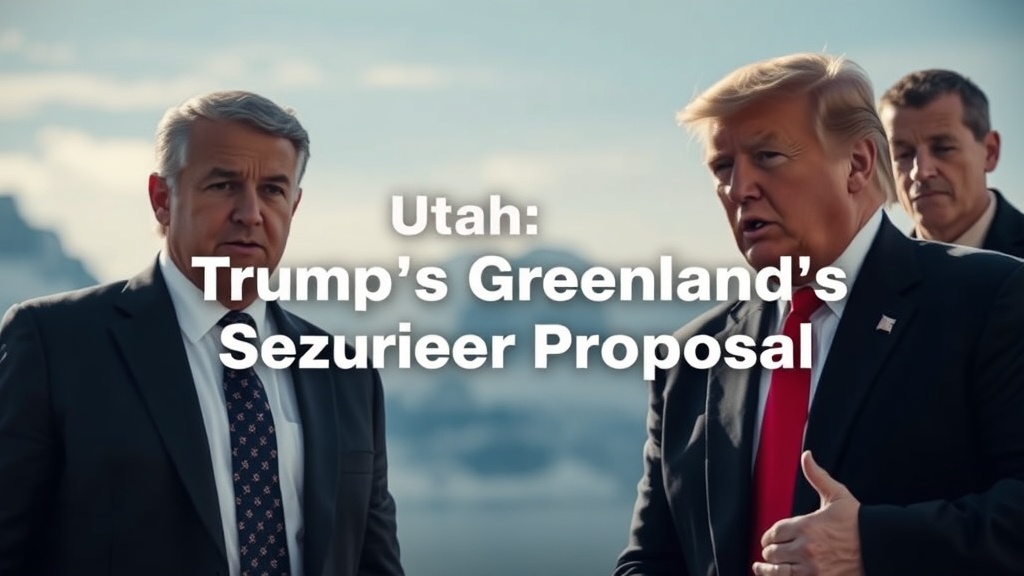
In a notable divergence from the rhetoric of former President Donald Trump, Utah Representative Blake Moore has publicly rejected Trump's controversial suggestion regarding the United States' potential annexation of Greenland. This marks a significant stance for Moore, who is a member of the Republican leadership, and highlights a growing concern among GOP lawmakers about the implications of such a drastic geopolitical maneuver.
The debate was reignited when Trump, during his presidency, expressed interest in purchasing Greenland, a semi-autonomous territory of Denmark, citing its strategic location and natural resources. The idea was met with immediate backlash from Danish officials, who were quick to dismiss the notion, emphasizing that Greenland is not for sale. As discussions of Trump's proposal resurfaced in recent weeks, several Republican lawmakers, including Moore, voiced their opposition, framing the idea as not only impractical but also “needlessly dangerous.”
Moore articulated his views during a recent interview, expressing concern over the potential repercussions of such a move on international relations. "The idea of seizing land from another country is not just unrealistic; it undermines the very foundations of diplomacy and international law that we have long championed," he stated. His remarks resonate with a faction of the GOP that is increasingly wary of Trump's approach to foreign policy, particularly regarding issues that could escalate tensions with allied nations.
This internal division within the Republican Party reflects a broader trend of recalibrating traditional conservative values in the face of Trump's unprecedented presidency. Moore, a proponent of pragmatic governance, emphasized that constructive dialogue with allies, such as Denmark, is essential for addressing mutual concerns over security and economic cooperation. He added, "We need to work together with our partners, not create unnecessary conflict."
Several other Republican lawmakers have echoed similar sentiments. Senator Mitt Romney of Utah, who has been a vocal critic of Trump, remarked, "The notion of taking over a territory in today's world is not only outdated but also reckless. We have to prioritize our relationships with our allies instead of making them feel threatened."
This sentiment is particularly relevant given the geopolitical landscape, where U.S.-Denmark relations have been historically strong. Greenland's strategic importance has been highlighted in recent years due to its proximity to the Arctic, an area increasingly relevant due to climate change and the opening of new shipping routes. The United States maintains a military presence in Greenland, which includes the Thule Air Base, underscoring the territory's significance without resorting to aggressive territorial claims.
Critics of Trump's original proposal also point to the historical context of territorial acquisitions, emphasizing that such actions often come with significant diplomatic fallout. The U.S.'s own history of land acquisition, notably during the 19th century, has left a complicated legacy that many believe should not be repeated in modern times.
Furthermore, Trump's suggestion has not only sparked unease among lawmakers but has also drawn criticism from foreign policy experts. Many argue that the proposal exemplifies a misunderstanding of international norms and the importance of respecting sovereignty. Dr. Emily Johnson, a political science professor at the University of Utah, explained, "The idea of seizing land is antithetical to the principles of self-determination and respect for national boundaries that the post-World War II order is built upon."
The fallout from Trump's comments could have lasting effects on U.S. foreign relations, particularly with nations that may feel threatened by such imperialistic rhetoric. In an era where international alliances are being tested, maintaining constructive relationships is crucial for addressing global challenges such as climate change, security threats, and economic stability.
As the discussion around Greenland continues, Moore's firm stance represents a growing chorus within the GOP that prioritizes diplomacy over military posturing. His leadership in this matter may encourage other party members to reconsider their positions and advocate for a more measured approach to foreign policy.
In conclusion, Blake Moore's rejection of Trump's Greenland annexation proposal signals a critical moment for the Republican Party as it navigates its identity and strategies in a post-Trump era. As lawmakers grapple with the implications of aggressive foreign policy suggestions, the focus may shift towards fostering international cooperation rather than territorial ambitions, a shift that could redefine Republican values moving forward.