Trump Administration Freezes Visa Processing for Immigrants from 75 Countries
The U.S. State Department has frozen visa processing for immigrants from 75 nations, sparking concerns over humanitarian impacts.
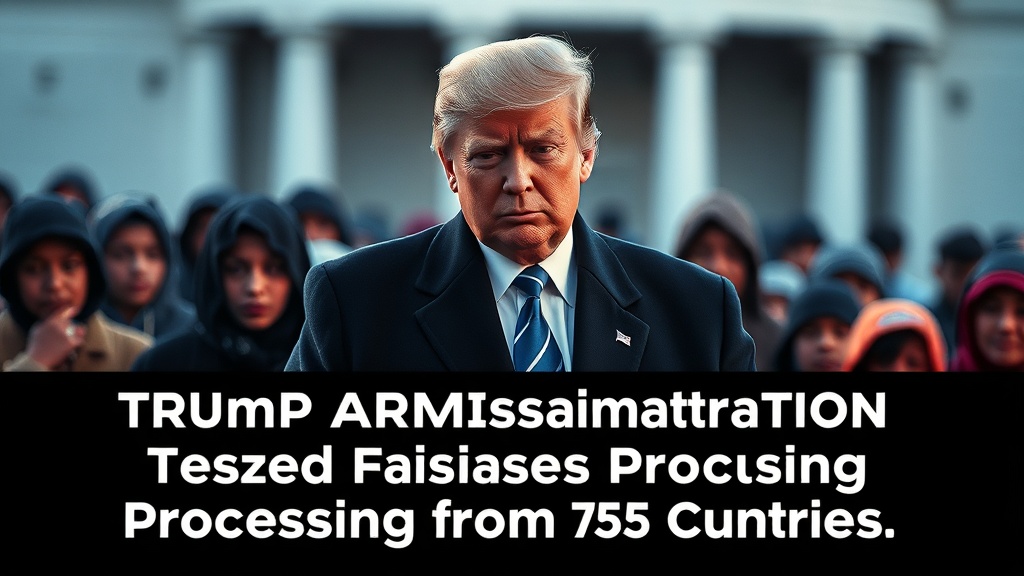
In a significant policy shift, the U.S. State Department announced on Wednesday the suspension of visa processing for immigrants from 75 countries deemed likely to require governmental assistance, a classification often referred to as 'public charge.' This decision has sparked widespread debate and concern among immigrant rights advocates, foreign governments, and potential immigrants, significantly impacting the immigration landscape in the United States.
The announcement was made via a social media post where the State Department stated, "The State Department will pause immigrant visa processing from 75 countries whose migrants take welfare from the American people at unacceptable rates. The freeze will remain active until the U.S. can ensure that new immigrants will not extract wealth from the American people." While the department did not provide a specific list of the countries affected, it did mention several, including Somalia, Haiti, Iran, and Eritrea. Other nations reportedly impacted include Afghanistan and Russia.
The timing of this policy shift has raised eyebrows, with the freeze set to take effect on January 21. This move aligns with previous attempts during President Donald Trump's administration to broaden the interpretation of what constitutes a public charge. During his first term, the administration sought to expand the definition to encompass any immigrant who had received certain public benefits for more than 12 months within a 36-month period. However, those efforts faced significant legal challenges, resulting in a convoluted regulatory landscape surrounding immigration.
The implications of this policy are far-reaching. Immigrants from the affected countries, many of whom are fleeing conflict, persecution, or dire economic conditions, may find their opportunities for resettlement in the U.S. severely limited. Immigration advocates argue that this freeze could lead to a humanitarian crisis, as individuals seeking refuge or a better life in the U.S. could be left stranded or forced to remain in hazardous conditions in their home countries.
The concept of 'public charge' has a long history in U.S. immigration law, tracing back to the Immigration Act of 1882, which prohibited the entry of individuals likely to become dependent on public assistance. The Clinton administration in 1999 sought to clarify this definition, specifying that a public charge was someone dependent on cash assistance programs such as welfare. However, the evolving interpretation of this term has fueled ongoing debates about immigration policy and its intersection with social welfare.
In November, the Department of Homeland Security published a notice for proposed rulemaking that outlined sweeping changes to how immigration officials assess who is likely to become a public charge. These changes are intended to tighten immigration eligibility and reflect a growing concern among some policymakers about the economic impact of immigration on American society.
Critics of the policy argue that it unfairly targets specific groups of immigrants while ultimately undermining the foundational principles of the U.S. as a nation of immigrants. They contend that many immigrants contribute significantly to the economy and society, often taking jobs that are hard to fill and participating in community-building efforts. Furthermore, advocates assert that the policy could have a chilling effect on immigrant populations, discouraging individuals from seeking necessary assistance out of fear that it could jeopardize their immigration status.
The decision has also drawn criticism from various international leaders, who express concerns about the humanitarian implications for their countries. Many of the nations affected are already facing crises, including war, famine, and political instability. By freezing visa processing for these countries, the U.S. may inadvertently exacerbate existing challenges and create additional pressures on vulnerable populations.
As discussions surrounding immigration policy continue to evolve, the implications of this visa processing freeze will likely be felt for years to come. The State Department’s decision not only affects the lives of countless individuals but also represents a broader trend in U.S. immigration policy that prioritizes economic considerations over humanitarian concerns.
In conclusion, the suspension of visa processing for immigrants from 75 nations marks a pivotal moment in U.S. immigration policy. As the Biden administration grapples with the legacy of its predecessor, the balance between economic considerations and humanitarian responsibilities will remain a contentious issue. Observers and stakeholders alike will be watching closely to see how this policy unfolds and its impact on the future of immigration in America.