Trump's Venezuela Policy: A Dangerous Gamble With Global Consequences
Trump's hardline stance on Venezuela raises concerns about military action and global instability.
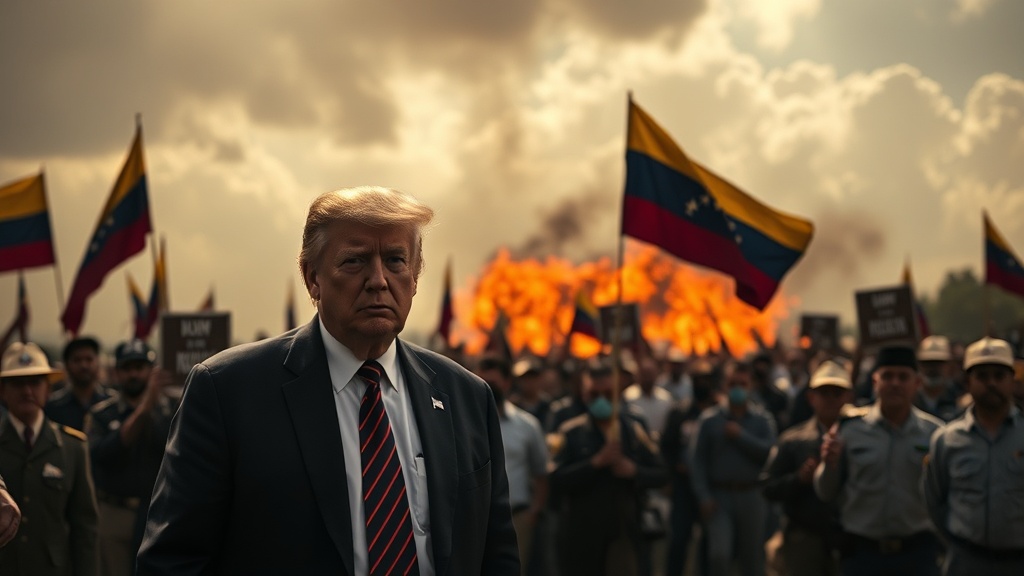
In recent weeks, the geopolitical landscape has shifted dramatically as tensions between the United States and Venezuela have escalated. President Donald Trump's administration has taken a hardline stance against the Venezuelan government, led by President Nicolás Maduro, which has resulted in both diplomatic and military implications. This shift is not just a localized conflict; it has the potential to unleash forces that could spiral out of control, affecting not only the Americas but also global relations and stability.
Venezuela has been embroiled in a socioeconomic crisis for years, characterized by hyperinflation, food shortages, and widespread civil unrest. The situation worsened after Trump recognized Juan Guaidó, the opposition leader, as the legitimate president of Venezuela in early 2019, a move that was met with immediate backlash from Maduro and his supporters. Since then, the U.S. has imposed severe sanctions aimed at crippling the Venezuelan economy, particularly targeting its oil exports, which are vital for the nation’s revenue.
The Trump administration argues that these sanctions are necessary to restore democracy and human rights in Venezuela. However, critics point out that such measures often disproportionately affect ordinary citizens rather than the ruling elite. Furthermore, the sanctions have led to increased tensions not only between the U.S. and Venezuela but also among various international actors, including Russia and China, who have shown support for Maduro’s regime. As these global powers engage in a battle for influence in Venezuela, the risks of escalation grow.
Military options have also been openly discussed by Trump and some members of his administration. This rhetoric raises concerns about the potential for armed conflict in a region already fraught with instability. Historical precedents, such as U.S. interventions in Iraq and Libya, serve as reminders of the unforeseen consequences that can arise from military action. While Trump may view military engagement as a means to exert U.S. influence and bring about regime change, the reality is that such actions often lead to chaotic outcomes that are difficult to contain.
In addition to the immediate consequences of U.S. policy, the long-term implications are equally troubling. Analysts warn that escalating tensions could lead to a humanitarian crisis of unprecedented proportions. As Venezuelans continue to flee their country in search of safety and stability, neighboring countries are feeling the strain. Colombia, which shares a border with Venezuela, has already taken in millions of refugees, causing social and economic challenges that are difficult to manage. If U.S. military action were to occur, the influx of refugees could increase dramatically, overwhelming regional resources and complicating diplomatic efforts.
Moreover, the potential for civil conflict in Venezuela poses risks not just to its immediate neighbors but to the broader international community. With various factions within Venezuela vying for power, any military intervention might inadvertently empower extremist groups or lead to a protracted civil war, further destabilizing the region. The unpredictability of such a scenario underscores the delicate balance of power in the Americas and raises questions about U.S. foreign policy objectives.
As the situation continues to evolve, it is crucial for policymakers to consider the broader implications of their actions in Venezuela. While the desire to support democracy and human rights is commendable, it is essential to recognize that military intervention is fraught with risks that could have global repercussions. The lessons of history remind us that war is often a continuation of policy by other means, but it can also unleash forces that are difficult to control or predict.
In conclusion, President Trump's aggressive approach to Venezuela poses significant risks not just for the nation itself but for regional and international stability. As diplomatic efforts remain complicated and the potential for military action looms, the world watches closely to see how this complex situation unfolds. The stakes are high, and the consequences of miscalculation could reverberate far beyond Venezuela's borders, making it imperative for the U.S. to tread carefully in its pursuit of policy objectives in the region.