Jerome Powell's Leadership at the Fed: A Bulwark Against Political Pressure
Jerome Powell's leadership at the Federal Reserve faces political pressure, raising concerns about the institution's independence and economic stability.
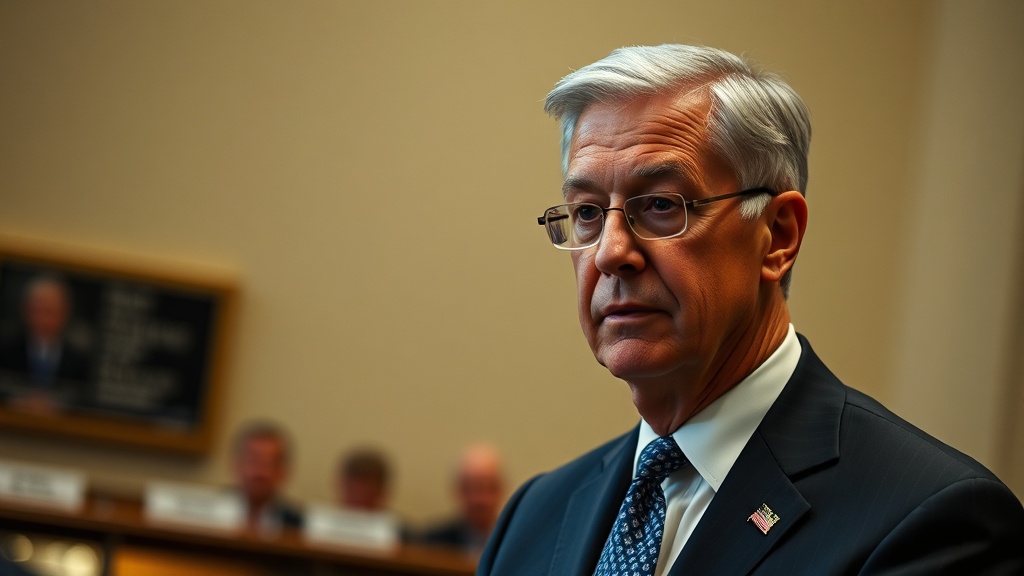
In recent months, the Federal Reserve, led by Chair Jerome Powell, has faced unprecedented political pressure, particularly from former President Donald Trump. This pressure reached a peak when Trump publicly criticized Powell for the Fed's interest rate policies, which he believed were detrimental to the economy. Such tensions highlight the delicate balance between economic governance and political influence in the United States, raising questions about the independence of the Federal Reserve and the implications for future monetary policy.
Jerome Powell, appointed by Trump in 2018, has navigated a challenging landscape marked by competing interests. The Federal Reserve, tasked with managing inflation and fostering economic stability, operates independently of the executive branch. However, Trump's vocal discontent with the Fed's interest rate hikes showcased a willingness to undermine that independence. In a series of tweets and public statements, Trump accused Powell of harming the economy, calling for lower interest rates to stimulate growth just before the 2020 election.
The stakes were high, as the U.S. economy was recovering from the 2008 financial crisis, and many Americans were feeling the effects of a fluctuating job market. Trump's critique of Powell was not merely a personal vendetta; it was also an attempt to sway economic policy ahead of a crucial election year. Trump's allies, including Attorney General Pam Bondi, echoed these sentiments, further pressuring Powell to align the Fed's policies with the political agenda.
Powell's response to this political pressure has been noteworthy. He has consistently maintained that the Federal Reserve will make decisions based on economic data and long-term stability, rather than political expediency. This commitment to independence is crucial for the credibility and effectiveness of the Fed. Economists and analysts have long argued that political interference can lead to poor economic outcomes, as monetary policy must be insulated from short-term political calculations.
Historically, the independence of the Federal Reserve has been a cornerstone of U.S. economic policy. The Fed's ability to set interest rates and control the money supply without direct political influence has allowed it to react swiftly to economic crises, such as the 2008 recession and the COVID-19 pandemic. However, Trump's attempts to undermine this independence could set a dangerous precedent, eroding public trust in economic institutions.
Experts warn that if the Fed succumbs to political pressure, it risks losing its effectiveness and credibility. Charles Plosser, a former president of the Federal Reserve Bank of Philadelphia, emphasized the importance of maintaining the Fed's autonomy, stating, "If the Fed is perceived as a political entity, its ability to manage the economy effectively will be compromised."
Moreover, Powell's stance against Trump's bullying reflects a broader trend within the Republican Party, where some members are beginning to distance themselves from Trump's influence. This shift is particularly significant given the increasing polarization in U.S. politics. Powell's leadership has garnered respect from various quarters, including economists, financial analysts, and even some lawmakers who recognize the importance of a strong, independent central bank.
As the U.S. economy continues to recover from the pandemic, the role of the Federal Reserve remains paramount. The challenges ahead are multifaceted, with inflation rising and supply chain disruptions continuing to impact markets. Powell's ability to navigate these challenges while maintaining the Fed's independence will be critical for ensuring long-term economic stability.
The implications of Powell's leadership extend beyond immediate economic concerns. The relationship between the Federal Reserve and the executive branch will likely be scrutinized more closely in the years to come. As political figures continue to challenge the Fed's decisions, the importance of upholding its independence becomes increasingly apparent.
In conclusion, Jerome Powell's tenure as Federal Reserve Chair has been marked by both challenges and triumphs. His willingness to stand firm against political pressure from Trump and his allies demonstrates a commitment to the principles of economic governance that have long been a hallmark of the Federal Reserve. As the nation moves forward, the need for an independent and robust Federal Reserve will be vital in ensuring economic resilience and public confidence in U.S. financial institutions.