Transparency and Accountability in Park City's Local Governance
Park City residents demand transparency and merit-based governance following divisive election events, raising concerns about local leadership.
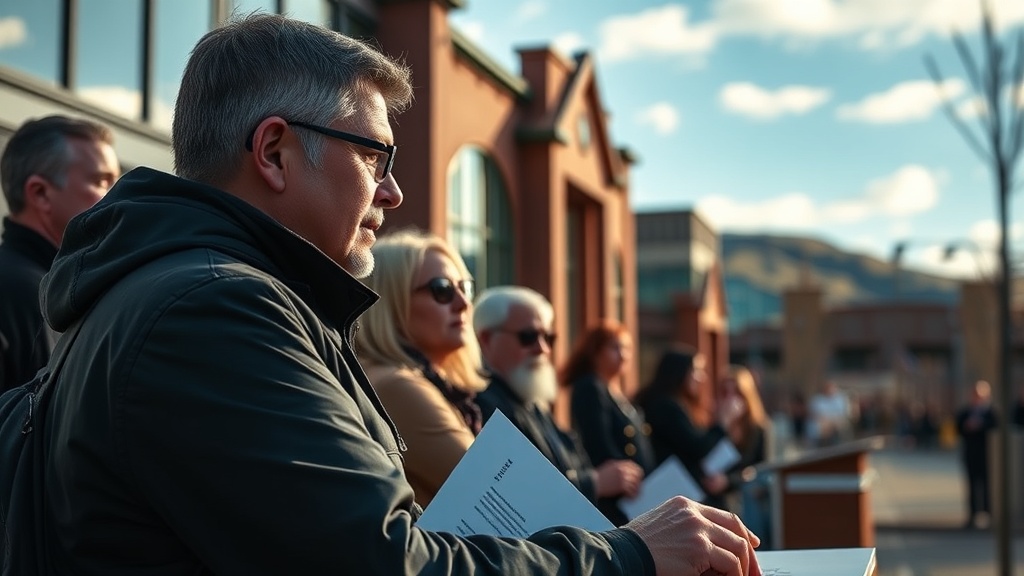
In Park City, local governance is under scrutiny as residents express concerns regarding fairness, transparency, and accountability in recent political events. The aftermath of Election Night has revealed a troubling pattern of divisiveness among elected officials, prompting calls for a more inclusive and merit-based approach to local government. Recent comments by former Park City Council Member Jeremy Rubell shed light on these issues, as he emphasizes the importance of transparent appointments and equal representation in city governance.
Following the recent elections, the atmosphere in Park City has been described as one of division and exclusivity. Editor of the Park Record, Don Rogers, highlighted the stark contrasts in Election Night celebrations, where elected candidates Tana Toly, Diego Zegarra, and Ryan Dickey hosted separate, exclusive gatherings that excluded crossover support from other candidates. This lack of inclusivity raises questions about the ability of the newly elected officials to foster dialogue and collaboration in a community known for its diversity.
Rubell, who chose to spend the election evening at home with family rather than attending any of the exclusive celebrations, expressed his disappointment in the self-proclaimed “inclusive” trio. He pointed out that Toly, Zegarra, and Dickey declined his invitations to joint voter events, opting instead for campaigns that leaned on personal attacks and factual inaccuracies rather than substantive debate on pressing issues. Key topics such as public safety, traffic management, fiscal responsibility, and city operations were noticeably absent from their discussions.
In contrast, Rubell noted the collaborative spirit demonstrated by fellow candidate Jack Rubin. Rubin focused on issue-based campaigning and engaged in open dialogues with voters. He attended some of Rubell's events and invited him to his own, embodying the democratic principles of engagement and cross-party dialogue that many residents crave. This raises a crucial question: how can local governance thrive if elected leaders prioritize personal agendas over community engagement?
The political dynamics have shifted significantly with Dickey now serving as mayor, alongside Toly and Zegarra, who, together, hold the power to appoint a successor to the recently vacated City Council seat. This situation raises concerns over the potential for a consolidated bloc of power that could further alienate other community voices and bypass democratic processes, particularly in light of Councilors Parigian and Ciraco being excluded from this decision-making.
Rubell’s reflections on past council discussions provide further context to the current political climate. In 2021, he advocated for diversifying the council by considering candidates with significant qualifications and experience, including senior citizens. However, he faced strong opposition from Dickey, who dismissed the idea of considering demographic factors. Ironically, Dickey has recently stated that it would be “hard not to appoint a woman” to the upcoming vacancy, suggesting a shift towards identity-based considerations that Rubell argues should not overshadow merit and qualifications.
As the appointment process for the vacant City Council seat moves forward, residents are urged to demand transparency and a merit-based selection process. The importance of evaluating candidates based on their qualifications and suitability for the role, rather than their identity, has been emphasized by Rubell. He hopes that accomplished women with Planning Commission experience and strong public service records will apply, but he warns against prioritizing identity over merit, asserting that such practices are inherently discriminatory.
The community is at a crossroads, with the potential to either embrace an inclusive approach that welcomes diverse voices or to reinforce a power structure that seeks to strengthen the existing bloc. As residents watch the unfolding events, the emphasis on transparency and accountability in local governance becomes even more critical. The actions of the newly elected officials in the coming weeks will likely shape the future of Park City's political landscape and its commitment to representing all constituents fairly.
In conclusion, the call for a fair and transparent local government resonates among Park City residents as they navigate the complexities of their political environment. The recent elections have underscored the need for leaders who prioritize community engagement, accountability, and a commitment to merit-based governance. As the next chapter in Park City’s political evolution unfolds, the hope remains that elected officials will rise to the occasion and embody the values of inclusivity and transparency that the community deserves.