Struggling for Affordability: Southern Utah's Housing Crisis and $400K Starter Homes
In southern Utah, rising home prices make affordable housing elusive for families like Tim Colburn's, highlighting a regional crisis.
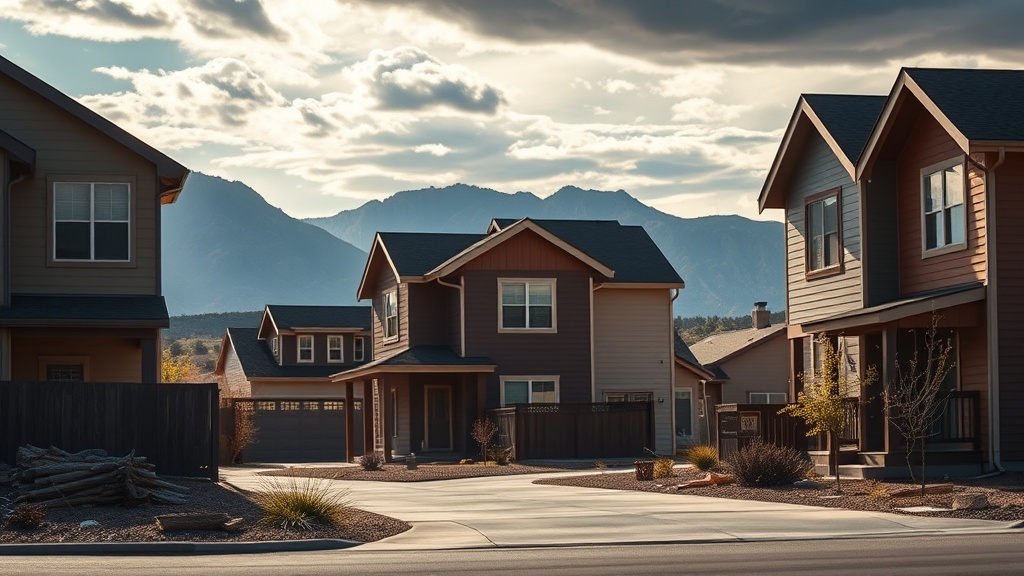
St. George, Utah – As the sun sets over the picturesque red rock landscape of southern Utah, residents like Tim Colburn find themselves caught in a housing crisis that continues to escalate. Colburn has spent the last six years searching for what he considers an affordable home in the increasingly competitive housing market of Washington County. His journey, marked by frustration and disappointment, highlights the growing gap between housing prices and the definition of affordability in the region.
Colburn, a 37-year-old local who works in the service industry, recalls a particular property that slipped through his fingers—a modest three-bedroom home listed at $350,000. "It was the perfect starter home for my family, but by the time I was ready to make an offer, it was already gone," he lamented. This experience is not isolated; it is emblematic of the broader challenges faced by many families in southern Utah.
The housing market in Washington County has experienced rapid growth in recent years, driven by an influx of new residents attracted to the area’s natural beauty and pleasant climate. However, this surge in demand has led to skyrocketing prices. According to the Utah Association of Realtors, the median home price in Washington County has reached approximately $480,000, a staggering figure that often puts homeownership out of reach for many families.
Real estate experts point to a variety of factors contributing to the rising home prices, including a limited supply of housing, increased demand from out-of-state buyers, and a lack of affordable housing development. "Southern Utah is a desirable place to live, but it is becoming increasingly difficult for locals to find homes within their budget," explains Kevin R. Lee, a local real estate agent. "Many homes that are marketed as ‘starter homes’ are still priced well above what most families can afford."
The term "affordable housing" has become increasingly problematic in southern Utah, especially when starter homes are now priced around $400,000 and above. For many in the area, this price point is not just high; it is unattainable. Colburn, who has a family of four, shared that the monthly mortgage payments for homes within this price range would consume a significant portion of his income, leaving little room for other essential expenses such as groceries and healthcare.
Local government officials and community leaders are aware of the crisis. In a recent town hall meeting, St. George Mayor Michele Randall acknowledged the need for more affordable housing options. "We are actively working to develop policies that would incentivize builders to create more affordable units," she stated. The city is exploring zoning changes to facilitate the construction of lower-cost housing and is reaching out to developers to encourage investment in this area.
Despite these efforts, progress has been slow. Many builders are hesitant to take on projects that may not yield significant profits, especially in a market that has historically favored higher-end developments. To further complicate matters, rising construction costs due to supply chain disruptions and labor shortages have made it even more challenging to produce affordable homes.
In addition to the financial implications, the housing crisis has social repercussions. Families like Colburn's are left grappling with the reality that they may need to look further afield to find affordable housing. "We are considering relocating to areas outside St. George, even if it means a longer commute to work," he said, highlighting the tough decisions many families face as they navigate the housing landscape.
The lack of affordable housing options can also contribute to a sense of community fragmentation, as long-time residents may be forced to leave their neighborhoods in search of better housing opportunities. This potential exodus raises concerns about the preservation of community ties and local culture in a region that prides itself on its tight-knit communities.
Colburn’s search for a home continues, and he remains hopeful that a solution will emerge before his family is forced to make drastic changes to their living situation. "I just want a place we can call our own, where my kids can grow up and feel secure," he remarked, a sentiment that resonates with many in the area.
As southern Utah grapples with its housing crisis, the community remains at a crossroads. The challenge lies not only in finding ways to provide affordable housing but also in ensuring that the region retains its character and supports its long-time residents. With the ongoing demand for homes and limited housing supply, the fate of many families hangs in the balance, underscoring the urgent need for comprehensive solutions to the housing dilemma in southern Utah.