Senator John Curtis Reflects on a Year in Office, Venezuela, and DC Gridlock
Senator John Curtis reflects on his first year, discussing Venezuela, Trump policies, and the need for bipartisanship in Congress.
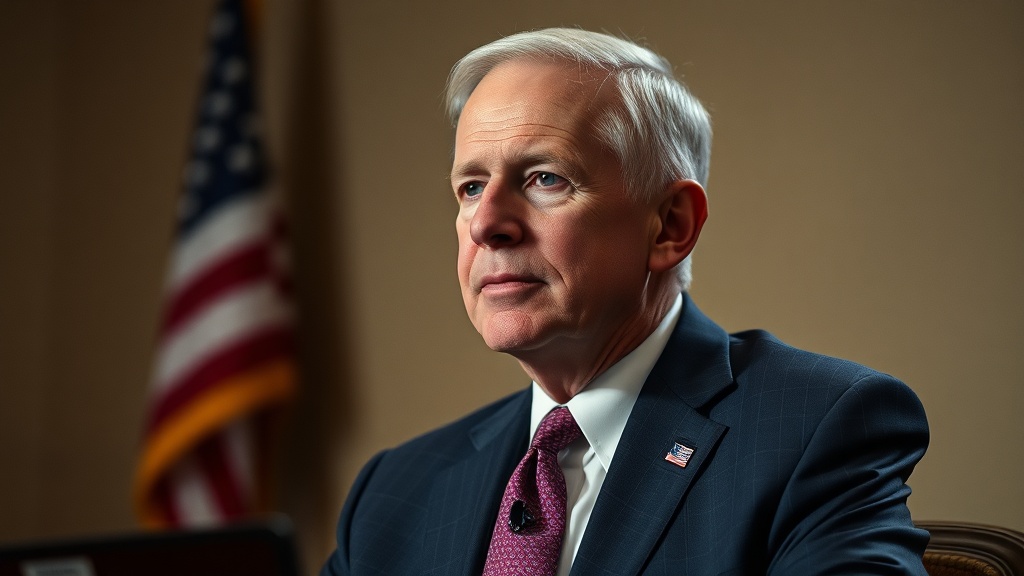
In a recent interview marking his first anniversary in the U.S. Senate, Utah Senator John Curtis discussed a range of pressing issues, including the U.S. response to the political crisis in Venezuela, his views on the Trump administration’s strategies, and the ongoing challenges of legislative gridlock in Washington, D.C. Curtis, who was elected to the Senate after serving in the House of Representatives, has carved out a niche as a pragmatic voice in a polarized political environment.
The senator expressed concern over the recent developments in Venezuela, particularly following the U.S. capture of Nicolás Maduro, the country's controversial leader. Curtis pointed out that while the U.S. has a role to play in promoting democracy and stability in Venezuela, the situation is incredibly complex and requires a nuanced approach.
"Our primary goal should be to support the Venezuelan people in their quest for freedom and democracy, but we must also be cautious about how our actions impact the situation on the ground," Curtis stated. He emphasized the importance of working closely with regional allies, such as Colombia and Brazil, to develop a comprehensive strategy that balances support for democratic movements with the need to avoid further destabilization in the region.
Curtis also reflected on the broader implications of U.S. foreign policy under the Trump administration. He acknowledged that while the administration's hardline stance against Maduro is aimed at bringing about change, it has sometimes led to unintended consequences. The senator expressed a desire for a more collaborative approach that includes voices from both sides of the aisle in Congress. "We need to engage in constructive dialogue rather than simply reacting to crises as they arise," he said.
As Curtis looks back on his first year, he also addressed the significant issue of legislative gridlock that has characterized much of Congress's work. He noted that partisan divisions have made it increasingly difficult to pass meaningful legislation on key issues such as immigration reform, healthcare, and infrastructure.
"We are in a challenging time where it feels like both parties are more focused on scoring political points rather than working together for the American people," Curtis remarked. He called for renewed bipartisanship, urging his colleagues to prioritize compromise and collaboration over division.
The senator pointed to several initiatives he has championed that aim to bridge the partisan divide. One such initiative is a bipartisan effort to address the opioid crisis, which has devastated communities across Utah and the nation. Curtis has worked with both Democrats and Republicans to secure funding for treatment programs and prevention efforts, highlighting that addiction knows no political affiliation.
Additionally, Curtis has been vocal about the need for infrastructure improvements in Utah and across the country. He believes that investing in infrastructure could serve as a unifying issue for both parties, creating jobs and stimulating economic growth. "If we can come together on infrastructure, it can set a precedent for future cooperation," he stated.
In terms of his constituents back in Utah, Curtis reiterated his commitment to listening to the needs of the people he represents. He emphasized that being responsive to local issues is a top priority, and he often holds town hall meetings to engage directly with the public. Curtis believes that maintaining open lines of communication with his constituents is essential for effective governance.
Looking ahead, Curtis is optimistic about the potential for legislative progress in the coming year. He is particularly focused on working with colleagues from both parties to address urgent issues such as climate change, economic recovery post-pandemic, and healthcare reform. "We have a lot of work ahead of us, but I believe that if we can find common ground, we can achieve meaningful change," he said.
As he reflects on his first year in the Senate, John Curtis remains committed to navigating the complexities of U.S. politics while advocating for the needs of Utahns and promoting a collaborative approach to governance. His emphasis on bipartisanship and constructive dialogue may offer a path forward in an increasingly divided political landscape, as he seeks to balance the demands of national and international issues with the needs of his constituents back home.
In conclusion, Curtis's insights into the Venezuelan crisis, the challenges of Washington gridlock, and his dedication to bipartisan solutions illustrate the complexities of leadership in today’s political environment. As he enters his second year in the Senate, the eyes of Utah and the nation will be on how he navigates these critical issues moving forward.