Examining the Political Strategies of Trump Amid Rising National Anxiety
Amid rising inflation and public anxiety, Trump appears to distract citizens with foreign conflicts, raising critical concerns.
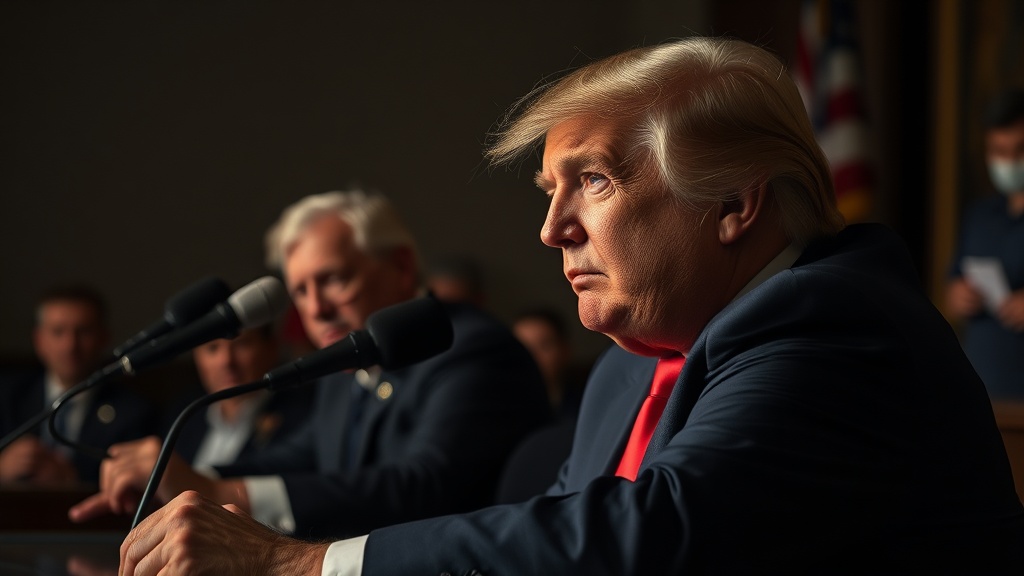
In recent weeks, political analysts have observed a distinct shift in former President Donald Trump's rhetoric as he grapples with a nation facing soaring inflation and growing public discontent. With the cost of living rising, many citizens are becoming increasingly anxious about their financial futures. Trump, known for his unconventional political strategies, appears to be employing tactics reminiscent of historical leaders who sought to redirect public attention towards foreign conflict in times of domestic uncertainty. This approach harks back to the advice given by King Henry IV in Shakespeare's play, urging leaders to 'busy giddy minds with foreign wars.'
As the nation experiences a surge in prices for everyday goods, from groceries to gas, many in the public and political spheres are questioning whether Trump is attempting to distract American citizens from their immediate concerns by drumming up tensions abroad. His recent comments regarding ongoing geopolitical conflicts have sparked debates about whether he aims to shift focus from domestic issues to international affairs, a tactic that has been employed by leaders throughout history.
Economic indicators have shown a troubling trend, with inflation rates reaching levels not seen in several decades. Many economists point to a combination of factors, including supply chain disruptions and the lingering effects of the COVID-19 pandemic, as contributing to the financial strain on American households. Consequently, the Biden administration has faced mounting pressure to address these economic woes, with many citizens expressing frustration over the lack of relief.
In light of these challenges, Trump's rhetoric has included references to foreign adversaries, suggesting a potential pivot towards military engagement as a means to rally his base and distract from economic grievances. His remarks have stirred concern among political commentators, who fear that such tactics could lead to increased tensions with foreign nations, further complicating an already volatile global landscape.
Critics argue that resorting to foreign conflicts as a distraction could have dangerous implications. As the U.S. remains embroiled in various international issues, including relations with China, Russia, and Iran, the prospect of escalating military tensions raises alarms about potential consequences for both national and global security. Political experts warn that leveraging foreign conflicts to bolster domestic approval could result in unintended repercussions, including entrenching divisions within the political landscape and exacerbating international tensions.
Furthermore, Trump's ability to mobilize public sentiment through such strategies is not new. His presidency was marked by a series of controversial foreign policy decisions, including the withdrawal from the Iran nuclear deal and the contentious relationship with North Korea. These actions were often accompanied by statements that sought to frame his administration's efforts in a favorable light, even when faced with domestic challenges.
As Trump prepares for a potential 2024 presidential run, his strategies appear to be evolving in response to the current political climate. Polls indicate that a significant portion of the American electorate remains dissatisfied with the direction of the country, particularly with regard to economic conditions. This growing discontent may prompt Trump to further emphasize foreign conflicts, positioning himself as a strong leader capable of addressing both domestic and international challenges.
Political analysts are closely monitoring these developments, seeking to understand how Trump's approach may influence the broader political landscape. As the midterm elections approach and candidates begin to solidify their platforms, the implications of Trump's strategies could reshape the narrative surrounding economic recovery and national security.
In conclusion, as the nation wrestles with the realities of rising prices and economic anxiety, the tactics employed by Trump raise critical questions about the intersection of domestic and foreign policy. While the former president may believe that highlighting international conflicts can distract from pressing economic issues, the potential consequences of such a strategy warrant careful consideration. As the political landscape evolves, the American public will be watching closely to see how these dynamics unfold and what they mean for the future of the nation.