Nationwide Protests Erupt Against ICE Following Fatal Shootings in Minneapolis and Portland
Nationwide protests erupted against ICE following fatal shootings in Minneapolis and Portland, highlighting tensions in immigration enforcement.
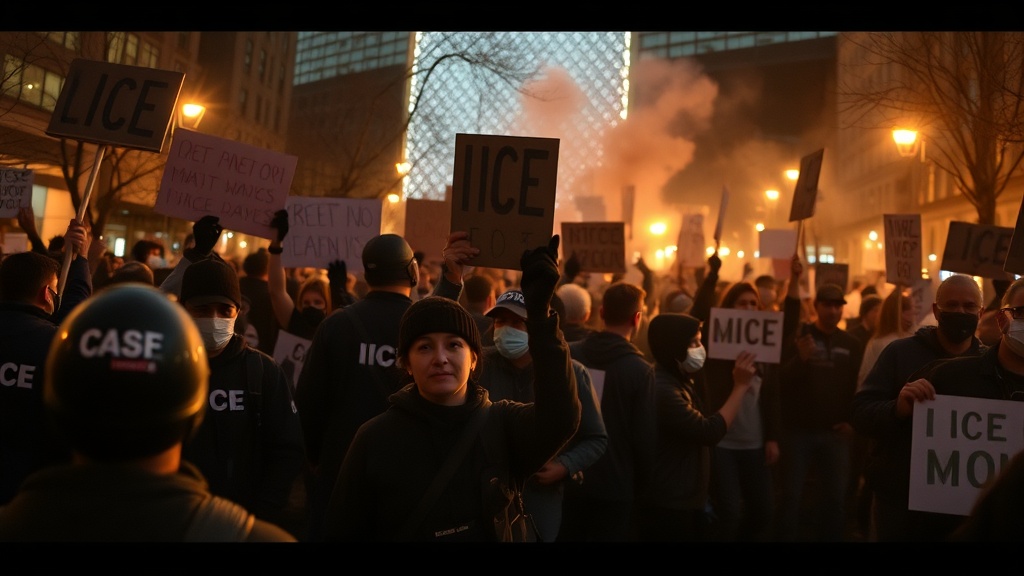
MINNEAPOLIS (AP) — A wave of protests erupted across the United States on Saturday as demonstrators rallied against the actions of immigration enforcement agencies following two recent shootings involving federal officers. The protests were fueled by anger and frustration after a federal officer fatally shot a woman in Minneapolis, while another officer shot and injured two individuals in Portland, Oregon.
In Minneapolis, the tragic incident occurred during a law enforcement operation targeting individuals with outstanding warrants. Witnesses reported that the shooting unfolded rapidly, leaving community members in shock and demanding accountability. During the operation, a federal officer reportedly discharged his weapon, striking a woman who was later identified as 22-year-old Angela Rodriguez. Eyewitnesses described a chaotic scene as emergency responders arrived, and the community mourned the loss of a young woman who had been involved in local advocacy efforts.
"She was a vibrant part of our community, and her life mattered," said Maria Gonzalez, a local activist who knew Rodriguez. "We need to stop these senseless killings by agents who are supposed to protect us. We cannot allow this to continue."
Following the Minneapolis incident, tensions escalated in Portland, where federal officers were involved in a separate shooting that left two individuals injured during a confrontation near an immigration enforcement facility. Details surrounding the Portland shooting remain unclear, but local police confirmed that both victims were hospitalized with injuries that were not life-threatening. As news of the incidents spread, protests emerged in both cities, quickly drawing participants from various backgrounds united in their opposition to the enforcement tactics employed by Immigration and Customs Enforcement (ICE) and other federal agencies.
The demonstrations were part of a coordinated effort that saw protests in cities including New York, Los Angeles, and Chicago. Marchers carried signs reading slogans such as “No Justice, No Peace” and “Abolish ICE,” while chanting calls for accountability and an end to aggressive immigration enforcement practices. In New York City, protestors gathered outside the ICE headquarters, demanding that the federal agency be dissolved and that its practices be reevaluated. Similar sentiments were echoed in Los Angeles, where protesters called for comprehensive immigration reform amidst growing concerns over the treatment of immigrant communities.
The protests come amid a broader national debate on immigration policy and enforcement practices. Critics of ICE have long voiced concerns over the agency's methods, arguing that they often disproportionately target vulnerable communities and lead to unnecessary violence. The recent incidents have reignited these discussions, prompting calls for transparency and accountability from federal law enforcement agencies.
In response to the nationwide protests, the U.S. Department of Homeland Security (DHS) issued a statement emphasizing its commitment to public safety while also acknowledging the need for community trust. "We recognize the importance of transparency in our operations and are committed to addressing community concerns while ensuring the safety of our officers and the public," the statement read. However, many activists argue that such assurances fall short in the wake of the recent violence.
Local officials in both Minneapolis and Portland have also called for investigations into the incidents, with many community members demanding that federal officers involved be held accountable for their actions. Minneapolis Mayor Jacob Frey expressed condolences to Rodriguez’s family and called for a thorough investigation. “We must seek answers and ensure that justice is served,” Frey stated during a press conference. In Portland, Mayor Ted Wheeler echoed similar sentiments, emphasizing the need for a transparent investigation to assuage community fears and restore trust.
As protests continued throughout the day, organizers emphasized the need for solidarity among marginalized communities, urging participants to remain peaceful while advocating for their rights. Many expressed hope that the demonstrations would lead to meaningful change in the way immigration enforcement is conducted across the country.
The recent incidents and the subsequent protests highlight the ongoing tensions between immigrant communities and federal law enforcement agencies. As the nation grapples with these issues, the voices of those affected by immigration policies are increasingly coming to the forefront, demanding justice and reform. The actions taken by protesters in response to these tragedies may very well shape the future of immigration policy in America, as the call for accountability resonates across the nation.
In the days and weeks to come, it remains to be seen how federal and local authorities will respond to these calls for change and whether the momentum from the protests will translate into concrete policy reforms. The tragic events in Minneapolis and Portland serve as a stark reminder of the complex and often contentious nature of immigration enforcement in the United States today.