Dr. King's Vision: The Ongoing Struggle Against Racial and Economic Inequality
Dr. King's warnings about racism and materialism resonate today as economic disparities for Black Americans grow.
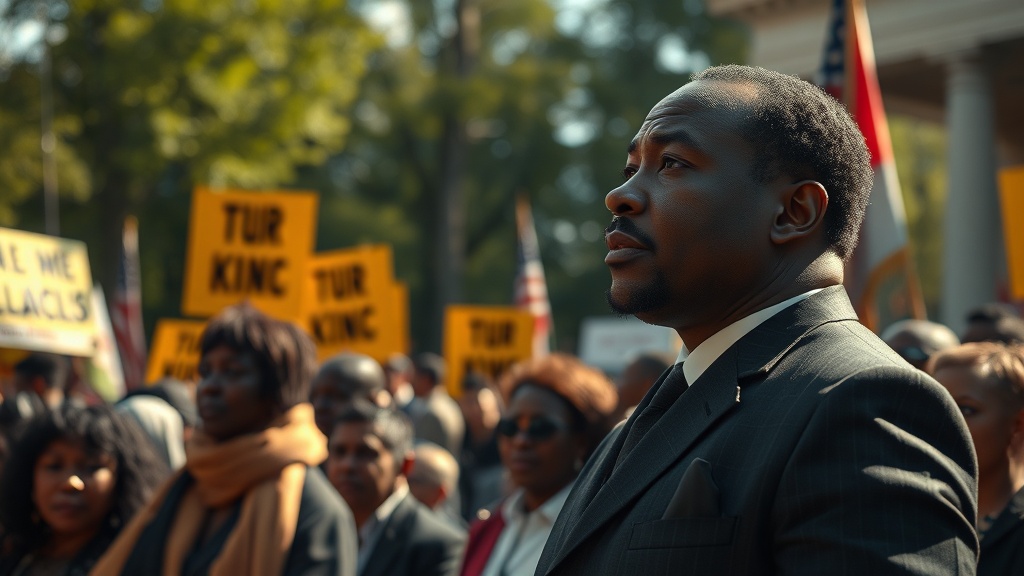
In a world that seems increasingly divided along lines of race and economic status, the prophetic words of Dr. Martin Luther King, Jr. from his 1967 "Beyond Vietnam" speech resonate more than ever. Dr. King warned of a society where machines, profit motives, and property rights overshadow the intrinsic value of human beings. His assertion that the 'giant triplets of racism, extreme materialism, and militarism' are incapable of being conquered unless we prioritize people over profits has become a stark reality in today's political landscape.
In recent reports, including the Joint Center's "State of the Dream 2026: From Regression to Signs of a Black Recession," the economic environment for Black Americans has deteriorated significantly. As of December 2025, Black unemployment rates surged to 7.5 percent, compared to the national average of 4.4 percent. This disparity not only highlights the persistent economic inequalities that Black communities face but also reflects a broader trend of regression as various policies have weakened labor market structures that sustain upward mobility.
The Trump administration's policies have played a pivotal role in exacerbating these inequalities. An analysis shows that executive orders targeting programs established under Lyndon Johnson's 1965 Equal Employment Opportunity executive order have dismantled crucial support systems that historically aided racial minorities. By defunding agencies such as the Minority Business Development Agency, the administration has redirected federal support away from disadvantaged businesses, putting Black-owned firms at risk of losing vital contracts and resources.
The implications of these policy shifts are profound. As Black-owned enterprises struggle to navigate a landscape that has become increasingly hostile due to reduced federal support, the potential for job losses and stunted economic growth looms large. Moreover, the broader economic ramifications threaten to undermine efforts aimed at bridging the racial wealth gap and diminishing long-standing disparities in the workforce.
The GOP's "Big Beautiful Bill," passed in 2025, has further entrenched systemic inequality. This legislation provides substantial tax cuts that disproportionately benefit high-income households and corporations while simultaneously slashing essential social programs like Medicaid and SNAP. Such cuts limit access to necessary services for low-income households, exacerbating the financial burdens on vulnerable populations.
In addition to the economic challenges, the technology sector—a crucial pillar of the modern economy—has also been affected by this disregard for civil rights. Executive orders, such as those aimed at "Removing Barriers to American Leadership in Artificial Intelligence," have stripped away essential protections that could foster inclusion in the burgeoning tech industry. Without these protections, the risk of reinforcing existing inequalities within this vital sector of the economy increases dramatically.
Dr. King's advocacy for robust and proactive federal leadership in addressing racial inequality remains relevant today. However, the current leadership's policies appear to be moving in the opposite direction. Choices to dismantle government jobs and agencies responsible for safeguarding against predatory economic practices not only undermine decades of progress but also exemplify regressive economic policies that contribute to increasing Black unemployment.
As stated by Dr. King, "we refuse to believe that the bank of justice is bankrupt." Yet, the urgency for action cannot be overstated. Without deliberate intervention, economic and racial inequalities are poised to become entrenched, resulting in generational loss for communities already marginalized. The fundamental question remains whether society will rise above its historical legacies of racism, materialism, and militarism. As Dr. King implored, we must embrace the "fierce urgency now" to cultivate an equitable future where all citizens, regardless of race or economic status, can thrive.
In conclusion, the challenges outlined in Dr. King's speeches and writings are not relics of the past; they are pressing issues that demand our immediate attention and action. The intersection of race and economics continues to shape the landscape of American society, and it is crucial that we heed Dr. King's call for justice and equality as we navigate an increasingly complex world.