Utah Voters Divided on Repealing Proposition 4 Redistricting Law
A new poll reveals Utah voters are nearly split on whether to repeal Proposition 4, with many expressing uncertainty about the law's implications.
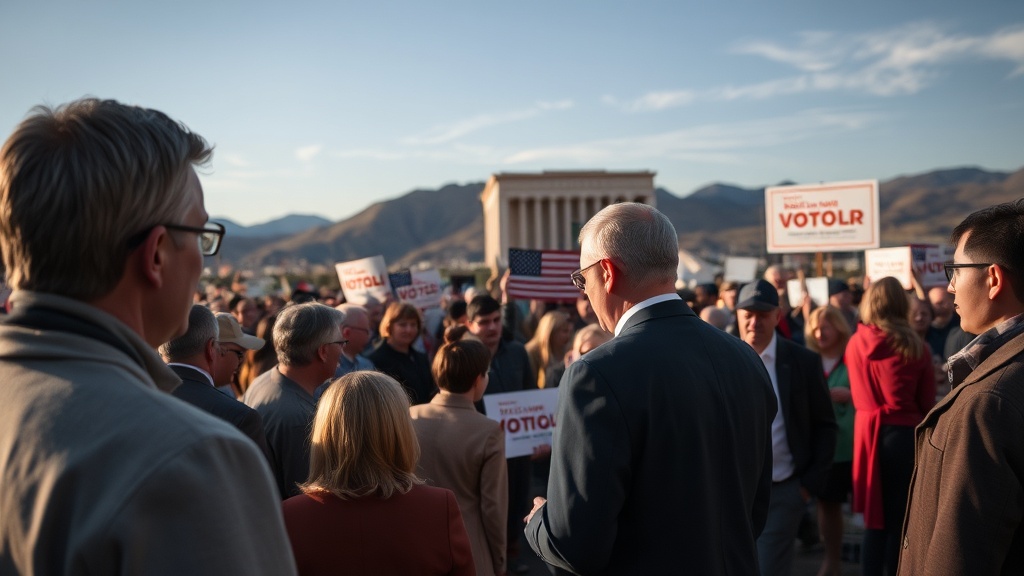
In a recent poll conducted by the Utah Policy Institute, Utah voters appear to be nearly split on the potential repeal of Proposition 4, a redistricting law that was narrowly passed as a ballot initiative eight years ago. The survey reveals a significant level of uncertainty among voters, with many expressing ambivalence about the future of the state’s redistricting process. The poll results indicate that 48% of respondents support repealing the law, while 45% oppose such a measure, with the remaining 7% undecided.
Proposition 4, which was passed in 2018, aimed to create an independent redistricting commission tasked with drawing congressional and legislative district boundaries in Utah. Supporters of the initiative argued that it would enhance transparency and reduce partisan gerrymandering, while critics contended that it could lead to unintended consequences and diminish legislative control over the redistricting process. As elections approach, the discussion around potential repeal has gained momentum, raising questions about the effectiveness of the current system.
The polling data provides a snapshot of voter sentiment, revealing that many Utahns are still grappling with the implications of Proposition 4. Mark M. Perna, a political analyst at the Utah Policy Institute, noted, "The close divide indicates that many voters are still trying to understand how the changes implemented by Proposition 4 affect their representation and the electoral process in Utah. There’s a palpable sense of uncertainty."
Further analysis of the poll shows that demographic factors play a crucial role in shaping opinions about the redistricting law. Younger voters and those living in urban areas are more likely to favor the repeal, while older voters and those in rural regions tend to oppose it. This trend underscores the varying perspectives influenced by geography and age, highlighting the complexity of the issue at hand.
In addition to voter demographics, the political landscape in Utah has shifted significantly since the passage of Proposition 4. The Republican Party, which has historically held a strong grip on state politics, is now facing challenges from more progressive factions within the electorate. This shift has sparked discussions about the need for fair representation and equitable districting practices. As the state prepares for the upcoming elections, the question of whether to maintain or repeal Proposition 4 has become a point of contention.
Utah's redistricting process is particularly significant given the state's rapid population growth and changing demographics. According to the U.S. Census Bureau, Utah was the fastest-growing state in the nation from 2020 to 2021, a trend that has implications for districting and representation. As the population continues to diversify, the need for fair and equitable district maps becomes increasingly pressing. Proponents of Proposition 4 argue that an independent commission is essential for ensuring that all voices are heard and that district maps reflect the demographic realities of the state.
Opponents of the repeal often cite concerns that the current system has not led to the desired outcomes. Critics argue that the independent commission lacks accountability and that the process can be susceptible to manipulation. They advocate for a return to a system where elected officials have more direct control over the redistricting process, believing it will yield better representation for constituents. This debate reflects broader national conversations about gerrymandering and electoral integrity, which have gained traction in recent years.
Looking ahead, the upcoming election cycle is likely to further influence public opinion on Proposition 4. Advocacy groups on both sides of the issue are mobilizing to educate voters about the implications of the law and the potential consequences of its repeal. Proponents of maintaining the current system are emphasizing the importance of transparency and fairness, while opponents are highlighting the need for legislative oversight.
As Utahns prepare to make their voices heard in the ballot box, the debate over Proposition 4 serves as a microcosm of the larger issues surrounding electoral integrity and representation in the United States. With the outcome of the repeal vote still uncertain, the future of Utah’s redistricting process remains a pivotal topic in state politics. As the state continues to evolve, the implications of this decision could resonate for years, shaping the political landscape and influencing voter engagement in ways yet to be fully realized.
In conclusion, the recent polling data illustrates a divided electorate grappling with the complexities of redistricting and representation in Utah. As voters weigh their options and consider the implications of repealing Proposition 4, the conversation surrounding electoral integrity and fair representation is set to remain at the forefront of state politics, influencing decisions that could have a lasting impact on the future of Utah’s political landscape.