Analyzing Trump's Influence on Latin American Politics Amidst Turmoil
President Trump's aggressive engagement in Latin American politics reshapes U.S. foreign policy amid regional instability and crises.
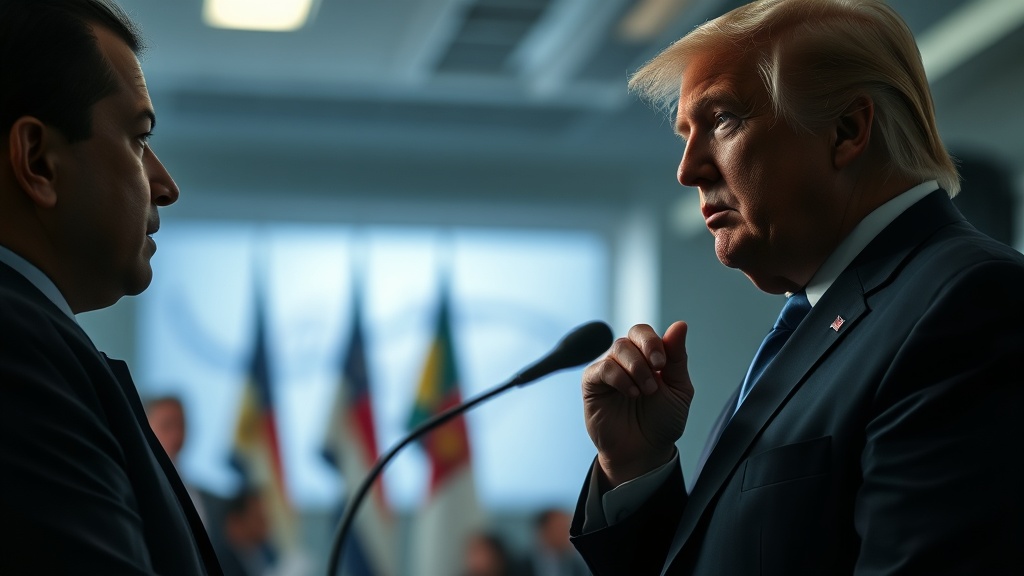
In a rapidly evolving political landscape, President Trump has increasingly engaged with Latin American politics, intertwining U.S. foreign policy with the continent's multifaceted challenges. Less than a year into his second term, Trump has taken decisive actions that have far-reaching implications for both the United States and the countries in the region. From imposing sanctions to threatening military intervention, Trump's approach reflects a significant shift in U.S. foreign relations and highlights the complexities of governance in a region fraught with instability.
One of the most notable actions taken by the Trump administration has been the recognition of Juan Guaidó as the legitimate president of Venezuela. This move came amid a humanitarian crisis that has seen millions of Venezuelans fleeing the country due to economic collapse and political repression. By supporting Guaidó, Trump has aligned the U.S. with opposition forces seeking to unseat Nicolás Maduro, whose government has been criticized for authoritarian practices and human rights violations. The U.S. has since imposed stringent sanctions on the Maduro regime, aiming to cripple its economic capabilities and support a democratic transition. This strategy, however, raises questions about the effectiveness of sanctions in achieving political change and the potential for exacerbating the suffering of ordinary Venezuelans.
In addition to Venezuela, the Trump administration has also placed Cuba and Nicaragua under heavy sanctions. In Cuba, the administration has rolled back many of the diplomatic openings initiated under President Obama, citing human rights abuses and the island's support for Maduro. The sanctions aim to pressure the Cuban government, but critics argue that they disproportionately affect the Cuban people rather than their leaders. Meanwhile, Nicaragua has faced similar measures due to President Daniel Ortega's crackdown on dissent and democratic institutions, further isolating the country from international support.
Trump's approach to Mexico has similarly been marked by threats and tough rhetoric. The administration has openly threatened airstrikes against drug cartels operating along the U.S.-Mexico border, a move that has raised alarms about potential violations of Mexican sovereignty. Additionally, the ongoing negotiations regarding immigration policies have put pressure on Mexico to take a more active role in curbing the flow of migrants to the U.S. The relationship between the two countries is strained, with the U.S. demanding stricter measures while Mexico grapples with its own internal challenges, including corruption and violence.
Colombia has also been a focal point of Trump's foreign policy, particularly in the context of its ongoing struggle against drug trafficking and guerrilla warfare. The administration's support for the Colombian government has included discussions of military aid and cooperation to combat narcotics trade. However, there are concerns that such support could inadvertently fuel further violence and instability, as Colombia continues to navigate a complex peace process with various armed groups.
Trade relations have also been a significant aspect of Trump's engagement in Latin America. The imposition of tariffs on Brazilian exports has sparked tensions between the two nations, with Brazil's President Jair Bolsonaro expressing frustration over the U.S. stance. The tariffs, while aimed at protecting American industries, have potential implications for Brazil's economy, which is heavily reliant on exports. This economic friction highlights the delicate balance the Trump administration seeks to maintain between safeguarding American interests and fostering cooperation with Latin American partners.
Furthermore, Trump's administration has sought to influence the political dynamics in Central America, particularly in Honduras and Guatemala. By leveraging U.S. aid, the administration has pressured these countries to adopt policies that align with American interests, particularly regarding immigration. This meddling in internal politics raises ethical questions about the U.S. role in shaping the governance of sovereign nations, especially in a region with a history of U.S. intervention.
The ramifications of Trump's foreign policy in Latin America are complex and multifaceted. While some argue that a more assertive U.S. approach is necessary to counteract authoritarian regimes and protect American interests, others caution that such tactics may lead to further instability and resentment towards the U.S. As the political climate in Latin America continues to evolve, the long-term effects of Trump's policies will likely be scrutinized by historians and political analysts alike.
In conclusion, President Trump’s entanglement in Latin American politics is characterized by a series of bold actions that reflect a departure from traditional diplomatic practices. As the administration navigates the challenges of a region marked by economic hardship, social upheaval, and political unrest, the implications of these policies will resonate well beyond his presidency, shaping the future of U.S.-Latin America relations for years to come. The upcoming elections in both the U.S. and various Latin American countries may further redefine these dynamics, making it essential for observers to remain vigilant in assessing the outcomes of this complex political interplay.