Analyzing the Impact of Trump's Foreign Policy on Global Relations
Trump's foreign policy blends isolationism and interventionism, impacting U.S. global relations and alliances.
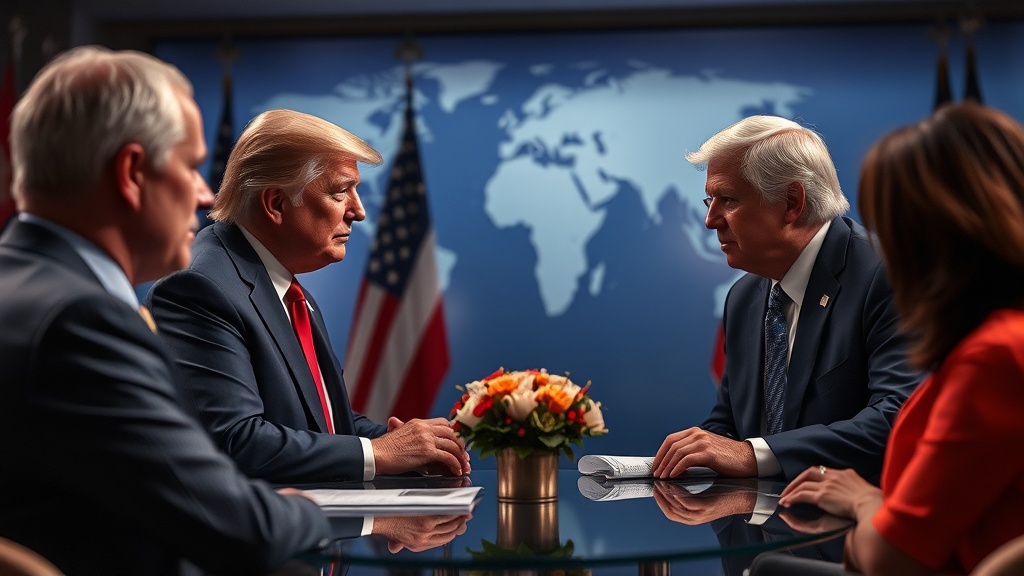
In recent years, the foreign policy of former President Donald Trump has sparked considerable debate and concern among political analysts and international relations experts. Critics argue that Trump's approach combines elements of both isolationism and interventionism, resulting in a foreign policy that many consider detrimental not only to the United States but also to global stability. This article delves into the key components of Trump's foreign policy, examining its implications for the U.S. and the world.
From the outset of his administration, Trump’s foreign policy was marked by a clear departure from the traditional diplomatic norms that had characterized U.S. engagement with the world. One of his most significant actions was the withdrawal from the Paris Agreement in 2017, which aimed to combat climate change through global cooperation. This decision was met with widespread criticism as it not only undermined international efforts to address a pressing global issue but also alienated key allies who had committed to the agreement.
Trump’s “America First” doctrine further illustrated his isolationist tendencies. By prioritizing American interests above all else, the administration often disregarded long-standing alliances. For instance, Trump’s approach to NATO raised alarms among member countries, as he repeatedly questioned the financial commitments of allies, suggesting that they were not contributing their fair share to collective defense. This rhetoric created uncertainty about the U.S. commitment to NATO, which has been a cornerstone of transatlantic security since its inception in 1949.
Moreover, Trump's foreign policy was characterized by a series of unpredictable and often aggressive stances toward adversaries. The administration’s approach to North Korea, for example, oscillated from bellicose threats of “fire and fury” to unprecedented diplomatic engagement with Kim Jong-un. While these summits were historic, many experts argue that they did not yield substantial progress in denuclearization efforts. Instead, critics contend that Trump's willingness to meet with the North Korean leader may have inadvertently legitimized a regime that has consistently violated human rights and international norms.
In the Middle East, Trump’s foreign policy further exemplified a blend of isolationism and interventionism. The controversial decision to recognize Jerusalem as the capital of Israel and move the U.S. embassy there ignited tensions not only between Israelis and Palestinians but also across the broader Arab world. While the administration touted this move as a step towards peace, many analysts viewed it as a provocation that undermined the U.S.'s role as a neutral mediator in the region.
Additionally, the administration’s withdrawal from the Iran nuclear deal in 2018 marked a significant shift in U.S. policy toward Tehran. The deal, which was negotiated under the Obama administration, aimed to limit Iran’s nuclear capabilities in exchange for the lifting of economic sanctions. Trump’s decision to unilaterally exit the agreement not only strained relations with European allies who remained committed to the deal but also escalated tensions in the already volatile region. Following the withdrawal, Iran resumed its nuclear activities, raising concerns about the potential for military conflict.
Furthermore, Trump's administration adopted a confrontational stance toward China, viewing the nation as a strategic competitor rather than a partner. The trade war initiated by imposing tariffs on Chinese goods had far-reaching consequences, affecting global supply chains and leading to economic uncertainty. While the administration argued that these measures were necessary to protect American jobs and intellectual property, critics pointed out that the tariffs ultimately burdened American consumers and businesses, raising prices on everyday goods.
As Trump's presidency concluded, the long-term implications of his foreign policy remain a subject of intense scrutiny. Many analysts contend that the erosion of U.S. credibility on the world stage, coupled with the fracturing of alliances, poses a significant challenge for future administrations. The Biden administration has sought to recalibrate U.S. foreign policy by re-engaging with international partners and reaffirming commitments to multilateral agreements, signaling a return to a more traditional approach to diplomacy.
In conclusion, Trump’s foreign policy has had profound and lasting effects on the United States and its relationships with other nations. By blending isolationist and interventionist tendencies, his administration has reshaped global dynamics in ways that continue to resonate today. As the world grapples with complex challenges ranging from climate change to geopolitical rivalries, the lessons learned from this tumultuous period will undoubtedly inform future U.S. foreign policy strategies. The path forward will require a careful balance between safeguarding national interests and fostering international cooperation to address the multifaceted issues facing the global community.