Commemorating the Jan. 6 Insurrection: Five Years Later at the Capitol
Five years after the Capitol insurrection, supporters of Donald Trump held a commemorative march, reflecting ongoing divisions in America.
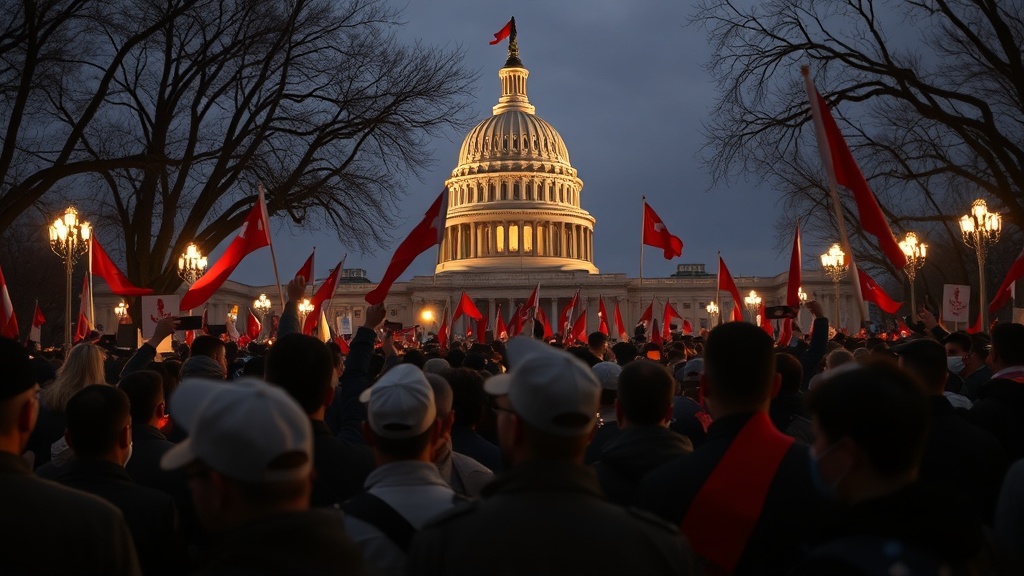
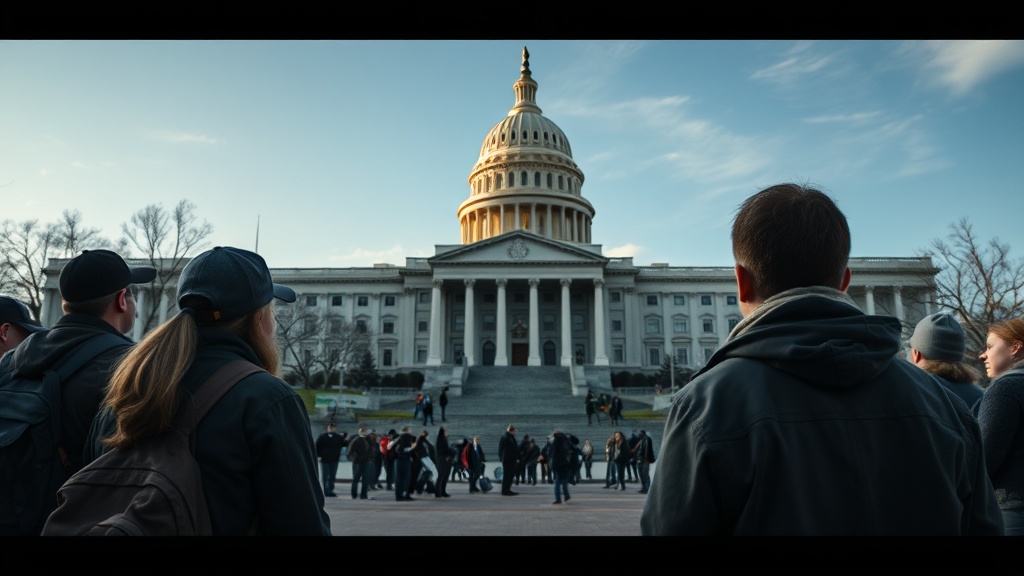
On January 6, 2026, the five-year anniversary of the Capitol insurrection, the echoes of that fateful day were felt both inside and outside the U.S. Capitol. A gathering of several hundred supporters of former President Donald Trump marked the occasion with a nonviolent march retracing the path taken by those who stormed the Capitol on January 6, 2021, in a failed attempt to overturn the certification of Joe Biden's presidential election victory. The atmosphere was markedly subdued compared to the chaos of the original event, yet it still raised concerns among observers and law enforcement.
The march began at the Ellipse, where Trump had spoken to a fervent crowd five years prior. Participants, many of whom were wearing pro-Trump apparel, walked peacefully toward the Capitol grounds, escorted by U.S. Capitol Police. Former Proud Boys leader Enrique Tarrio, who had been sentenced to 22 years in prison for charges related to the 2021 attack but received a commutation from Trump, was present and expressed solidarity with the marchers. He remarked, "We’re here for one purpose, and that’s to honor the lives of Ashli Babbitt and those who passed away that day."
Inside the Capitol, U.S. House Democrats convened for an unofficial hearing to revisit the findings of a 2022 House committee investigation into the insurrection. Lawmakers and experts criticized Trump’s recent pardons of individuals involved in the attack, asserting that these actions sent a troubling message about accountability and the rule of law. Brendan Ballou, a former U.S. Justice Department prosecutor, testified that the pardons signaled to Trump’s supporters that they were above the law, reinforcing an environment where loyalty to the president outweighed accountability.
In a separate event, Trump addressed House Republicans at the Kennedy Center, where he echoed his longstanding claims of election fraud, blaming then-House Speaker Nancy Pelosi for the events of January 6. His remarks, devoid of any substantive evidence, fueled further divisive rhetoric surrounding the legitimacy of the 2020 election. “Our elections are crooked as hell,” Trump asserted, without offering proof for his allegations.
The Democrats’ hearing featured testimony from Pamela Hemphill, a former Trump supporter who had participated in the Capitol riot. Now an advocate for accountability, Hemphill expressed remorse for her actions and emphasized the importance of acknowledging the truth about that day. "Once I got away from the MAGA cult and started educating myself about January the 6th, I knew what I did was wrong,” she stated, clarifying her decision to plead guilty to charges related to the riot rather than accept a pardon from Trump. Hemphill’s emotional testimony resonated deeply, showcasing the personal transformations some individuals have undergone since the insurrection.
As the march continued outside, participants paid tribute to Ashli Babbitt, a rioter who was shot and killed by Capitol Police while attempting to breach the Speaker’s lobby during the insurrection. Babbitt’s mother, Michelle Witthoeft, laid flowers at the spot where her daughter died, marking the somber moment with a moment of silence. The event drew counterprotesters who shouted accusations of treachery, but police quickly intervened to maintain order, preventing any violent confrontations.
Amidst the crowd, Jan. 6 rioter Rasha Abual-Ragheb expressed gratitude for her pardon, showcasing her “MAGA 1776” tattoo as she rallied support. Willie Connors, another participant, echoed the sentiments of loyalty to Trump, stating, “Donald Trump, I’ll take the bullet for that man. He’s my president.” Such statements highlight the unwavering allegiance still felt among a faction of Trump's base, despite the fallout from the insurrection.
The stark contrast between the events of January 6, 2021, and the commemorative march in 2026 serves as a reminder of the ongoing divisions within American society. The differing narratives surrounding the insurrection—one that sees it as a legitimate expression of political dissent, and another that views it as an attack on democracy—continue to perpetuate polarization in the United States. As both sides reflect on this anniversary, the implications of the events from five years ago remain deeply embedded in the political landscape, influencing current discourse and future elections.
As the day progressed, it became clear that while the violence of the past may have subsided, the struggle to reconcile the meanings of January 6 continues, leaving many questions unanswered about the future of American democracy and political unity.