Analyzing the Debate Over Trump: Fascism or Not? A Comprehensive Examination
The debate over Donald Trump's governance raises questions of fascism and democracy, reflecting deep societal rifts in the U.S.
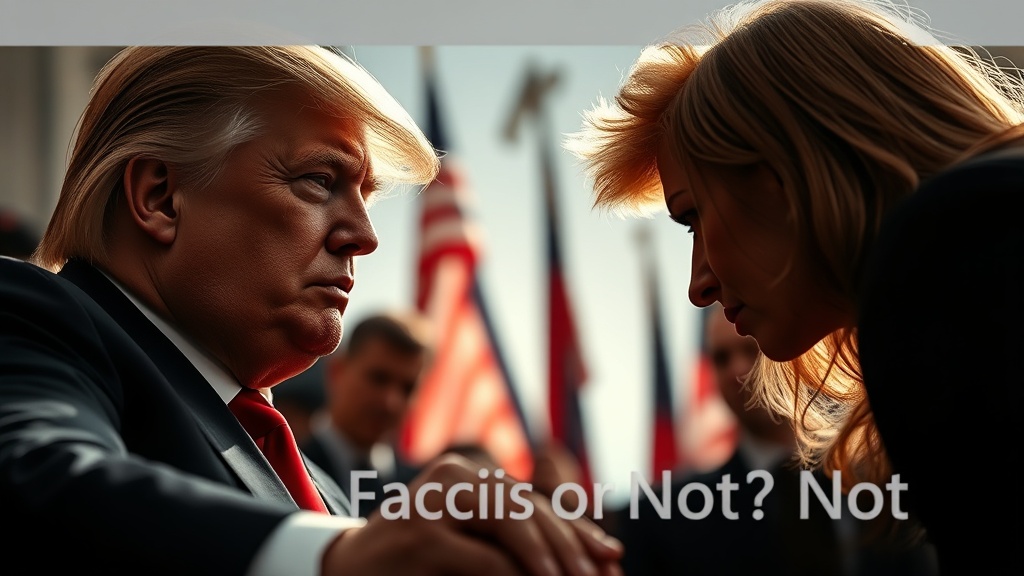
For the past decade, a contentious debate has simmered within political circles and among the general populace regarding the classification of former President Donald Trump and his administration. This discourse has often revolved around the term 'fascism,' a label that many have assigned to Trump's style of governance and rhetoric. To understand the implications of this debate, it is essential to explore the contexts in which these discussions arise, the definitions of fascism, and the historical precedents that inform such claims.
The term 'fascism' is rooted in early 20th-century Europe, characterized by authoritarian power, suppression of dissent, and strong nationalist sentiments. Scholars define it through various lenses, all pointing toward a governance style that undermines democratic institutions and promotes an extreme form of nationalism. With this backdrop, many critics of Trump have drawn parallels between his administration and historical fascist regimes, citing actions that they believe align with this definition.
One of the most often-cited examples is Trump’s rhetoric, particularly during his 2016 campaign and throughout his presidency. His frequent attacks on the media, labeling it as 'fake news,' and his denouncement of various political opponents have raised alarms among political analysts and historians. These tactics mirror the propaganda strategies used in past fascist movements, where dissent was often dismissed and marginalized. Furthermore, the January 6 Capitol riots have intensified these discussions, as many view the events as a culmination of Trump's incendiary rhetoric and a direct challenge to democratic norms.
The debate has not only been limited to academics and political pundits but has also permeated public discourse. Various polls conducted over the years indicate that a significant portion of the population has been concerned about the erosion of democratic principles during Trump's tenure. For instance, a survey by the Pew Research Center revealed that 68% of Americans believed Trump was undermining democratic institutions, a sentiment echoed by many in the political sphere.
Conversely, Trump and his supporters vehemently reject the fascism label, arguing that such accusations are politically motivated efforts to delegitimize his presidency. They assert that Trump's policies, such as tax cuts and deregulation, bolster economic freedom and individual liberties, diverging significantly from fascist ideology, which typically emphasizes state control over the economy. Supporters also highlight the fact that Trump’s administration oversaw a vigorous electoral process, with a significant voter turnout during the 2020 election, countering the notion of a system under totalitarian rule.
Examining the broader implications of this debate, it becomes clear that the discourse around whether Trump is a fascist is emblematic of deeper societal rifts within the United States. This bifurcation reflects a growing polarization, where individuals are increasingly inclined to view political adversaries through an extreme ideological lens. As this schism deepens, it raises questions about the future of American democracy and the potential for bipartisan dialogue.
Moreover, the rise of social media has dramatically influenced the way these discussions are framed and disseminated. Platforms like Twitter and Facebook have become battlegrounds for political narratives, often amplifying extreme viewpoints and fostering an environment where nuanced discussions are increasingly rare. This phenomenon has given rise to echo chambers, where individuals engage predominantly with those who share their views, further entrenching divisive perspectives.
As the political landscape continues to evolve, the debate over Trump and the fascism label will likely persist. Understanding the historical context, the definitions at play, and the societal implications is crucial for engaged citizens. It challenges both supporters and critics of Trump to critically assess not only his presidency but also the state of American democracy in the 21st century.
In conclusion, while the debate over whether Donald Trump embodies fascist tendencies may not reach a consensus anytime soon, it serves as a significant indicator of the current political climate in the United States. The discussions surrounding this issue highlight the need for informed and rational discourse in an increasingly polarized environment. As citizens navigate this contentious landscape, it is imperative to remain vigilant about the principles of democracy and the importance of constructive dialogue in shaping the future of the nation.