Venezuela's Political Landscape Remains Unchanged Amid U.S. Actions
The U.S. intervention in Venezuela raises questions as Maduro's regime remains intact despite recent actions.
In a surprising turn of events, the Trump administration's recent actions regarding Venezuela appear to be more of a tactical maneuver rather than a full-fledged regime change operation. As of Monday, President Nicolás Maduro's administration continues to hold significant power, with key officials remaining in their positions. This situation has raised questions about the effectiveness of U.S. intervention in the region and the future of Venezuelan governance.
On the surface, the U.S. strategy seemed aggressive, particularly with the reported abduction of Maduro, but the reality on the ground tells a different story. Instead of dismantling the current regime, the United States has opted to leave Maduro’s vice president, Delcy Rodríguez, and other high-ranking officials in control. This decision has significant implications for the political stability of Venezuela, as it indicates a lack of commitment to a comprehensive regime change.
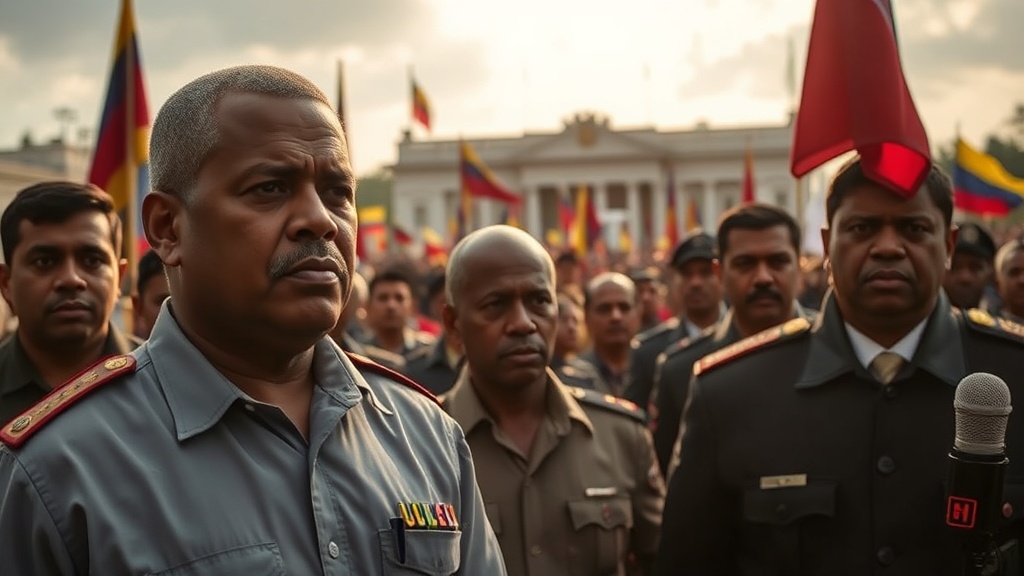
Key figures in Maduro's government, such as Defense Minister Vladimir Padrino López and Interior Minister Diosdado Cabello, remain firmly in their roles. Padrino López, a crucial player in the military, has been a steadfast ally of Maduro, ensuring loyalty within the armed forces. Cabello, on the other hand, is notorious for his control over the police and has been labeled as one of Maduro’s most feared enforcers. His continued presence in government underscores the difficulties the U.S. may face in altering the power dynamics in Venezuela.
The U.S. administration's approach has been criticized for its inconsistency. While the early stages of U.S. intervention suggested a clear intent to dismantle Maduro’s regime, the current reality shows that the administration is effectively negotiating with a government it claims to oppose. This has led many analysts to describe the situation as extortion rather than liberation, as the U.S. appears to be leveraging its influence without a clear strategy for a post-Maduro Venezuela.
Further complicating the situation is the humanitarian crisis that Venezuela has been experiencing for several years. With millions of citizens facing food shortages, lack of medical supplies, and widespread poverty, the need for a stable government is more pressing than ever. However, the current political landscape, largely unchanged by U.S. intervention, suggests that the suffering of ordinary Venezuelans is unlikely to improve in the near future.
International reactions to the U.S. strategy have been mixed. Some countries in Latin America have expressed support for the U.S. position, viewing Maduro's government as a threat to democratic stability in the region. Others, however, have criticized the U.S. for its heavy-handed tactics and warned against the consequences of foreign intervention. This division highlights the challenges that any future U.S. policy will face in garnering international support.
Furthermore, the United Nations and various human rights organizations have repeatedly condemned the actions of the Maduro regime, citing widespread violations of human rights and the suppression of dissent. The continued presence of key figures such as Cabello and Padrino López raises concerns that any potential reforms or changes in governance would likely be superficial and fail to address the underlying issues facing the Venezuelan populace.
Experts suggest that a more nuanced approach is necessary for the U.S. to effectively influence change in Venezuela. Diplomatic efforts should focus on engaging with a broader range of Venezuelan stakeholders, including opposition groups and civil society organizations that have been marginalized by the current regime. Without a clear plan for dialogue and cooperation, any U.S. strategy risks falling short of its goals and leaving the Venezuelan people in a state of continued suffering.
As the situation evolves, it is clear that the political landscape in Venezuela remains fraught with challenges. The U.S. may need to reconsider its tactics and seek a more collaborative approach to support the Venezuelan people in their quest for stability and democracy. Only time will tell whether the current course of action will lead to meaningful change or if the tyranny that has plagued Venezuelans will persist in the face of external pressure.
In conclusion, while the U.S. actions in Venezuela may have sparked initial hope for a regime change, the reality is that little has changed in the upper echelons of power. The persistence of Maduro’s administration, coupled with the ongoing humanitarian crisis, paints a bleak picture for the future of Venezuela and its citizens. The need for a comprehensive and cohesive strategy is more critical than ever to address the complex political and social issues at play in this South American nation.