Utah Seeks to Lift Injunction on Near-Total Abortion Ban Amid Legal Battle
Utah's Attorney General seeks to lift an injunction blocking a near-total abortion ban, prompting legal battles with Planned Parenthood.
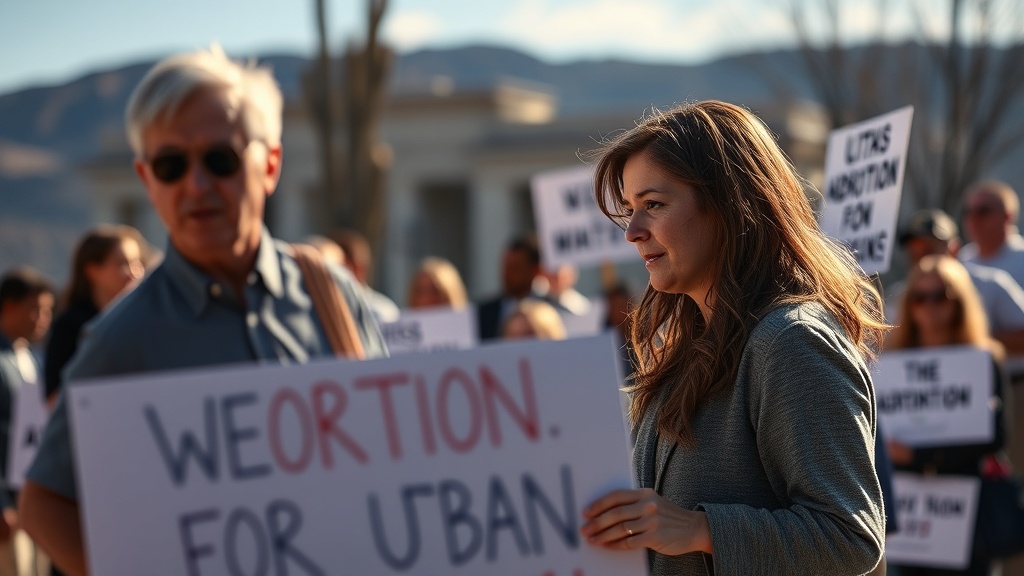
In a significant legal development, the state of Utah has formally requested a judge to lift a preliminary injunction that currently blocks the implementation of a near-total abortion ban enacted by the Utah State Legislature. This request, made by attorneys from the Utah Attorney General's Office, comes as both the state and Planned Parenthood Association of Utah have filed motions for summary judgment in the ongoing legal dispute over the controversial legislation.
The near-total abortion ban, which was passed by the Utah legislature in 2020, allows abortions only in very limited circumstances, such as in cases of rape, incest, or when the life of the mother is at risk. The law was designed to go into effect following the U.S. Supreme Court's decision to overturn Roe v. Wade in 2022. Following that landmark ruling, Planned Parenthood quickly filed a lawsuit against the state, leading to a preliminary injunction that has kept the ban on hold since then. The injunction was affirmed by the Utah Supreme Court, which also denied the state’s request for a mid-case appeal.
Assistant Attorney General Lance Sorensen, representing the state, argued in a recent court filing that legislative bodies are best equipped to make decisions regarding abortion laws, as they are elected representatives of the people. He emphasized that while there may be persuasive policy arguments advocating for more liberal abortion laws, these do not translate into constitutional rights. "The existence of persuasive policy arguments does not create constitutional rights," Sorensen wrote. He likened the situation to discussions surrounding other regulated activities, such as recreational marijuana and assisted suicide, asserting that just as these issues have been debated in the public sphere, so too should discussions about abortion.
In contrast, attorneys for Planned Parenthood contend that the near-total abortion ban violates fundamental rights guaranteed by the Utah Constitution. They cite rights to bodily integrity, privacy, sex equality, and the free exercise of personal beliefs as being infringed upon by the restrictive law. Planned Parenthood attorney Troy Booher asserted, "The undisputed facts establish that the near-total ban on abortion from the earliest stages of pregnancy, with only narrow exceptions, impermissibly infringes on numerous enumerated and unenumerated rights protected by the Utah Constitution." Booher further elaborated that the Utah Supreme Court had provided a framework for evaluating these claims, suggesting that the ban contravenes the constitutional guarantees of bodily integrity and privacy.
The legal battle over the abortion ban is reflective of broader national debates surrounding reproductive rights, particularly in the wake of the Supreme Court's decision to overturn Roe v. Wade. Many states have seen similar legislative measures introduced or enacted, leading to a patchwork of abortion laws across the country. In Utah, abortion remains legal up to 18 weeks gestation, but the potential lifting of the injunction could significantly alter access to reproductive healthcare in the state.
The arguments regarding the motions for summary judgment from both sides are set to be heard by Judge Charles Stormont in April. This upcoming court date will be pivotal in determining whether the injunction is lifted, allowing the near-total ban to take effect, or if the legal obstacles will continue to prevent the implementation of the law.
As the case unfolds, it underscores the ongoing tensions between state legislative decisions and constitutional rights, with advocates on both sides of the abortion debate preparing for a potentially transformative legal ruling. The outcome could influence not only the landscape of reproductive rights in Utah but also serve as a precedent for similar legal challenges in other states grappling with their own abortion laws. The implications of this case will likely resonate beyond Utah, as the nation continues to navigate the complex and often contentious issues surrounding reproductive healthcare and individual rights. The legal and political ramifications of the court's decision will undoubtedly be felt in various communities, shaping discussions and policies for years to come.