Republican Candidates Challenge Utah Senate President Stuart Adams in 2026 Primary
Three Republican candidates, including a former Weber State General Counsel, aim to unseat Utah's Senate President Stuart Adams in the 2026 primary.
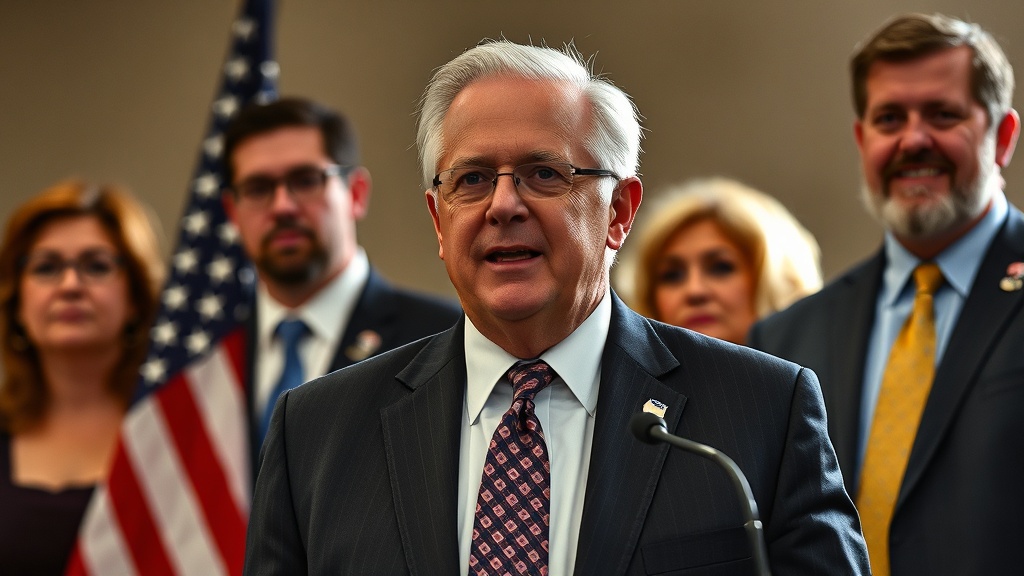
In a significant political development in Utah, at least three Republican candidates are gearing up to challenge Senate President Stuart Adams in the 2026 primary elections. Among the challengers are notable figures with connections to Weber State University, highlighting an emerging faction within the Republican Party that seeks to reshape leadership at the state Capitol. The candidates are motivated by a desire for change and represent a diverse array of backgrounds and political agendas.
Stuart Adams, who has held the position of Senate President since 2020, has been a prominent figure in Utah politics. Under his leadership, the Utah Senate has pushed through various legislative initiatives, including tax reforms and education funding increases. However, his administration has also faced criticism on several fronts, including concerns over the handling of state budget priorities and responses to pressing social issues such as housing affordability and healthcare.
Among the challengers is former Weber State University General Counsel, who has expressed a strong desire to bring transparency and accountability to the state government. This candidate, who has a background in law and higher education administration, believes that a fresh perspective is necessary to address the evolving needs of Utah residents. In a recent statement, they articulated their vision for a more inclusive political process: "Our state deserves leaders who prioritize the voices of everyday citizens, not just political insiders."
Another candidate, a local business owner and community organizer, has also emerged as a formidable contender. With deep roots in the Ogden area and a history of engagement in local issues, this candidate aims to leverage their grassroots connections to mobilize support across the state. They have emphasized the importance of economic development and job creation in their campaign, stating, "Utah is a land of opportunity, but we need leaders who will fight for equitable growth across all communities."
As the 2026 elections approach, the political landscape in Utah is expected to shift, with these challengers pushing for a more dynamic and responsive Republican Party. Political analysts note that the candidates’ ties to Weber State University could play a significant role in their campaigns, given the institution's influence in the region and its commitment to public service and community engagement.
The primary challenge also reflects broader trends within the Republican Party, as factions vie for control and influence. There has been growing discontent among some party members regarding the direction of leadership, particularly in light of recent controversies surrounding statewide policies and governance strategies. The emergence of these candidates signals a potential shift towards a more populist approach within the party, as they seek to align with constituents' concerns over issues like healthcare, education, and economic fairness.
Political experts suggest that the primaries will not only test the incumbency of Adams but also reveal the evolving priorities of Utah Republicans. The candidates' differing platforms may resonate with various voter demographics, particularly younger voters who are increasingly engaged in the political process. As they campaign, they will likely focus on building coalitions and highlighting their unique qualifications to address the state's challenges.
In the lead-up to the primaries, the fundraising landscape will be crucial. Candidates will need to secure financial backing to amplify their messages and reach voters effectively. The political action committees (PACs) and endorsements will also play a significant role in shaping the candidates' viability. Observers will be closely monitoring fundraising efforts, as they can indicate which candidates are gaining traction with party members and constituents alike.
As the political climate in Utah continues to evolve, the challenge to Senate President Stuart Adams is emblematic of a broader desire for change within the state’s Republican Party. The upcoming primary will not only determine the future of Adams’s political career but also signal the potential for a transformative moment in Utah politics. With the 2026 primary elections on the horizon, all eyes will be on the candidates and their ability to connect with a diverse and changing electorate. Voter turnout and engagement will be key factors in determining the success of these challengers as they seek to redefine the Republican landscape in Utah.
In conclusion, the emergence of these Republican challengers against Senate President Stuart Adams marks a critical juncture in Utah politics. With a focus on transparency, economic growth, and community engagement, the candidates are poised to challenge the status quo and potentially reshape the future of governance in the state. As the primaries approach, the dynamics of this political contest will be closely watched by both supporters and opponents alike, as it promises to be a pivotal moment in Utah's political history.