Utah Breweries Face Challenges as Dry January Begins Amid Industry Decline
Utah breweries brace for impact as Dry January begins, facing challenges from rising costs and declining sales.
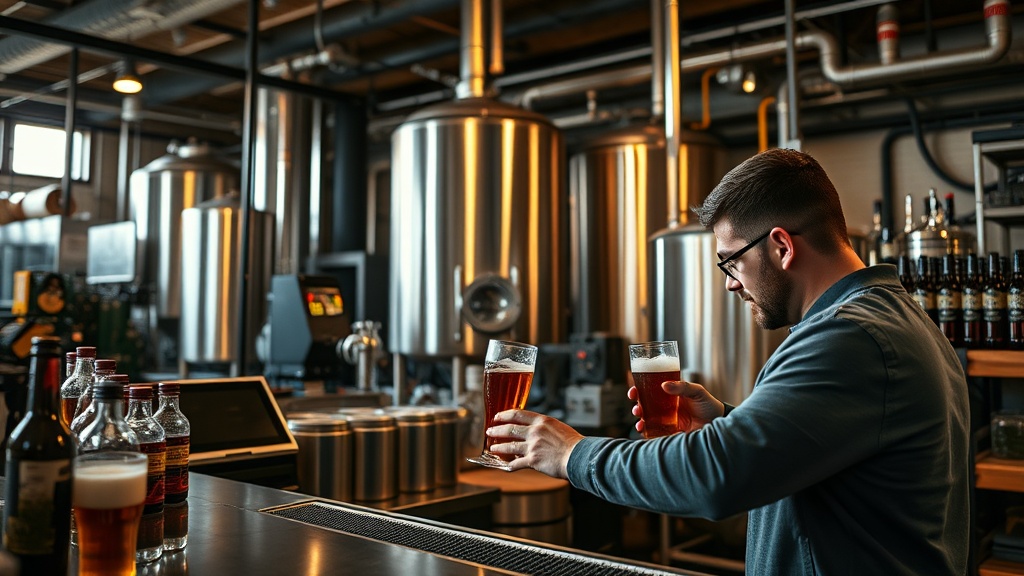
As January unfolds, a trend known as "Dry January" casts a shadow over Utah's craft brewing scene, leaving many local breweries bracing for a significant downturn. According to Stephanie Biesecker, the executive director of the Utah Brewers Guild, the month is often a tough period for the industry. "It hurts," she remarked, highlighting the challenges that come with a significant drop in patronage after the holiday season. Many individuals choose to abstain from alcohol at the beginning of the year as part of a health-conscious effort to counterbalance festive indulgences.
The phenomenon of Dry January has grown in popularity over recent years, with many Americans opting to forgo alcohol for the entire month, leading to a noticeable impact on sales at breweries. Biesecker noted the difficulties faced by her industry, saying, "It's incredibly difficult for us to lose that patronage so much in one month." She suggested that a more gradual approach to abstaining from alcohol throughout the year would be beneficial for local breweries.
While some microbreweries offer food and non-alcoholic beverages for patrons, Biesecker pointed out that many people participating in Dry January tend to avoid establishments that primarily serve alcohol. This trend comes at a particularly challenging time for the craft brewing industry, which has experienced a wave of closures. According to the Brewers Association, there were 434 brewery closures across the United States in 2025, marking the second consecutive year that closures have surpassed openings. In Utah, the industry felt the sting of loss with the closure of Policy Kings brewery in September.
The economic pressures facing breweries are compounded by rising costs, as both grain prices and packaging materials have seen increases. Biesecker explained that tariffs and other political pressures have contributed to these escalating costs. "Those are things that we depend on, and you just can't get them in mass quantities in the United States," she lamented, emphasizing the struggles that craft brewers face in maintaining production levels while keeping costs down.
The decline in alcohol consumption is a nationwide trend, with the Utah Department of Alcoholic Beverage Services reporting sales reductions for the last two fiscal years. This shift in consumer behavior, coupled with increasing operational costs, poses a significant threat to the continued viability of many breweries.
Even larger brewing companies are feeling the effects of this downturn. Anheuser-Busch announced in December its decision to sell one of its breweries and close two others, a move that underscores the widespread challenges facing the brewing industry as a whole.
However, not all breweries are experiencing decline. Fisher Brewing Co., for instance, has seen a brighter outlook. Co-owner Colby Frazier reported that 2025 was a good year for the brewery, partly due to its decision to expand distribution into local stores. "We have long-term contracts for a lot of our raw materials," Frazier said, expressing optimism for the future. He remains hopeful that continued patronage will help sustain the brewery through the upcoming months.
Despite the challenges, the Utah Brewers Guild continues to represent about 60 beer and cider makers throughout the state, and Frazier believes that the local market may not be as saturated as those found in other regions. This could potentially offer some resilience amid the broader industry trends.
Both Biesecker and Frazier advocate for legislative changes that could benefit local breweries. Currently, Utah law restricts breweries from serving beer on tap that exceeds 5% alcohol by volume, even if the beer is brewed on-site. Instead, breweries are required to bottle or can their higher-alcohol products, which customers must then purchase and open themselves. Biesecker criticized this regulation, stating, "Even if we're making it in the same building, we bring it to the other end of the building and we open it up and throw away the package. So, it's a lot of waste and a lot of money that just sort of goes down the drain. We could save it if we could serve our beer on draft."
Frazier echoed her sentiments, emphasizing the importance of serving fresh beer. "Fresh beer is better beer, and local beer is the best beer," he stated, underscoring the connection between quality and local production. As the craft brewing industry navigates the complexities of Dry January and the broader challenges of declining sales and rising costs, the future remains uncertain. The hope is that with the right support and changes, Utah's breweries can weather this storm and continue to thrive in the coming years.