Unraveling the Complex History of the Morgan Mining Claims in Park City
The Morgan mining claims saga in Park City reveals a tumultuous history of partnerships, lawsuits, and financial turmoil.
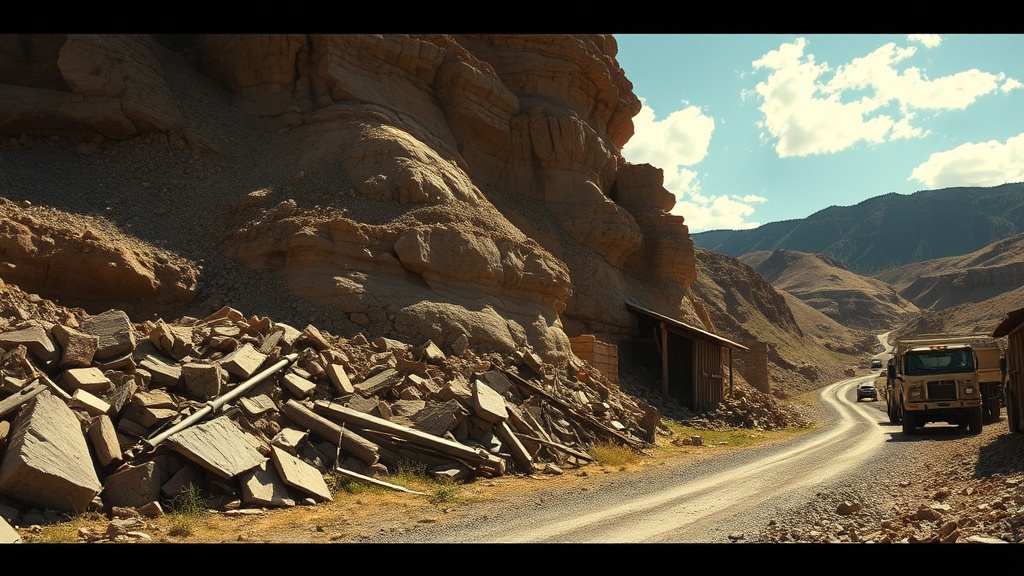
In the late 19th century, the Empire Canyon area of Park City, Utah, became the epicenter of a tumultuous saga involving mining claims that would see partnerships shift, lawsuits filed, and fortunes made and lost. This narrative primarily revolves around Philip Morgan, a Welsh immigrant, who in 1878 began acquiring a series of mining claims that would lead to two decades of intense conflict and confusion within the mining community.
The initial phase of this saga unfolded when Morgan partnered with Gottlieb Schaer and two others to lease their claims to George A. Meears, a Latter-day Saint from Birmingham, England, in May 1884. As reported by the Park Record, the agreement stipulated that Meears would receive $1,000 and a deed of trust to facilitate the lease's execution. However, as time progressed, dissatisfaction with Meears' development efforts led Morgan and his partners to pursue a new alliance with Simon Bamberger, a businessman who would later become the governor of Utah. By June 1885, this new group claimed that Meears had done little to advance the mining project, declaring his lease void.
Tensions escalated further when Meears countered with claims that he had invested significant resources into the project, including approximately $6,000 for developing the Grizzly Tunnel, which lies near what is now the Pearl run at Deer Valley Resort. In a dramatic turn of events, Morgan's group resorted to force, sending men to seize control of the Grizzly Tunnel. Armed with six-shooters, these individuals attempted to take possession without firing shots, but Meears quickly alerted local law enforcement. The sheriff intervened, leading to the arrest of several raiders and restoring Meears' control over the property. The court subsequently found four members of the raiding party guilty, imposing a $25 fine on each.
The conflict intensified with the involvement of John Daly, owner of the nearby Daly West Mine, who sent surveyors to assess the disputed claims. This culminated in what became known as the “Three-Corner Lawsuit.” Both Morgan and Meears sued each other, with Daly also entering the fray to stake his claim. The Salt Lake Democrat aptly noted the convoluted nature of the disputes, describing it as a series of chaotic legal battles that made any attempt at clarity “a very hazardous, not to say doubtful, proceeding.” After years of litigation, the Third District Court dismissed the cases in 1888, marking a significant victory for Meears.
Despite the ongoing turmoil, the parties involved sought to form a cohesive venture. In 1890, the Meears Silver Mining Company was incorporated, bringing together Morgan, Meears, and other stakeholders. However, the partnership proved fraught with tension. By March 1892, reports surfaced indicating that the mining site was inactive due to disputes among the directors. Meears claimed he had invested close to $500,000 into the claims, including $150,000 in legal fees, highlighting the financial stakes at play.
Tragically, the narrative took a dark turn when Meears, facing immense pressure from financial difficulties, took his own life during the financial panic of 1893. Just before his death, he was embroiled in legal battles, including a suit filed against him by the widow of Gottlieb Schaer for alleged mismanagement of Schaer's estate.
In early 1895, the Meears company rebranded to the Morgan Silver Mining Co. However, the operational challenges persisted, and layoffs soon followed. The complex dynamics continued when, in 1897, Daly acquired a portion of the new company, only to find himself listed among delinquent stockholders by December 1898.
By 1899, Daly, along with other investors, acquired the remainder of the business for $100,000, a deal that Philip Morgan believed would secure a prosperous future for him and his brother, Henry. However, the Morgan claims ultimately failed to yield the expected returns, falling short of the productivity seen in the nearby Daly West and other prominent mines.
Despite attempts to explore deeper into the mines, efforts rarely exceeded the 900-foot level, failing to reach the planned 1,200-foot depth. The saga concluded with yet another twist; the Morgan Group's claims, alongside the Quincy Mine and the Little Bell Mine, were eventually absorbed into the Daly West's expansive holdings. This consolidation resulted in the Daly West Mine encompassing over 1,200 acres in Empire Canyon, though disputes continued with the Ontario owners, who held half ownership of the mine.
As the narrative of the Morgan mining claims illustrates, the early days of mining in Park City were marked by volatility and intrigue, where alliances shifted as swiftly as fortunes could be gained or lost. The Park City Museum and the Friends of Ski Mountain Mining History will host a lecture titled “Preserving Park City Mine History,” presented by Brian Buck, on Thursday from 5 to 6 p.m. at their Education and Collections Center, located at 2079 Sidewinder Drive. This event promises to shed further light on the rich and tumultuous history of mining in the region.
Michael O’Malley, a researcher at the Park City Museum and author of "Attitude at Altitude: The People’s Guide to Park City and Summit County," draws from his extensive research to chronicle this intricate chapter of local history, including insights from a recent presentation on John Daly by Sandy Brumley and Brian Buck on November 19, 2025.