Summit County Council Unanimously Approves Comprehensive Arts and Culture Development Plan
Summit County Council adopts a master plan to enhance arts and culture, fostering local engagement and economic growth.
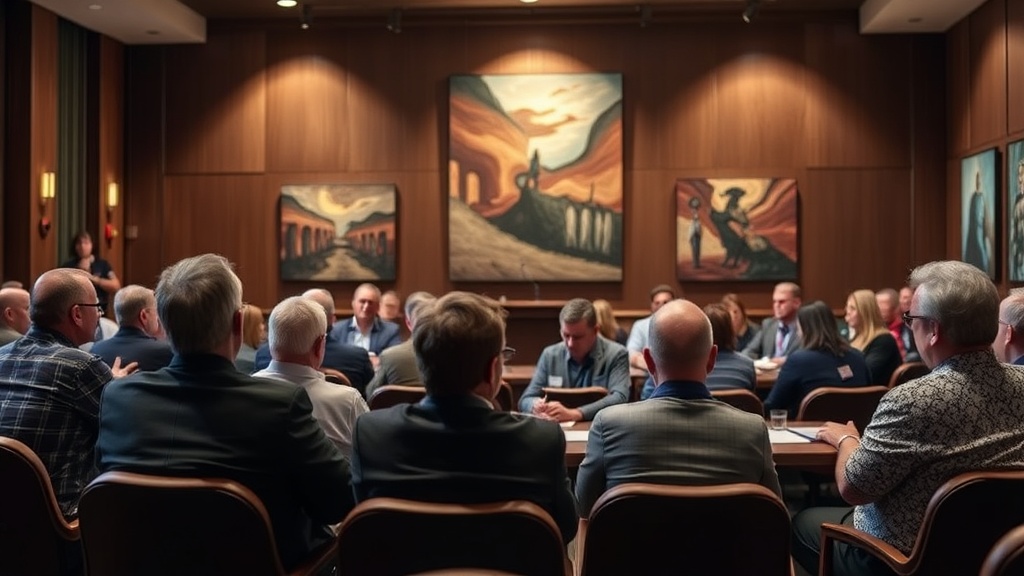
The Summit County Council has taken a significant step toward enriching the cultural landscape of the region by unanimously adopting a master plan aimed at enhancing arts and culture development across the county. This pivotal decision, made during a recent council meeting, comes after more than a year of collaborative efforts spearheaded by the Arts Council of Park City and Summit County. The comprehensive master plan is designed to serve as a strategic roadmap for future initiatives in the arts sector, addressing the needs and aspirations of the community.
The inception of the master plan dates back to February 2025 when the Arts Council announced its initiative to develop a framework for the arts in Summit County. A diverse group of thirty stakeholders, including representatives from local organizations such as Mountain Town Music, Park City Film, and the Egyptian Theatre, collaborated with the Ohio-based consulting firm Designing Local to gather insights and conduct research on the arts ecosystem in the area. Members of the Summit County and Park City staff, along with Coalville City Councilor Lynn Wood, were integral to the planning process, ensuring that a wide range of voices were heard.
Jocelyn Scudder, the executive director of the Arts Council, presented the finalized master plan to the County Council, emphasizing its significance as a formal agreement between the council and the Arts Council. "This document symbolizes our joint commitment to fostering arts and cultural development in Summit County," Scudder stated. The master plan is structured into three core sections: arts in the everyday, spaces and places, and funding, each addressing different aspects of the cultural landscape.
In the first section, "arts in the everyday," the plan highlights the importance of making arts and cultural experiences accessible to residents without requiring attendance at specific events. Scudder provided the example of the moose statue at a roundabout in Jeremy Ranch, which embodies the concept of integrating art into daily life. "We want to ensure that art is a part of the daily experience for our residents," she explained. The staff report accompanying the master plan outlines various objectives under this category, including the promotion of cultural nonprofits in North and South Summit and the encouragement of creative enterprises in eastern Summit County to stimulate economic growth.
Scudder also underscored the role of arts in boosting the local economy, particularly in terms of tourism, which can generate additional revenue for the area, especially in years marked by low snowfall. She noted that the upcoming 2034 Winter Olympics present a unique opportunity to showcase local artists and cultural institutions to an international audience. "We can collaborate with host cities like Ogden and Salt Lake City to ensure that the arts are integral to the Olympic planning process," Scudder remarked, highlighting potential partnerships that could arise from this global event.
The master plan also addresses the preservation of historical landmarks and buildings, with a focus on working closely with Summit County officials to determine the future of the Summit County Historical Museum located in Coalville. Additionally, the plan calls for prioritizing capital improvements to historic structures along the Wasatch Back, reinforcing the community's commitment to its cultural heritage.
As part of its initiatives, the Arts Council is exploring an artist-in-residency program that would utilize vacant workforce housing during the off-season. This innovative approach aims to provide artists with affordable accommodation while fostering collaboration with local cultural organizations and schools. "The idea is to leverage unused housing during slower seasons and create an environment conducive to artistic collaboration," Scudder explained, noting that private developers have shown interest in this initiative.
The second section of the master plan, titled "spaces and places," outlines plans to create multi-disciplinary facilities where individuals can both create and showcase their art. This section emphasizes the need for proactive engagement with both the county and private developers to ensure that public artwork is incorporated into new construction projects.
Moreover, the master plan seeks to formalize a partnership between the Arts Council and the Park City Chamber/Bureau, aiming to bolster cultural tourism efforts throughout Summit County. While Scudder did not elaborate extensively on funding mechanisms within the master plan, she acknowledged that securing stable revenue streams is critical for the Arts Council to implement its initiatives effectively. Currently, the Arts Council operates with an approximate budget of $900,000, supported by contributions from the Summit County and Park City governments.
In conclusion, the Summit County Council's adoption of the master plan marks a significant milestone in the region's cultural development. Scudder indicated that the Arts Council's next steps would include promoting the plan throughout the county and commencing work on its outlined objectives by fostering connections and collaborations with local partners. For those interested in reviewing the full plan, it is accessible online at pcscarts.org/arts-culture-master-planning, providing the community with a comprehensive guide to the future of arts and culture in Summit County.